


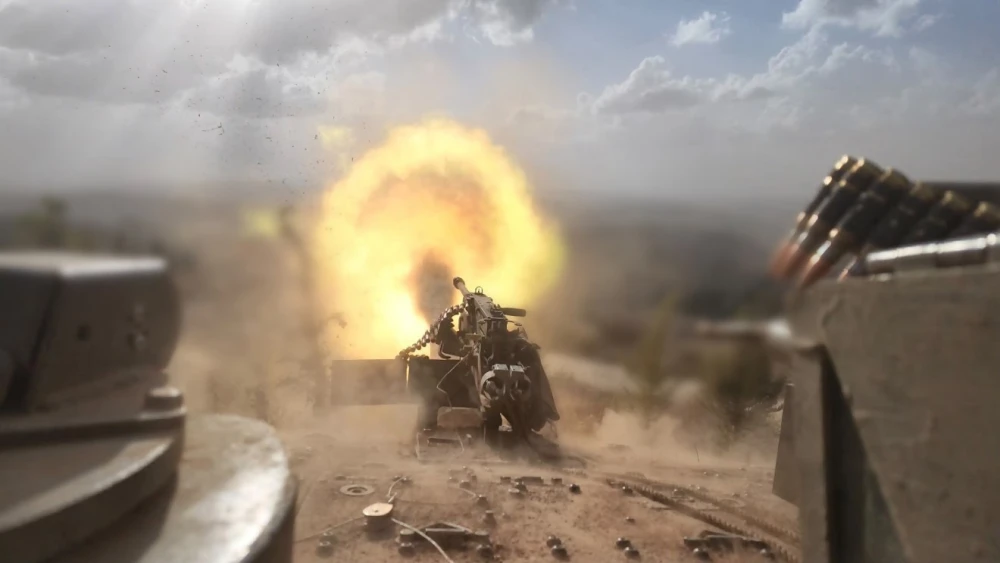
The IDF’s 7th Brigade combat team has completed eight months of operations in Southern Lebanon, destroying approximately 3,500 terror infrastructure sites and killing some 400 Hezbollah terrorists, the military said on Tuesday.
The force, comprising armored troops, Golani infantry and combat engineers, crossed into Lebanon on March 8. Its operations took it to Qantara, the Saluki River, the Litani River and the Beaufort ridge before troops returned to Israel, according to the IDF.
במרחב הסלוקי, קנטרה והליטאני: כוחות צוות הקרב החטיבתי 7 השלימו שמונה חודשי פעילות בדרום לבנון
— צבא ההגנה לישראל (@idfonline) November 3, 2026
לכל הפרטים👇👇https://t.co/UTvMY0vsyf pic.twitter.com/udAYJp0BTk
In Qantara, troops uncovered underground systems, including one nearly two kilometers (1.2 miles) long, with living quarters, a kitchen and electricity. Combat engineers opened routes toward the Litani and Beaufort areas, clearing obstacles and dealing with explosive devices and mines, the military said.
“These aren’t tunnels where you go in and find one or two rooms,” said Lt. Col. A., commander of the 75th Armored Battalion. “These are enormous facilities, with room for hundreds of operatives.”
Separately, the IDF said on Sunday that troops of the 769th Brigade, operating under the 91st Division near Khiam in Southern Lebanon, found weapons in a civilian home and located and dismantled a storage facility for explosive drones. Weapons recovered during the operation included rockets, Kalashnikov rifles, ammunition and explosive drones.
The military said its forces would continue operating to remove threats while remaining committed to the ceasefire agreement.


