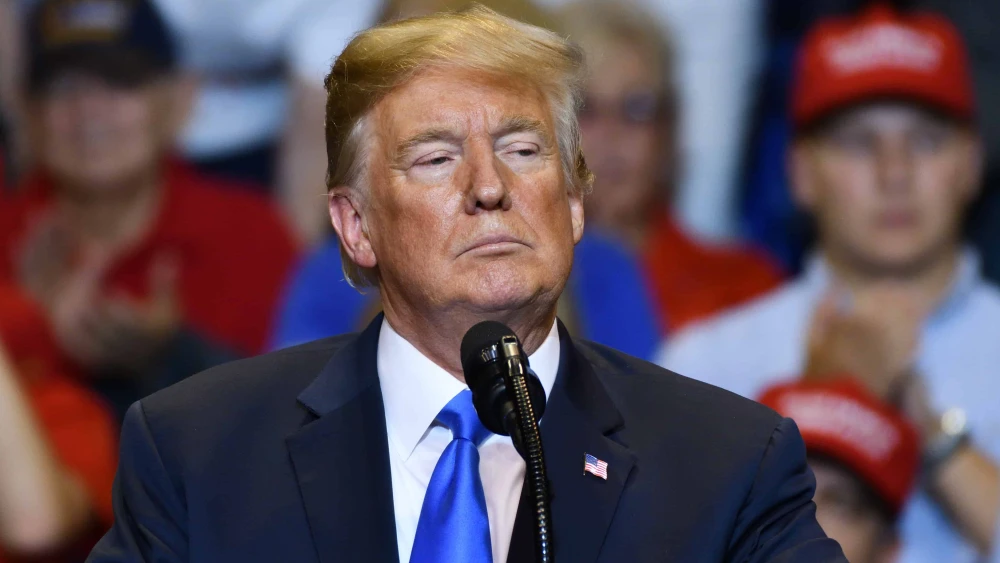
Former U.S. President Donald Trump told TIME magazine in a wide-ranging interview published this week that he was no longer sure a two-state solution is viable.
“Most people thought it was going to be a two-state solution. I’m not sure a two-state solution anymore is gonna work,” the former president said.
“There was a time when I thought two states could work. Now I think two states is going to be very, very tough. I think it’s going to be much tougher to get. I also think you have fewer people that liked the idea. You had a lot of people that liked the idea four years ago. Today, you have far fewer people that like that idea,” he added.
Israeli Finance Minister Finance Minister Bezalel Smotrich, an ardent opponent of Palestinian statehood, tweeted in response to the interview, “I congratulate the former U.S. president and presidential candidate, a clear supporter of Israel, Donald Trump, for his clear words and his return from his support for the establishment of a Palestinian state.
“A Palestinian state would be a terrorist state that would endanger the existence of Israel and the international pressure to establish it is an injustice on a historical scale of the Western countries who are willing to endanger the only Jewish state due to internal political interests.”
He went on to state that, “I hope and pray that more leaders in the world will discover the courage and integrity shown by presidential candidate Trump to change their position, will withdraw from turning their backs on the State of Israel and will resolutely join hands with us in the fight we are leading in the name of the free world against radical Islam that threatens the peace of the entire world.”
In the same TIME interview, Trump pointed out his criticisms of Israeli Prime Minister Benjamin “Bibi” Netanyahu, saying he “never forgot” how Netanyahu “dropped out” of the attack that killed Iranian Quds Force Commander Qassem Soleimani four years ago. He also said he “had a bad experience with Bibi” in 2020.
The Oct. 7 massacre, in which Hamas murdered over 1,200 people, “happened on [Netanyahu’s] watch,” said Trump, “And I think it’s had a profound impact on him, despite everything. Because people said that shouldn’t have happened. They have the most sophisticated equipment. They had—everything was there to stop that. And a lot of people knew about it, you know, thousands and thousands of people knew about it.”
Netanyahu “rightfully has been criticized” in connection with Oct. 7, he added.
In an interview with Israel Hayom in March, the former president said that he supported Israel’s defensive war against Hamas and that he would have responded to the Oct. 7 attack in a very similar way. At the same time, he warned that the longer the war dragged on, the worse things would get for Israel.
“You have to finish up your war. To finish it up. You gotta get it done. And, I am sure you will do that. And we gotta get to peace, we can’t have this going on. And I will say, Israel has to be very careful, because you’re losing a lot of the world, you’re losing a lot of support, you have to finish up, you have to get the job done. And you have to get on to peace, to get on to a normal life for Israel, and for everybody else,” he said.
Trump’s TIME interview comes as the United States has been upping efforts to bring about normalization between Israel and Saudi Arabia. A planned normalization agreement would include a security pact with the United States, civilian nuclear assistance and diplomatic recognition of Israel—contingent on Israel committing to a concrete plan, with a deadline, for the creation of a Palestinian state, something Netanyahu has so far rejected.
With an eye on the U.S. political calendar, the Saudis want to move in the next couple of weeks, hoping to generate bipartisan support in the Senate before the November election, according to The New York Times. Should Trump reclaim the presidency, the chances of Democrats in the Senate voting for a normalization deal could vanish, according to the report.
U.S. Secretary of State Antony Blinken, who was in Israel this week, has made a path to a Palestinian state a priority in his conversations in the region. Speaking at the King Abdul Aziz International Conference Center during his trip the Arab kingdom, Blinken told World Economic Forum President Borge Brende, “I think the single biggest, most effective rebuke to both Iran and Hamas would be Israel having normal relations with every country in this region and the realization of a Palestinian state.”
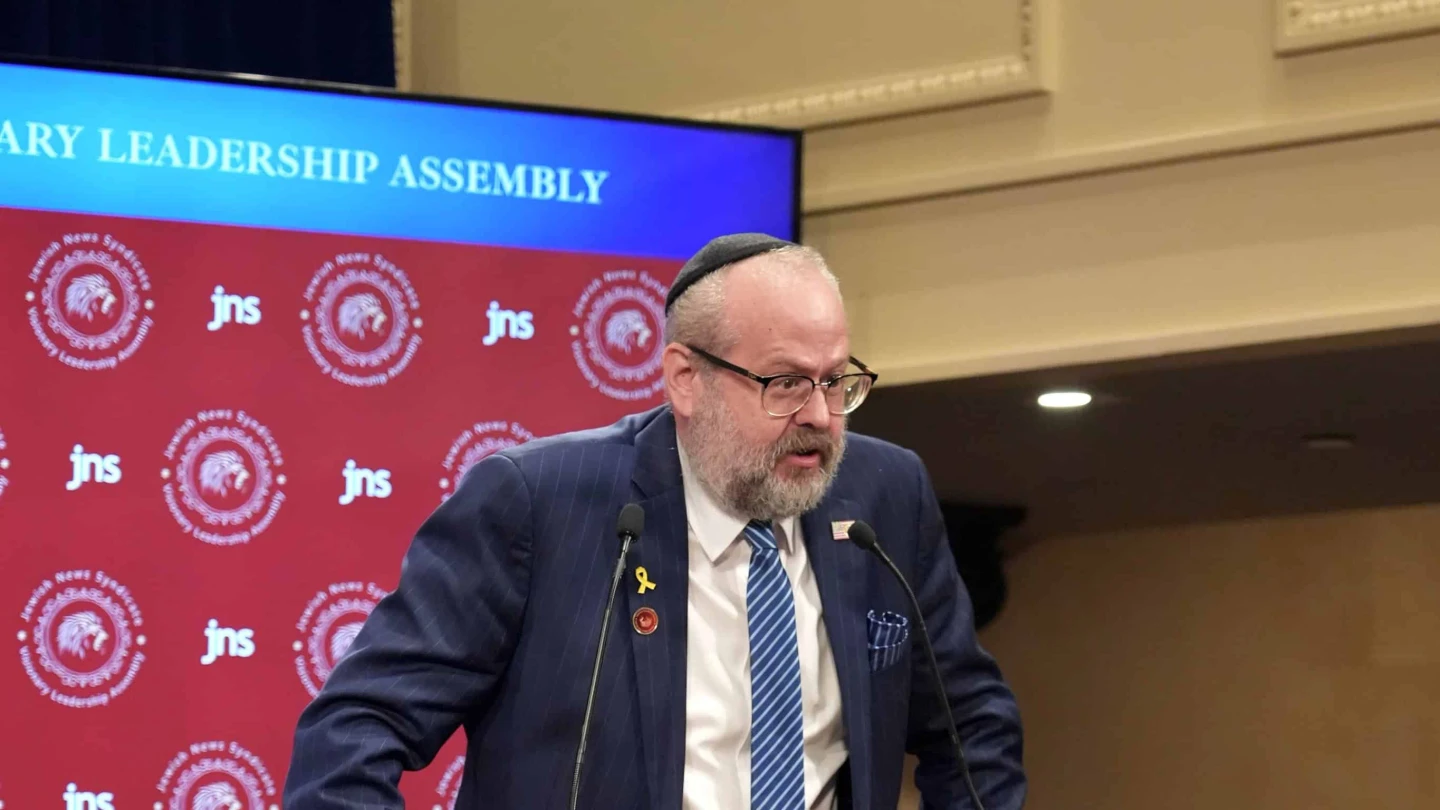
“The very concept of a Palestinian state is deeply flawed and detrimental to regional stability,” Knesset member Dan Illouz of Netanyahu’s Likud Party told JNS. “It is imperative that we vehemently oppose its establishment. As awareness grows about the inherent risks and dangers posed by such a state, we must actively work towards ensuring that it never becomes a reality. Our unwavering stance against a Palestinian state must be resolute and uncompromising,” he said.
Israeli Energy Minister and former Foreign Minister Eli Cohen chimed in on X, writing on Thursday “There will be no sustainable peace with Saudi Arabia without victory in the war. In the Middle East, no one makes peace with the weak.”
Knesset Member Ohad Tal responded as well, saying, “I thank President Trump for standing up for truth and morality. After the massacre of Oct. 7, there is no more doubt: Establishing a Palestinian state will be a reward to terrorism and lead to the dismantling and destruction of the only Jewish state.”
Mark Zell, chairman of Republicans Overseas Israel, added “Many have questioned where President Trump stands now on Israel, the Palestinians and Judea & Samaria. President Trump’s statement in the Time interview confirms unequivocally that he sees American and Israeli interests are aligned.”