The Knesset voted 31-18 on March 21 to repeal articles of the 2005 Gaza Disengagement Law, which banned Israelis from entering and living in four communities in northern Samaria. Hours later, a spokesman for the U.S. Department of State was denouncing the vote during the department’s daily press briefing.
“The United States is extremely troubled that the Israeli Knesset has passed legislation rescinding important parts of the 2005 Disengagement Law, including the prohibition on establishing settlements in the northern West Bank,” Vedant Patel told reporters.
The amendments are “inconsistent with Israel’s recent commitments to de-escalating Israeli-Palestinian tensions,” he added. “Just two days ago, Israel reaffirmed its commitment to stop discussion of any new settlements for four months and to stop authorization of any outposts for six months.”
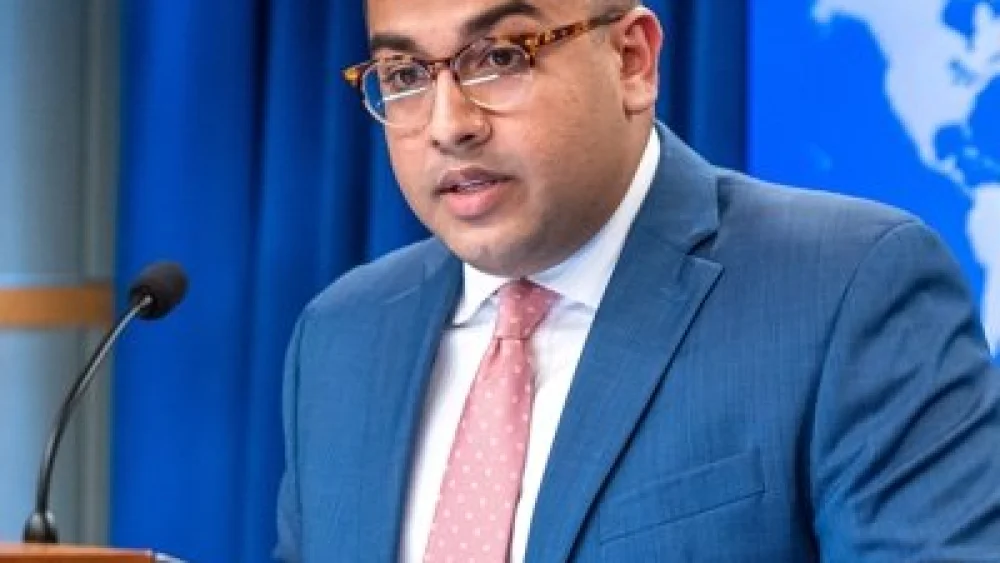
Patel spoke of the changes coming “at a time of heightened tensions” and being “particularly provocative and counterproductive to efforts to restore some measures of calm as we head into Ramadan, Passover and the Easter holidays.”
The State Department spokesman appeared to refer to an agreement of Israeli and Palestinian officials in Sharm el-Sheikh, Egypt, on March 19. At the security summit, Israel agreed to “stop discussion of any new settlement units for four months and to stop authorization of any outposts for six months,” according to a joint statement released by the State Department.
The March 19 statement added that both sides “agreed to develop a mechanism to curb and counter-violence, incitement and inflammatory statements and actions.” Although an Israeli man was wounded in a second Huwara terrorist attack as that agreement was hammered out, Patel did not refer on March 21 to that attack, which seriously wounded an Israeli man, as particularly provocative and counterproductive to restoring calm.
Reporters at the press briefing repeatedly pressed Patel on why Washington wasn’t doing anything to punish Israel beyond issuing statements. Patel maintained that the statements the United States was making, both publicly and in discussions with Israel, were significant.