


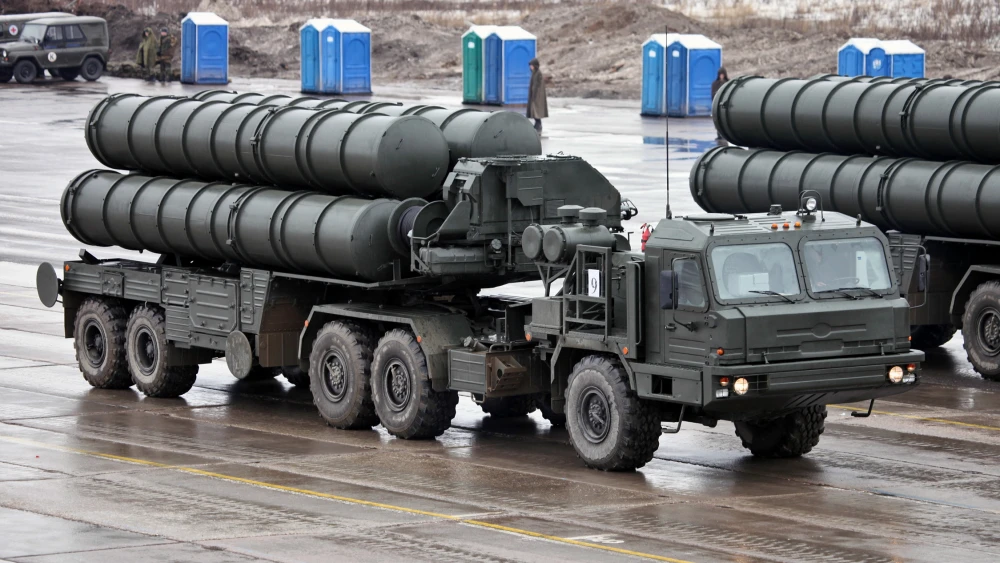
The United States warned on Thursday that sanctions against Turkey for planning to acquire the S-400 Russian missile defense system is a “very viable” option, despite a threat by Turkish President Tayyip Erdoğan to retaliate were that to happen.
“Seeking resolution is still within the realm of possible today, but imposition of sanctions remains a course of action and a very viable one at this point,” U.S. Assistant Secretary of State for Political-Military Affairs Clarke Cooper told reporters on a teleconference.
At a press conference, Erdoğan remarked that Turkey will not reconsider the purchase of the S-400, and said that Ankara will respond with sanctions were Washington to follow through on its threat.
“I do not see any possibility of these sanctions happening,” he said, adding were that to occur, “we will have sanctions of our own.”
Erdoğan said the delivery of the system would begin during the first half of next month.
The United States has already blocked its sale of the F-35 in response to Turkey’s plan to receive the S-400.
The Armed Services Committee in both the U.S. Senate and U.S. House of Representatives have each passed its own version of the 2020 National Defense Authorization Act, both of which blocks the transfer of F-35 jets to Turkey.
Regarding the Senate’s NDAA, “The bill sends a clear message to Erdoğan, who insists that he can acquire both the S-400 air-defense system and the F-35 jets, Aykan Erdemir, who served in the Turkish parliament from 2011 to 2015, and now serves as a senior fellow at the Foundation for Defense of Democracies, previously told JNS.



