Newsletter
Newsletter Support JNS

Israeli birth rate on decline, government data shows

At 6.64 children per woman, the haredi sector had the highest fertility rate among Israel’s Jewish population in 2020. Jewish fertility rate surpasses Muslim fertility rate for the first time.

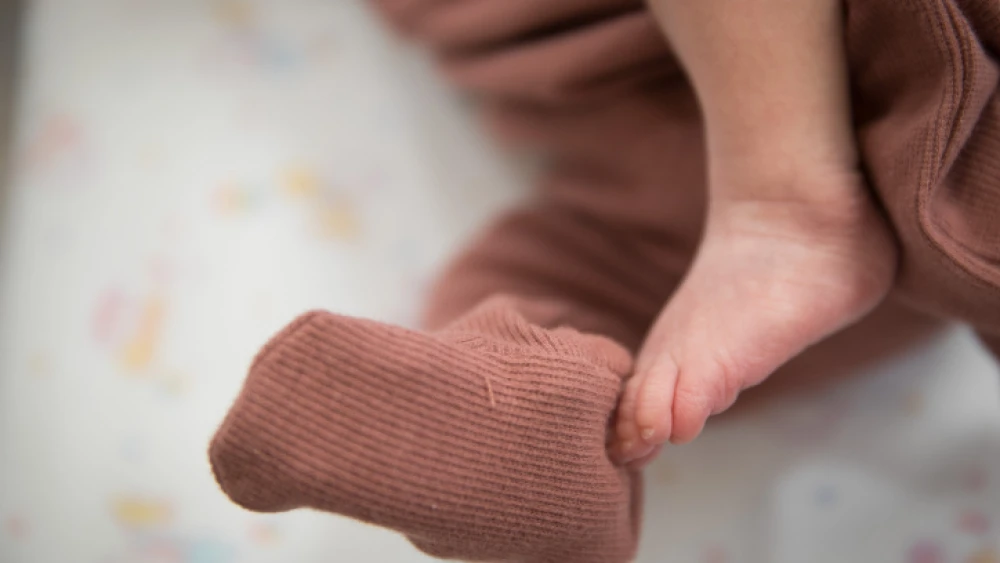
A newborn at Sha'arei Tzedek Hospital in Jerusalem, Oct. 29, 2018. Photo by Hadas Parush/Flash90.
A newborn at Sha’arei Tzedek Hospital in Jerusalem, Oct. 29, 2018. Photo by Hadas Parush/Flash90.

With 4,709 fewer births recorded in 2020, Israel’s birth rate declined 2.6 percent over the previous year, according to data released from the Central Bureau of Statistics on Monday.

Of the 177,307 children born in 2020, 51.4% (91,101) were boys and 48.6% (86,206) were girls. A majority, 73.3%, were born to Jewish women, while 21.7% were born to Muslim women, 1.4% to Christian women and 2.4% to Druze women.

The Jewish fertility rate surpassed the Arab rate for the first time in 2020, with Jews having three children on average compared to 2.99 in the Arab sector.

At 6.64 children per woman, haredi women had the highest fertility rate among Israel’s Jewish population, compared to 1.96 among secular Jewish women.

The average Israeli woman was 27 years old at the birth of their first child, according to CBS data. Arab women, on average, had their first child at the age of 24.

The decline in the birthrate continues a trend that began in 2019 and follows an ongoing increase in the birthrate that began in 1988 and peaked when 184,370 children were born in 2018.

According to CBS data, the fertility rate for Israeli women in 2020 was 2.9, a decrease from 3.01 in 2019.

Israel, however, continues to have the highest birthright in the Organization for Economic Cooperation and Development, where the average birthright is 1.6.

This article first appeared in Israel Hayom.

“The University of Washington has been notified by the U.S. Department of Justice that it is conducting a compliance review. The university will cooperate with the review and provide information and responses,” a UW spokesperson told JNS.
“Using public funds and benefits to discriminate against religious schools is unconstitutional—period,” said Nathan Diament, of the Orthodox Union Advocacy Center.
Reza Dindar is accused of using a China-based front company to procure U.S. goods and illegally route them to Iran in violation of export controls.
“The results in Iran will be amazing,” the U.S. president wrote. “And if Iran’s new leaders are smart, Iran can have a great and prosperous future.”
The U.S.-led forum focused on how to “effectively disrupt and deter Iran’s terrorist plots and other illicit schemes,” the U.S. State Department said.
“People have every right to protest, but what’s happening here goes beyond that,” Regina Sassoon Friedland, of the American Jewish Committee, told JNS. “The Jewish people will not be intimidated to halt our events and activities.”