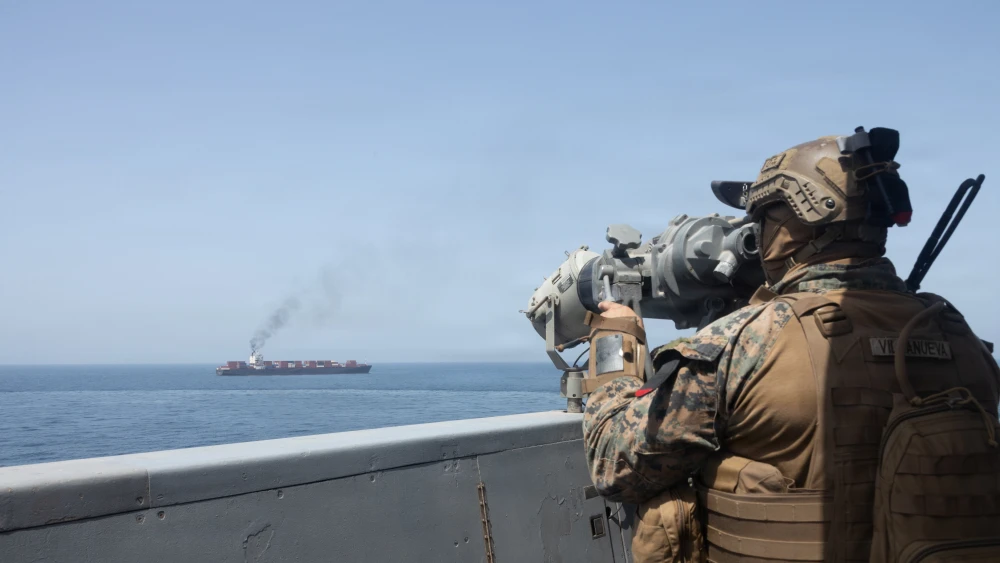
The U.S. Central Command said on Friday that U.S. forces enforcing the blockade of Iran since April 13 have redirected 129 commercial vessels from their route in the Arabian Sea and disabled six more.
CENTCOM posted a photo of the amphibious assault ship USS Tripoli on X as it transits the Arabian Sea to help maintain the blockade.
USS Tripoli (LHA 7) transits the Arabian Sea as the amphibious assault ship supports the ongoing U.S. blockade against Iran. U.S. forces have redirected 129 commercial vessels and disabled 6 to ensure compliance. pic.twitter.com/dxqiwk53YS
— U.S. Central Command (@CENTCOM) June 5, 2026
Meanwhile, CENTCOM said in a separate post that its commander, Adm. Brad Cooper, met with senior leaders from Bahrain, Qatar, Kuwait and Jordan during a recent visit to the Middle East.
Cooper also met with deployed U.S. service members, recognized exceptional performers and presided over the leadership transition for U.S. Army Central—the echelon above corps for the army component of CENTCOM—the statement continued.
During a recent trip to the Middle East, Adm. Brad Cooper, CENTCOM commander, met with senior leaders from Bahrain, Qatar, Kuwait and Jordan. He also met with deployed U.S. service members, recognized exceptional performers, and presided over the leadership transition for U.S.… pic.twitter.com/avR2YTVy4O
— U.S. Central Command (@CENTCOM) June 5, 2026