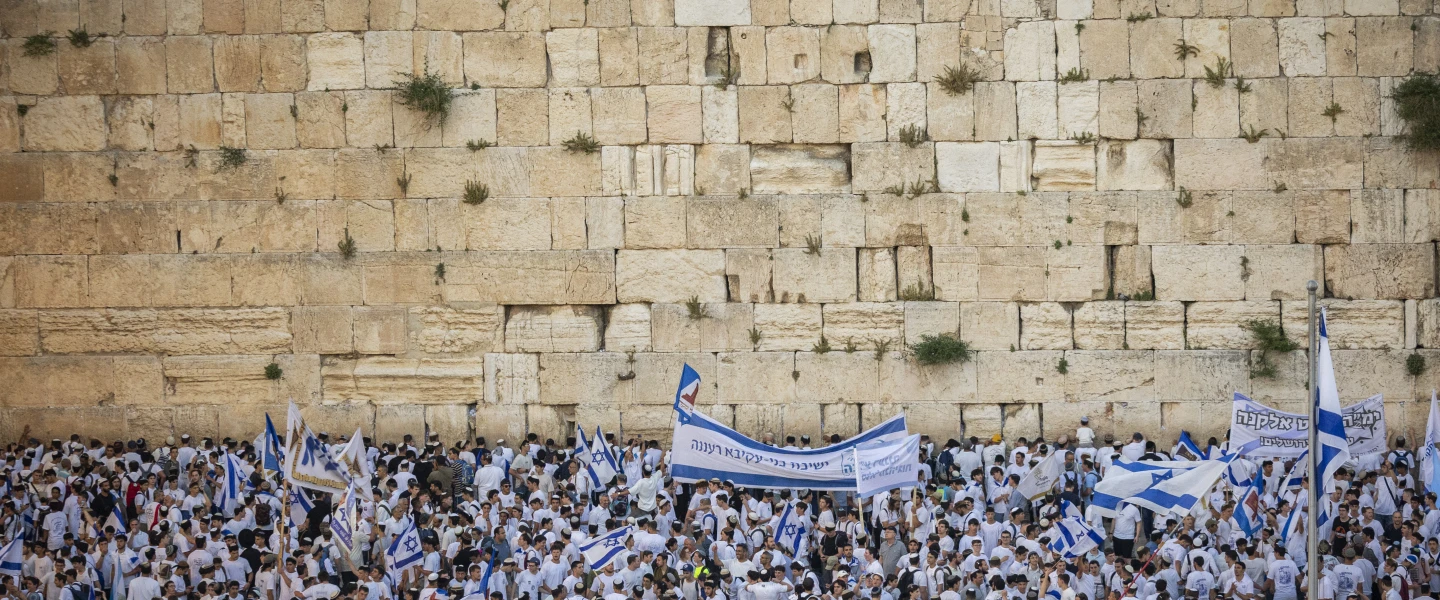
As Israel prepares to mark the reunification of Jerusalem in the Six-Day War on June 7, the Tower of David Jerusalem Museum is asking the public to help uncover a visual record of one of Judaism’s most cherished sites—the Western Wall.
The museum has launched a nationwide appeal for photographs, postcards and other visual materials documenting the Kotel from the earliest days of photography through 1968, ahead of a major exhibition to open in 2027, on the 60th anniversary of the war.
The exhibition, titled “Eyes on the Wall,” will be the first large-scale museum exhibition dedicated entirely to the Western Wall. Curated by Shimon Lev with associate curator Yael Brandt, it will explore nearly 2,000 years of history through the experiences of worshipers, pilgrims, visitors and photographers who documented the site across generations.
Museum officials are encouraging the public to search family albums, private archives, attics, drawers and storage boxes for images that may have been forgotten over time.
While the Kotel is now among the most photographed and recognizable landmarks in the world, visual documentation from earlier decades remains surprisingly incomplete, the Tower of David said in a press release on Tuesday.

Rare photographs
One discovery has already demonstrated the potential value of such contributions.
Last year, Professor David O. Freedman found a long-forgotten photograph album while searching through the basement of his parents’ home in Montreal. The album had belonged to his grandfather, Dr. Abraham Orkin Freedman, a Canadian Zionist physician who lived in Jerusalem during the 1920s and documented the city, its residents and the Western Wall while volunteering as a doctor.

“One day last year, when rummaging through the basement of my parents’ home to find some family photographs, I found this album,” Freedman said. “I felt like I struck gold. This album had likely been undisturbed since at least 1961, when my grandfather, A.O. Freedman, died.
“As I turned the pages, I realized I was looking at extraordinary images of Jerusalem, its people, and daily life from over a century ago. I immediately understood their historical value and we decided to gift the album for safekeeping to the Tower of David Jerusalem Museum for research and the enjoyment of others. The album has found a new home, not many meters from where my grandfather once stood.”
Photographs of the Western Wall from Freedman’s album will be included in the exhibition.

‘The Temple Mount is in our hands’
Lev said the museum seeks many more such discoveries.
“We hope to receive more photographs like that of Dr. A.O. Freedman—images taken simply as part of a personal visual chronicle of a journey to Jerusalem, which a century later became part of our shared national archive,” he said.
“There is something profoundly moving in the moment when an intimate private photograph transcends its original purpose and becomes an important historical testimony—here preserving not only the stones of the Western Wall, but the human experience of encountering it across generations.”
The exhibition is the culmination of three years of research and will examine how the Western Wall evolved from a sacred remnant of the Second Temple into a central symbol of Jewish identity and national memory.

The public appeal was made just days before the 59th anniversary of June 7, 1967, when IDF paratroop commander Mordechai “Motta” Gur famously declared, “Har HaBayit BeYadeinu” (“The Temple Mount is in our hands”), a moment that became one of the defining symbols of Jerusalem’s reunification during the Six-Day War.
“Through this initiative, the museum seeks to uncover additional visual testimonies—images that capture the Western Wall and its surrounding environment during a period of profound change,” Lev said. “The Tower of David Jerusalem Museum invites you to join us in this collective effort—to open drawers, revisit albums and rediscover the visual heritage that connects personal memory with the shared history of the Western Wall.”
Submissions and inquiries can be sent to exhibitions@tod.org.il.