Newsletter
Newsletter Support JNS

Multiple rounds of Israeli elections give Palestinians multimillion-dollar boon

While the majority of Palestinians who work in Israel are not eligible to vote, they nevertheless enjoy paid time off on election day. As one Palestinian in Ramallah put it, “as far as we are concerned, Israel can hold elections every month.”

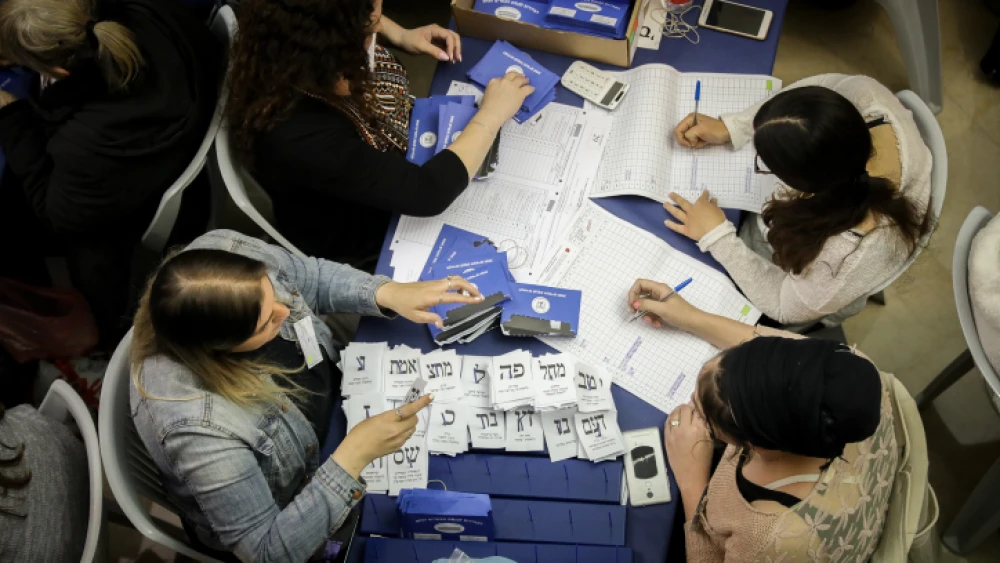
The ballots of soldiers and absentee voters are counted the day after national elections, on April 10, 2019. Photo by Noam Revkin Fenton/Flash90.

According to Israeli law, election day is a sabbatical day, and as a result, most workers are able to take the day off at their employer’s expense. Those who choose to work are paid double, as is customary on Shabbat and holidays.

It seems that now, as a result of Israel holding two elections within a six-month period, Palestinian employed in Israel are set to reap tens of millions of shekels in direct and indirect income.

According to the United Nation’s International Labor Organization, some 127,000 Palestinians are employed in the Israeli labor market. Although a majority of these workers are ineligible to vote in Israel, they will nevertheless enjoy the sabbatical day afforded to employees by Israeli law.

The average Palestinian worker in the Israeli labor market earns NIS 291.55 ($81.52) a day. In total, Palestinian workers earn NIS 37 million ($10 million) every day. Assuming the election is a sabbatical day, then in addition to the April 9 election sabbatical Israeli business will have paid Palestinian workers an extra NIS 70 million ($19.5 million).

“Business was also good on the last election day in Israel,” a Palestinian merchant in a shopping mall in Ramallah told Israeli daily Israel Hayom. “Many Palestinians who work in Israel and had a vacation day came with their family and kids, and the stores were full. As far as we are concerned, Israel can hold elections every month,” he said.

This article first appeared in Israel Hayom.

“We will not allow hatred to dictate whether we remain in New York,” Rivkie Feiner, a board member of the Jewish Federation and Foundation of Rockland County, told JNS. “Our history is defined by resilience, not surrender, and that will not change now.”
“We’re a tiny percentage of the population, yet we’re over 50% of the attacks, and the mayor’s diatribes don’t help,” Rabbi Allen Schwartz of Ohab Zedek, a synagogue the victim attends, told JNS on the fast of Tisha B’Av.
“You know that’s the other Jewish guy named Josh, right?” the New Jersey congressman wrote, after Rep. Summer Lee appeared to confuse him with Pennsylvania Gov. Josh Shapiro.
“Whether operating under the guise of charities, businesses or underground financial networks, those who enable Hamas will be exposed, sanctioned and held accountable,” the U.S. treasury secretary stated.
The United Nations agency “teaches Palestinian children to hate Jews, essentially functioning as a child soldier factory,” stated Rep. Chris Smith, who introduced the legislation.
“This reward offer is part of a broader effort to solicit information leading to the disruption of the financial mechanisms” of the Islamic Revolutionary Guard Corps, the State Department said.