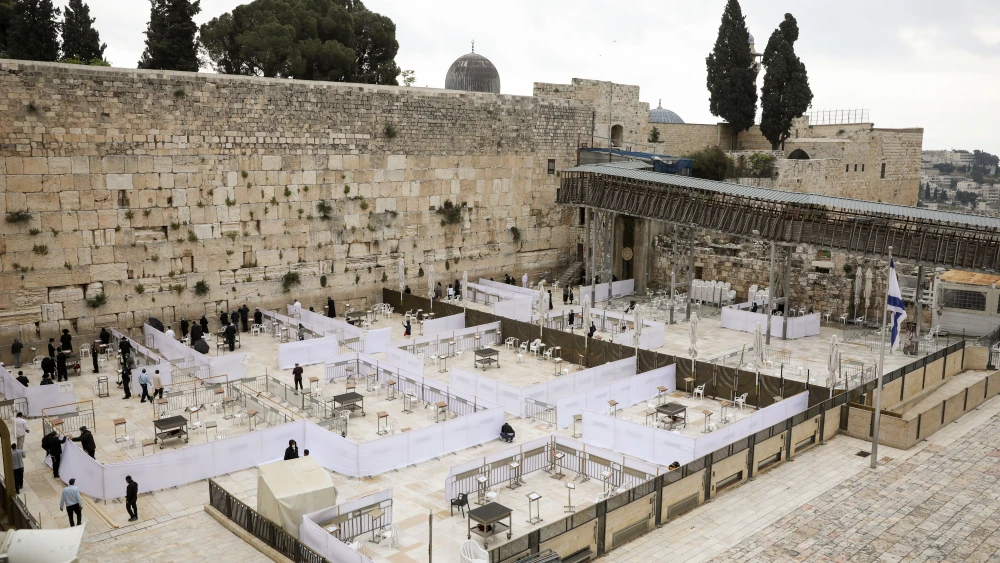
The Western Wall Plaza in Jerusalem re-opened to worshippers on Tuesday morning after the Israeli government announced a softening of its social-distancing orders across the country.
Prayer at the Western Wall since the start of the coronavirus pandemic was limited to those living in the Old City of Jerusalem, and to groups of only 10, and then 19, people at any one given time.
The Western Wall Heritage Foundation, which manages the site, confirmed that worshippers can return to visiting the sacred site and pray in front of it “while keeping to the Health Ministry restrictions.”
“The Western Wall prayer plazas will be divided into as many prayer areas as possible in the given area and in accordance with the regulations,” the Foundation explained on its website. “For the next few days, up to 300 worshippers will be allowed to come to the Western Wall plaza simultaneously, contingent on them wearing masks. Should the prayer areas all get full, worshippers will be requested to wait outside the entrances to the Western Wall, with the required distances between them, until space becomes available.”
Celebrations at the Western Wall, such as bar and bat mitzvahs, can be held “in accordance with regulations.”
The Western Wall Tunnels, however, remain closed until further notice.