


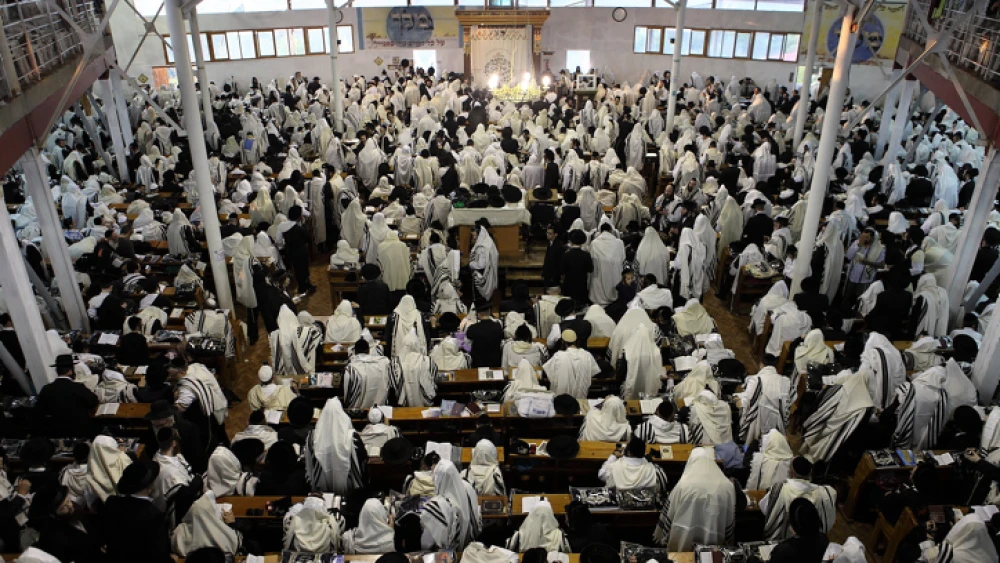
Thousands of Israeli pilgrims traveling to the burial site of a revered rabbi in Ukraine ahead of Rosh Hashanah next month will not be permitted to connect through Moldova and will be rerouted via Romania and Poland instead, a trip organizer said on Sunday.
The annual High Holidays pilgrimage, which is taking place despite the Russo-Ukrainian War, is being made even more difficult due to a decision by Moldovan authorities last week not to allow Israeli charter flights to land in their country after months of negotiations on the issue.
Tens of thousands of mostly Chassidic Jews from Israel and other countries make the trek to Uman every year ahead of Rosh Hashanah to visit the burial site of Rabbi Nachman of Breslov (1772-1810), the founder of the Breslov Chassidic sect.
The predominantly male pilgrimages to Uman, located about 125 miles south of Kyiv, continued last year despite travel warnings issued by the Israeli government and the pleas of Ukrainian officials to stay away because of the war with Russia.
Moldovan officials cited security concerns at the airport for the decision.
“We feel exploited by the Moldovans after months of talks on the issue,” Levi Yitzhak Gvirtz of the Ihud Breslev in Uman told JNS on Sunday.
He said that about 15,000 passengers on charter flights were affected by the change, about half of the roughly 30,000 visitors expected to make the pilgrimage his year. The majority of the worshippers come from Israel.
The organizers are now working to reroute all the pilgrims via Romania and Poland.
There are no flights to and from Ukraine because of the war.
“In the end, people will not give up on the trip, only now they will be more uncomfortable and that’s a shame,” Gvirtz said.
The pilgrimage issue came up in a call last month between the Israeli and Ukrainian leaders.
Last month, the United States issued a travel warning against American citizens going to Uman because of the security situation in Ukraine.
Last year, Prime Minister Benjamin Netanyahu cautioned Israelis against traveling to Uman for the High Holidays, saying they must take full responsibility for their own safety.
“God has not always protected us, both on Ukrainian and other European soil,” Netanyahu said.



