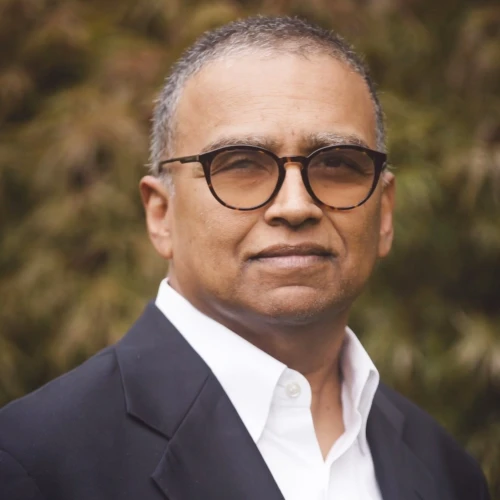
According to JNS editor-in-chief Jonathan Tobin, understanding the anomalous position of the kingdom of Jordan requires balancing distaste for its strident public advocacy against Israel against its role as a strategic ally. Tobin is joined in this week’s episode of “Think Twice” by journalist Aaron Magid, author of the biography The Most American King: Abdullah of Jordan.
Magid, who worked in Amman for several years as a reporter, says that it’s hard to measure the popularity of Jordan’s King Abdullah since the Jordanian people have no say in their government.
But he points out that Abdullah has skillfully navigated a dangerous political and strategic landscape by seeking to mollify the approximately half of his country’s population that is Palestinian with criticisms of Israel. At the same time, the half-British and American-educated king (who at the time of his accession to the throne in 1999 spoke better English than Arabic) has managed to closely align his country with the United States. And he is dependent on the close cooperation between his security services and those of the United States and Israel, without which it is unlikely that he would still be on the throne.
Magid points out that the regime in Jordan is far less repressive than other Arab and Muslim countries, but it is not a democracy. Abdullah has maintained the peace treaty with Israel that his father, King Hussein, agreed to in 1994, despite the fact that the overwhelming majority of Jordanians, both Palestinian Arabs and “East Bankers,” would prefer that it be abrogated. Magid stated that hatred for Israel and Jews is pervasive in Jordanian society, with copies of Adolf Hitler’s Mein Kampf being sold on the streets of its cities.
By contrast, the sale of Magid’s book, which is by no means highly critical of Abdullah, is banned in the kingdom.
Magid says the reason why Abdullah managed to hold onto power during the Arab Spring protests of 2011 is that, unlike Egyptian dictator Hosni Mubarak, the United States didn’t discard him. To that end, Jordan receives $1.45 billion a year in aid from the United States. In return for that money, Amman allows American troops to be stationed on its territory and assists Washington in dealing with threats, including shooting down Iranian missiles that were aimed at Israel in 2024.
While friends of Israel had good reason to be outraged over some of the statements Jordan has made about the Palestinian war on Israel, such as Queen Rania’s denial of the atrocities committed on Oct. 7, 2023, Magid says that is part of the price Jerusalem pays for having a tacit ally on its border. He also notes that the reason why Jordan hasn’t extradited Palestinian terrorist murderer Ahlam Tamimi to the United States is because the U.S. powers that be have never prioritized the issue. That has allowed Tamimi—the mastermind of the Sbarro pizzeria bombing in Jerusalem in 2001 that led to the murder of 16 people, including 15-year-old American Malki Roth—to evade justice.
Listen/Subscribe to weekly episodes on Spotify, Apple Podcasts, YouTube Music, iHeart Radio or wherever you listen to your podcasts.
Watch new episodes every week by subscribing to the JNS YouTube Channel.