Newsletter
Newsletter Support JNS

Mossad chief visits Jordan’s King Abdullah to discuss Israeli annexation

Other than Jordan, the Jewish state maintains a peace treaty with neighboring Egypt, which has also expressed concern over the move.

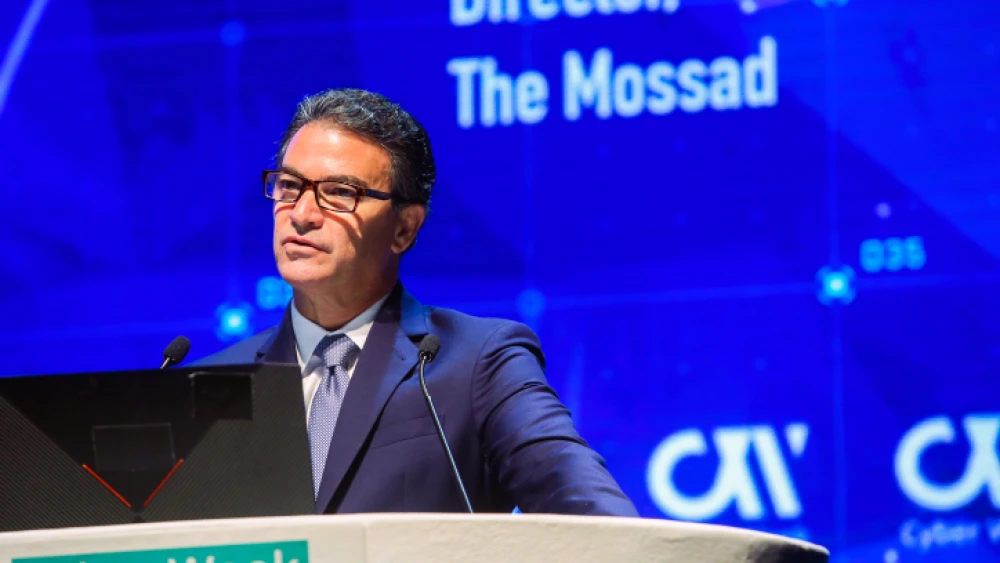
Then-Mossad director Yossi Cohen speaks at a Cyber Week at Tel Aviv University on June 24, 2019. Photo by Flash90.

Mossad chief Yossi Cohen visited King Abdullah of Jordan to discuss Israel’s plan, starting in July, to annex parts of the West Bank, according to Israel’s Channel 13.

Cohen reportedly made the trip last week to the neighboring country, which which it has a peace treaty, to deliver a message from Israeli Prime Minister Benjamin Netanyahu, though the specific details were not revealed.

Along with most of the international community, except for the United States, Jordan has expressed strong opposition to Israel’s intention to annex parts of the West Bank, also known as Judea and Samaria.

In fact, Amman has threatened to cut off diplomatic and economic agreements with Jerusalem if the latter goes ahead with even partial annexation. It has also warned of making null the 1994 peace treaty between the two Middle Eastern countries.

Other than Jordan, Israel maintains a peace treaty with its westernmost neighbor, Egypt, which has also expressed concern regarding the proposed move.

“At a time when some would isolate Israeli academia, UCLA has chosen collaboration,” Eveline Shekhman of the American Jewish Medical Association told JNS.
“The juxtaposition of us being at the United Nations, and all those people walking out while literally their employees helped to perpetuate Oct. 7 was put in a certain frame,” Rabbi Steven Burg of Aish told JNS.
“I want you to listen to my words carefully: One day, and it may not be far away, the Iranian people will be free. Their murderous regime will be toppled by its lies, by its corruption, by its cruelty,” the Israeli prime minister said.
Jason Brodsky, of United Against Nuclear Iran, told JNS that the address carried messages to “the international community, antisemites abroad, state threats against Israel and most especially the Iranian people.”