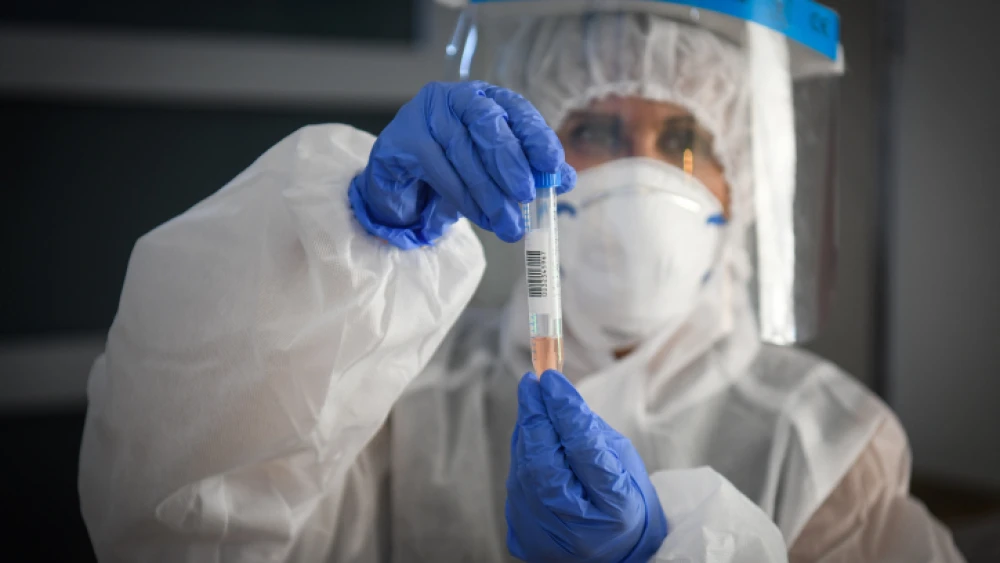
Israel began conducting mass serological testing on Monday to detect COVID-19 antibodies, amid rising concern over a “second wave” of infections.
Around 80,000 tests will be taken across the country, according to a report by Israel’s Channel 12.
Tuesday saw the highest daily rise in COVID-19 cases in the country since April 2. Since Monday at midnight, 714 new cases were confirmed, the third-highest daily tally since the onset of the pandemic in Israel.
It is estimated that the number of those exposed to the virus is 10 times the number actually diagnosed as carriers (24,441), indicating a far greater infection rate than previously thought.
The serological test is not used to diagnose whether or not a person has the disease, but can detect antibodies to it that appear about 21 days after a person has been infected. Those in whom antibodies are found are considered to have been coronavirus carriers, but it is still unclear whether such a person can become infected again or not.
Israel’s Ministry of Health has instructed that those found to have antibodies but who were not previously known to have had the disease will be sent for coronavirus testing.
There may also be people infected with the virus but who do not develop antibodies. However, their numbers in relation to all patients are likely to be low. The sensitivity of the antibody detection test is 95 percent, according to the report.
“This is a very, very important survey,” emphasized Sigal Dadon Levy, head of the Sharon district of Israel’s Maccabi Health Services. “It basically allows us to get information about the true extent of the infection. The purpose of the test is to see if a person has developed antibodies as a result of being exposed to corona.”