
While we celebrate Sukkot in Israel, with our eyes turned inward to our own wars, our own divisions and our own future, something odd has happened in France. Maybe nothing. Maybe a great deal.
For now it’s a noise, not a signal. But some noises announce historic shifts before anyone alive has understood what they heard.
Israeli journalists keep asking me the same thing: How can Europeans watch political Islam gain ground, immigration strain institutions and demographic change accelerate, and do so little about it?
Maybe we’re looking for the reaction in the wrong place. A civilization doesn’t always start by voting differently. Sometimes, it starts by remembering that it has something to hand down, and therefore, something to lose. That may be what France just showed us.
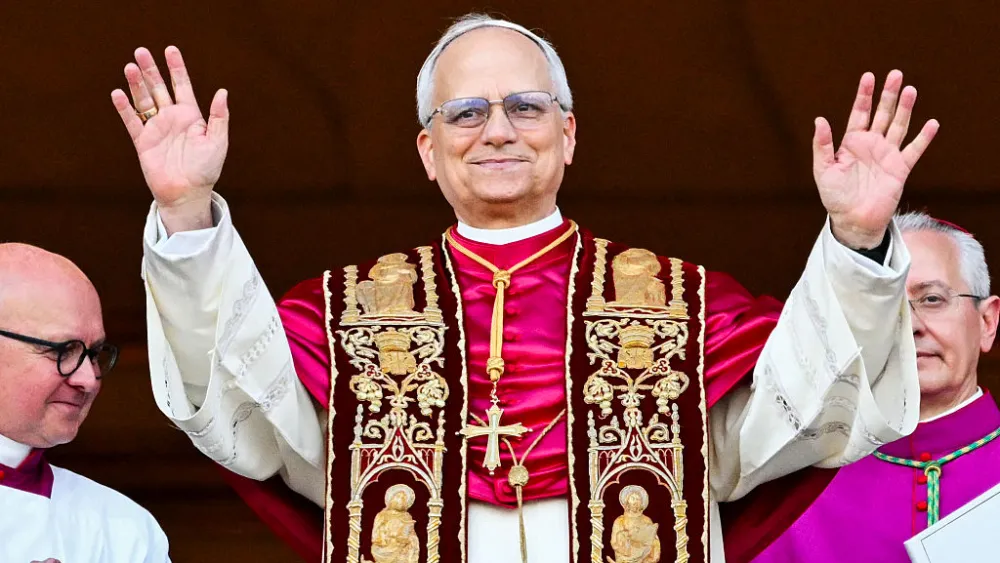
On Sept. 25, several hundred young people set out in procession from the Basilica of Saint-Denis, the burial place of France’s kings, and made their way to the Stade de France, where 80,000 young people joined Pope Leo XIV for a prayer vigil.
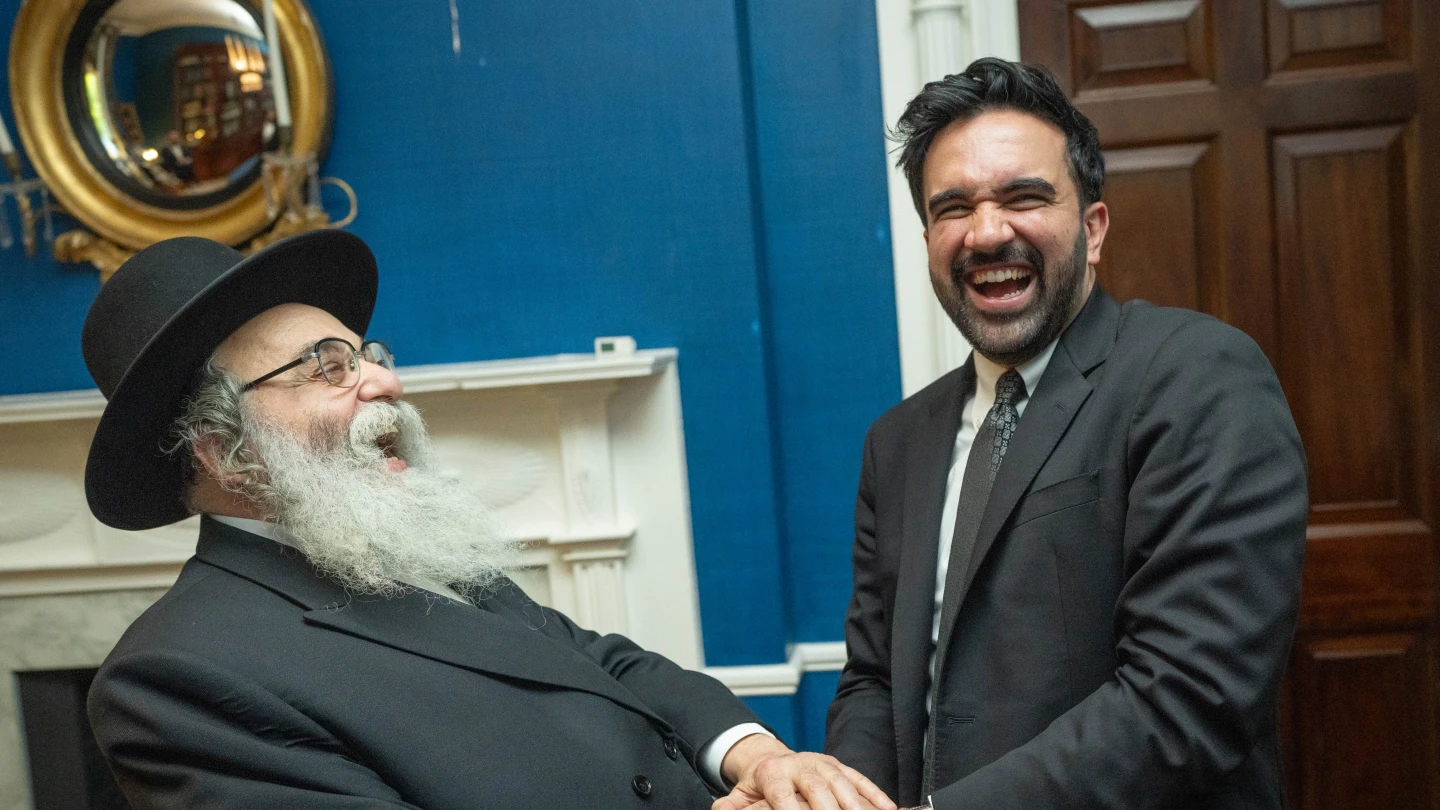
The symbolism was hard to miss. Saint-Denis is a working-class city shaped by immigration and home to a large Muslim community. Its mayor, Bally Bagayoko, is a Muslim, a member of the left-wing La France Insoumise Party and the son of Malian immigrants. He openly champions the “new France” that immigration has created.
So, a procession rooted in France’s Christian inheritance, setting out quite literally from its kings’ tombs, passed through one of the country’s emblematic multicultural cities on its way to a packed stadium.
The next day, the scale changed. Roughly 800,000 people gathered in central Paris, from the Place de la Concorde up the Champs-Élysées, for the pope’s mass.
That doesn’t mean France has become Catholic again or that its politics have shifted. But in one of the most secular countries in the West, a public turnout like that deserves a second look.
It matters all the more in a country where troubled neighborhoods struggle with drug trafficking, black-market economies, violence and weakened state authority. Saint-Denis packs many of France’s social tensions into a few square miles.
It would be wrong, however, to cast Leo as the pope of closed borders. Like his predecessor, Pope Francis, he defends welcoming and integrating migrants. But he adds another question: What is Europe, exactly? What should it pass on if it wants to welcome others without dissolving?
In Metz, at a gathering on Europe’s roots, Leo said that one cannot speak of Europe without speaking of Christianity. French President Emmanuel Macron, speaking before him, described Europe as having a “Greco-Roman and Judeo-Christian foundation.” Athens, Rome and Jerusalem are a civilizational vocabulary that is returning to a Europe that had gotten used to talking about markets, rights, regulations and procedures.
Identities come into focus when they feel exposed. Sometimes, we discover who we are when we imagine that we might cease to be.
The message isn’t “shut the door.” It’s subtler: You can welcome the other without ceasing to be yourself. The awakening in question isn’t electoral, and it isn’t necessarily religious. It is first of all an awakening to vulnerability.
Europe has been here before. The word “Europe” is ancient, of course. But after Constantinople fell in 1453, with the Ottomans advancing, the future Pope Pius II, Enea Silvio Piccolomini, increasingly invoked “Europa” and even the idea of “Europeans,” to name a community worth defending. Old Christendom was becoming a European consciousness. Threat gave identity its density.
Identities come into focus when they feel exposed. Sometimes, we discover who we are when we imagine that we might cease to be.
France is not Europe. But the French episode reads differently next to what’s happening farther east.
War has returned to the continent. Russia has reminded Europeans that borders aren’t just legal lines. The Baltic states live with a concrete military threat. The Czech Republic maintains unusually close ties with Israel. Slovenia has recently renewed political and economic dialogue with Jerusalem. These countries don’t agree with Israel on everything. But those who feel vulnerable may grasp certain Israeli reflexes more easily.
This is where a possible European awakening gets interesting for Jews.
The postwar project of European integration was built in part on distrust of unconstrained nationalism. After the catastrophes of the 20th century, borders, military power and collective particularism became suspect. The European project was partly about taming national passions through law, trade and shared institutions.
Israel, born at almost the same moment, drew nearly the opposite lesson. For Jews, the century hadn’t proved that the nation-state should be transcended. It proved that the Jews needed one of their own. Survival demanded sovereignty, defended borders, military strength and the handing down of a particular identity.
Some of the friction between Israel and Western Europe may spring from that gap. What some European critics saw as an Israeli anachronism—attachment to land, military power, sovereignty and a specific national memory—Israelis saw as the bare minimum for staying alive.
But vulnerability changes how you look at things. When war seems impossible, an army looks quaint. When borders feel permanent, someone who wants to defend them seems obsessive. When your own identity feels safe, another people’s particularism looks archaic.
Then comes the day you learn that none of it is guaranteed. A border can be crossed. A population can be attacked. A culture can discover that its continuity is not automatic. An identity survives only if someone decides to pass it on, and it survives an attack only if someone is willing to defend it.
Israelis have never really forgotten that. Some Europeans may be relearning it.
So, is Europe waking up? It’s far too early to say. Some 800,000 people in Paris don’t erase decades of secularization or the continent’s demographic transformation. A papal visit isn’t a political revolution.
For now, it’s just a faint stirring. But if that stirring heralds a Western Europe rediscovering that civilizations are mortal, then Europe might one day look at Israel differently. Not as the awkward relic of an age of borders, armies and national identities Europe thought it had outgrown, but as a people who grasped, before Europe did, that an identity you don’t defend can vanish.