



Making unequal things equal is an injustice. In politics, it can become a national security doctrine, with consequences considerably more deleterious than an intellectual error. What happens when democratic leaders cease distinguishing between those who defend their country and those who attack it?
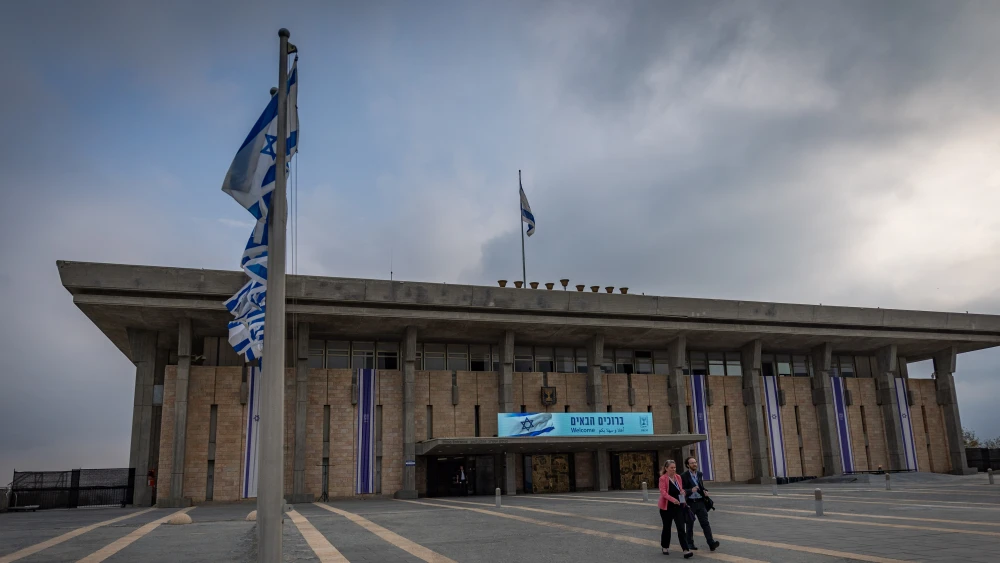
Israel’s coalition negotiations give that question immediate significance. The election produced 53 seats for Benjamin Netanyahu’s bloc, 48 for its principal opponents and 19 for Arab parties. Neither principal camp commands the 61 seats required for a majority. Parliamentary arithmetic has magnified the influence of parties whose positions on Israel’s identity and enemies demand examination.
Arab citizenship is no impediment to legitimate political participation. Arab citizens possess the same electoral rights as Jewish citizens. Those rights do not oblige other parties to accept their representatives as governing partners, any more than electoral success entitles any Jewish party to a Cabinet post. Coalition membership requires agreement about what the government exists to preserve.
The distinction is elementary. A citizen’s right to representation does not establish a party’s suitability for a particular coalition. Every prospective partner brings commitments that others must assess. Why should positions on terrorism, sovereignty and national defense escape scrutiny merely because their proponents represent a minority?
Gadi Eisenkot has specified conditions including recognition of Israel as Jewish and democratic, military or civilian service and acceptance that Hamas is a terrorist organization that must be dismantled. Can a government defend its citizens while depending on partners who reject its declared security objectives?
Arab parties and coalition responsibility
The parties must be judged individually. Mansour Abbas condemned the Oct. 7 massacre. Ra’am participated in the Bennett-Lapid government, and its participation did not prevent military operations. These facts militate against treating every Arab party as an identical security threat. They do not settle what commitments should bind prospective partners today.
That precedent deserves more than a dismissive sentence. Cooperation can serve national cohesion, and representatives who assume responsibility for government may strengthen their constituents’ stake in its success. The question is whether such cooperation rests on durable commitments or on agreements that become untenable when the next security crisis arrives.
The same i24NEWS analysis reported Ra’am candidate Yasser Hujirat describing Hamas partly as a charitable organization when asked whether it was a terrorist organization. What reassurance does that answer offer citizens whose families Hamas murdered? An organization’s welfare activities cannot absolve its deliberate slaughter of civilians. Parliamentary respectability cannot make that distinction dispensable.
Condemning a massacre, identifying its perpetrator as a terrorist organization and supporting the destruction of its military capacity are separate commitments. A coalition charged with preventing another massacre must know where its partners stand on all three. Sympathy for Palestinian civilians does not require preserving Hamas’s ability to terrorize Israeli civilians.
The problem extends beyond evasive terminology. In 2022, Efraim Karsh documented Balad and Hadash’s opposition to the Arab League’s designation of Hezbollah as a terrorist organization. Their stated defense of “resistance” deserves scrutiny whenever successors seek influence over Israeli security policy. Historical conduct requires current answers; neither silence nor dissimulation supplies them.
Opposition to a government’s military decisions is legitimate. Support for an organization conducting attacks against one’s country raises a different issue. The distinction turns on conduct and declared allegiance. It should apply to every party seeking power, whatever its religion, ethnicity or position on Netanyahu.
Foreign financing and democratic legitimacy
Foreign financing raises another question. Election authorities referred suspicions of outside interference for investigation. Qatar denied involvement. On Nov. 1, election chairman Noam Sohlberg affirmed that the results reflected voters’ wishes and said the suspicions, even if substantiated, would not invalidate the outcome as a whole.
That assessment does not remove the obligation to investigate. If hostile foreign money financed electoral inducements, investigators must establish its origin, intermediaries and beneficiaries. A democracy cannot permit a foreign treasury to purchase domestic leverage through venal intermediaries. Equally, suspicions cannot justify treating lawful voters as accomplices or declaring an election stolen before the evidence establishes it.
The financing question must remain distinct from the coalition question. A party might present unacceptable security positions without receiving a foreign penny. An unlawful funding operation might warrant prosecution without overturning an election. Combining every concern into one accusation makes each harder to investigate and easier to dismiss.
The American parallel
Americans confront a related failure of discrimination. Asked whether Israel or Iran posed the greater threat, Michigan Senate candidate Abdul El-Sayed answered that both had “proven dangerous in their own way.” He subsequently condemned Iranian actions and acknowledged Iran as an enemy combatant. His refusal to identify the greater threat nevertheless blurred a fundamental strategic distinction.
Israel is America’s military partner. Iran is the adversary against which their forces operated. An American military account described an Israeli opening strike enabled by American intelligence, followed by synchronized American operations. Whatever one thinks of the campaign, this was coordinated military action authorized by an American president. Portraying Washington merely as Israel’s instrument diminishes American agency while obscuring the adversary’s responsibility.
Americans are entitled to dispute their president’s decision. They can question the operation’s objectives, costs and prospects. Those are arguments about American policy. The suggestion that Israel simply dragged America into war substitutes an accusation against the ally for an examination of the decisions made in Washington.
Allies can commit errors. Governments can pursue misguided wars. Neither proposition makes an ally and an adversary strategically interchangeable. Judgment requires weighing purposes, conduct and obligations rather than distributing blame equally to achieve the appearance of impartiality.
The obligations of democracy
The broader democratic lesson concerns allegiance and conduct, whether the actors are native-born or immigrants. Different origins and opinions are compatible with citizenship. Support for organizations attacking fellow citizens presents another matter. Political freedom cannot survive indefinitely without sufficient commitment to the institutions protecting it.
A democracy need not demand affection for every national tradition. It must require those exercising public power to uphold the constitutional order, protect equal citizenship and reject political violence. Otherwise, the machinery of consent can empower movements whose success would destroy the freedom of those who opposed them.
The obligation to protect citizens includes Arab citizens, who also face the consequences of terrorism and war. Security cannot be reduced to an ethnic possession. A government that protects a Jewish family from a rocket owes the same protection to an Arab family. Representatives seeking influence over that government should be expected to defend its capacity to protect both. This is a reciprocal civic obligation, and it offers a clearer standard for partnership than either blanket exclusion or the assumption that every electoral alliance is acceptable.
Before exchanging parliamentary support for executive power, coalition negotiators should publish their agreements on counterterrorism, defense appropriations and foreign funding. Voters deserve to know what has been promised, what has been conceded and whether security decisions will become bargaining counters.
An external support arrangement does not remove the difficulty. A party need not occupy a ministry to threaten a government’s survival. If its votes sustain the budget or defeat a confidence motion, its leverage remains. What can that leverage extract when military necessity collides with parliamentary convenience?
The ambition to replace a prime minister is legitimate. Making national defense dependent on those who support the country’s enemies demands a different justification. What office could compensate for losing the capacity to preserve the country it serves?