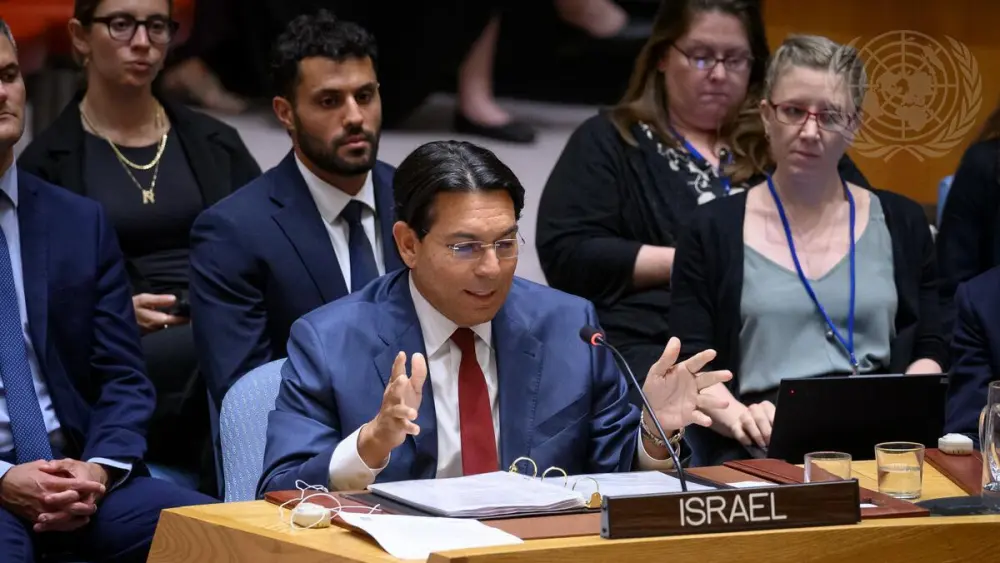
A recent meeting between the Israeli and Venezuelan ambassadors to the United Nations included discussions about Caracas’ potential use of Israeli technology in several sectors, JNS has learned.
Danny Danon, Israel’s U.N. ambassador, wrote on Monday that he had met with his Venezuelan counterpart, Coromoto Godoy Calderón.
“Israel and Venezuela will continue working to deepen our cooperation, both internationally and at the United Nations,” Danon stated.
The meeting came as Jerusalem and Caracas move to restore ties after a 17-year diplomatic rupture. On Aug. 11, the two countries announced an agreement to establish a mechanism for providing consular services to their citizens, as well as to continue technical cooperation stemming from Israel’s emergency response to the devastating earthquakes that struck Venezuela on June 24.
The countries broke diplomatic relations in 2009 under Venezuelan President Hugo Chávez, who severed ties in protest of Israel’s military operation against Hamas in the Gaza Strip. Chávez subsequently deepened Venezuela’s alliance with Iran, a policy his successor, Nicolás Maduro, continued.
Relations began to thaw after the U.S. captured Maduro in January. Venezuelan Vice President Delcy Rodríguez subsequently became Venezuela’s interim president, with Caracas moving closer to Washington and away from its previous alignment with Iran.
Danon wrote that he and Godoy Calderón “discussed strengthening relations between our countries, renewing consular ties, and the Israeli assistance sent to Venezuela following the earthquake.” He added that “Israel and Venezuela will continue working to deepen our cooperation, both internationally and at the United Nations.”
JNS learned that the talks also focused on expanding economic cooperation by identifying areas of mutual interest and exploring potential partnerships in which Israeli expertise and innovation could contribute to Venezuela’s economic development.
The sides discussed the possibility of Venezuela adopting Israeli technologies in areas including agriculture, water management, energy, health care and advanced technologies.