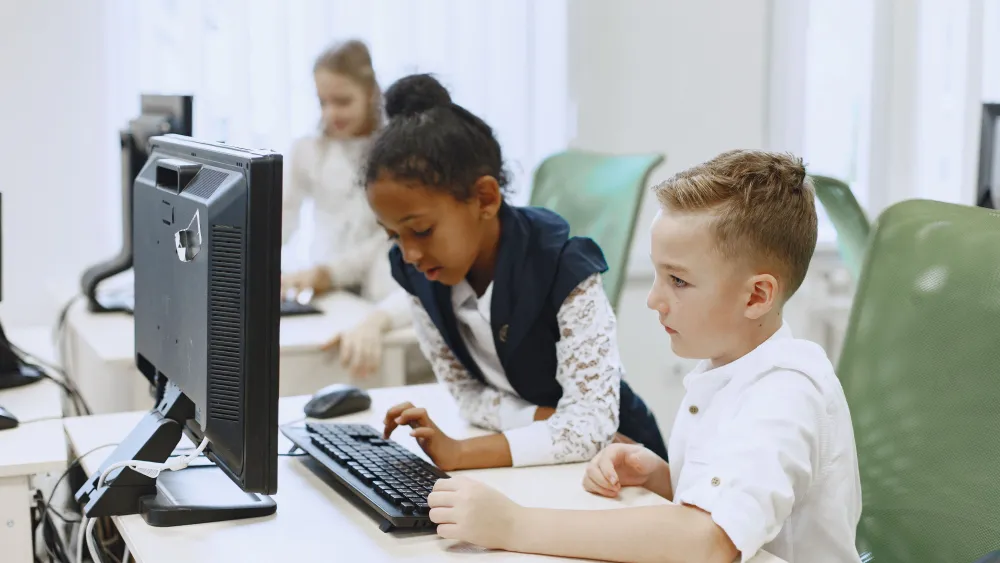
New York City Mayor Zohran Mamdani announced on Wednesday a one-year moratorium on student-facing generative artificial intelligence tools for public-school students from 2-K through eighth grade, as part of a new citywide policy governing AI use in schools.
The policy, which the mayor announced at the Brooklyn STEAM Center, will allow high school students limited use of AI through five approved pilot programs under direct teacher supervision. The policy affects roughly 600,000 students and will apply during the 2026-27 school year.
“Children need their teachers and human connection in order to learn and in order to grow,” Mamdani said. “They need to develop skills alongside their peers, build relationships with their teachers, and wrestle with tough problems on their own.”
“I have yet to see a study showing that AI is beneficial for students in elementary and middle school, with the exception, of course, of research sponsored by the very corporations that stand to profit,” the mayor said.
High school students participating in the AI pilots will be limited to a maximum of 45 minutes of AI use per week under direct teacher supervision. The approved programs, including Quill, Edia, Brisk Teaching, Playlab and Intel AI-Ready Schools, do not include chatbots such as ChatGPT or Claude.
The city will also stop using or disable AI features in more than 38 previously approved education programs that officials said do not meet its new safety and oversight standards.
Kamar Samuels, chancellor of New York City Public Schools, said every high school student will be required to complete two 45-minute AI-literacy modules each year covering topics including misinformation, overreliance on AI and critical thinking. Students participating in AI pilots or career-readiness programs will receive more extensive instruction.
“I don’t want technology to do our students’ thinking for them,” Samuels said. “I don’t want new technologies introduced into classrooms where our parents and our educators do not understand them.”
The policy includes exceptions for certain assistive technologies used by students with disabilities and for technology supporting language access for multilingual learners. Teachers may continue to use approved AI tools for instructional planning and operational work, but not for grading, behavior monitoring or decisions involving student placement, promotion or graduation.
The city will evaluate the policy throughout the school year and use feedback from students, parents and educators to help shape its approach to AI in schools for the 2027-28 school year.
“We will embrace new technology, but only when it serves our students,” Mamdani said. “Kids need to learn to think for themselves.”