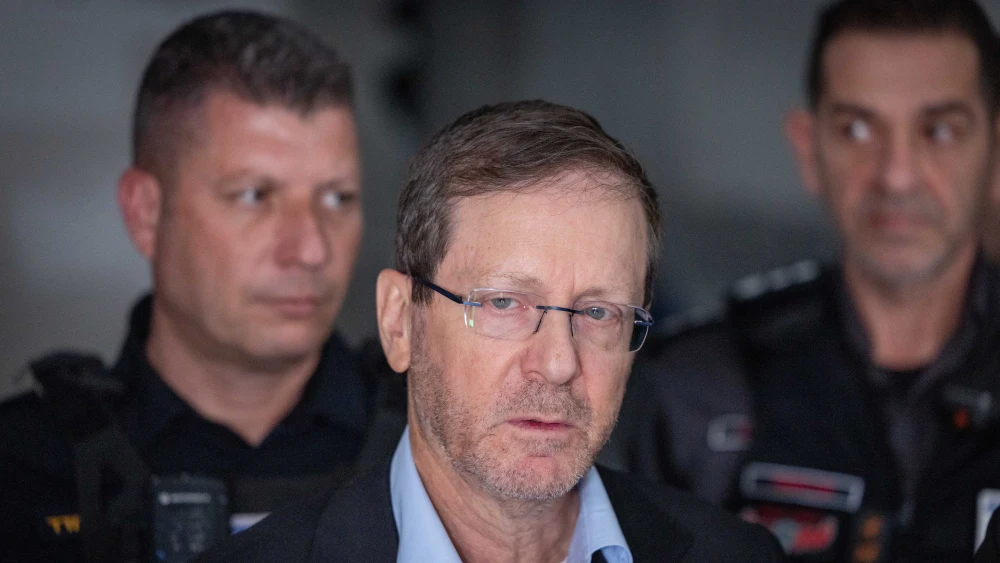
The office of Israeli President Isaac Herzog on Sunday requested supplemental information regarding the March 24 legal opinion submitted to it by Heritage Minister Amichai Eliyahu recommending that Prime Minister Benjamin Netanyahu be granted a pardon in his corruption cases.
Herzog’s legal adviser, Michal Tzuk, asked for data and information from the Justice Ministry’s Pardons Department regarding precedents in which pardons were granted before a trial had been concluded, Israel’s Channel 13 reported. She also asked the Pardons Department to address gaps between various opinions submitted in the case.
The President’s Office emphasized that the request did not reflect any position taken regarding Eliyahu’s opinion. Worth noting, however, is that Eliyahu made his recommendation to pardon Netanyahu despite opposition from the Pardons Department.
Defending his opinion, Eliyahu posted to X on March 20 that he had “a long series of consultations” with various legal experts, opinion leaders, religious authorities and others.
Normally, the justice minister handles such cases, but Eliyahu submitted the opinion in place of Justice Minister Yariv Levin, who recused himself on March 10, citing a conflict of interest. Levin said he has been “very close to the prime minister for many years,” served as a witness in Netanyahu’s trial, and is the No. 2-ranked member in the Likud Party.
Herzog faces pressure to grant a pardon from U.S. President Donald Trump.
On March 5, Trump said of Herzog, “I think the people of Israel should really shame him. He’s disgraceful for not giving it,” referring to a pardon. Herzog “promised me five times that he would give Bibi a pardon,” Trump said, adding that he would refuse to meet with the Israeli president until the pardon was granted.
On Feb. 12, Trump said that the Israeli president “should be ashamed of himself,” adding that Herzog had been holding the issue over Netanyahu “for a year” and should stop using it as leverage. Before that, on Oct. 13 of last year, while addressing the Knesset, Trump called on Herzog to grant a pardon. Trump followed that up with a letter to the Israeli president on Nov. 12.
Herzog’s office pushed back against Trump’s comments on March 5, saying Israel “is a sovereign state governed by the rule of law. ... [T]he president will examine the request according to the law, the good of the country and according to his conscience, without any influence from external or internal pressures of any kind.”