


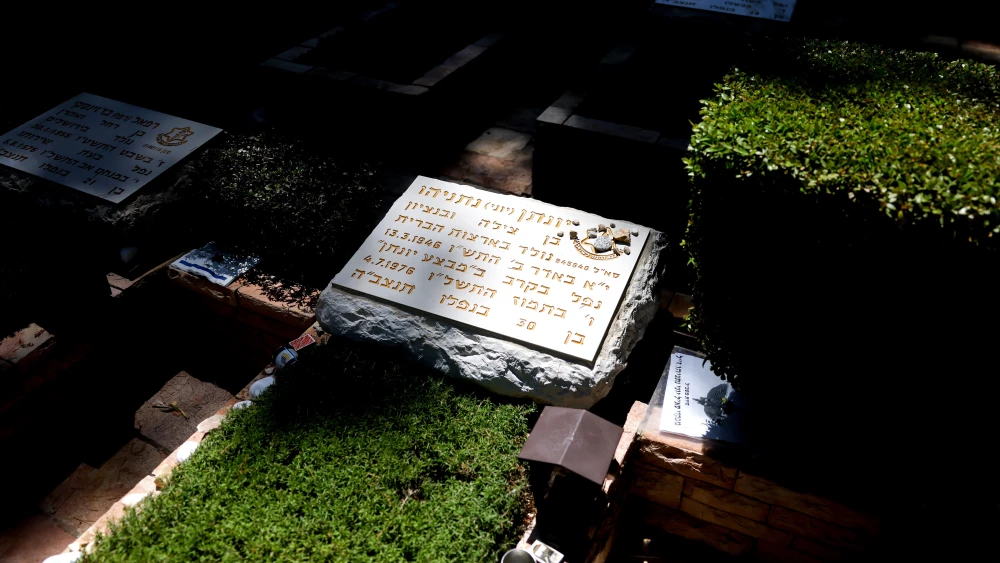
Shortly after his brother Jonathan “Yoni” Netanyahu was killed during the Israeli counter-terror operation in Entebbe, Uganda, to liberate hostages from Palestinian and German terrorists, Benjamin Netanyahu met with a British television producer, the Israeli prime minister wrote in an introduction to a book of his brother’s letters published in 2001.
He and the producer talked about a “dramatization of my brother’s life,” Netanyahu wrote in his “Ode to Yoni,” in the foreword to “The Letters of Jonathan Netanyahu: The Commander of the Entebbe Rescue Force.”
“After reviewing the events of Yoni’s life and death, the producer said to me, ‘Leave it alone. A great biography of a great life needs the perspective of decades,’” Netanyahu wrote. “Two decades have passed since that day, and each year I am reminded of the wisdom of that advice.”
“For Yoni’s image grows with the passage of time, as does the appreciation of his unique character,” Netanyahu wrote.
With the 50th anniversary of the 1976 Operation Entebbe marked early this month on July 3-4, JNS asked the Israeli prime minister if he had any new thoughts about his brother’s legacy, some 25 years after he penned the “ode” to Yoni.
“It’s certainly true in Israel—recognizes his sacrifice and his contribution,” Netanyahu told JNS.
“There’s not a day I don’t think about him,” he told JNS. “There’s not a day that I don’t try to consult with him and with my father.”
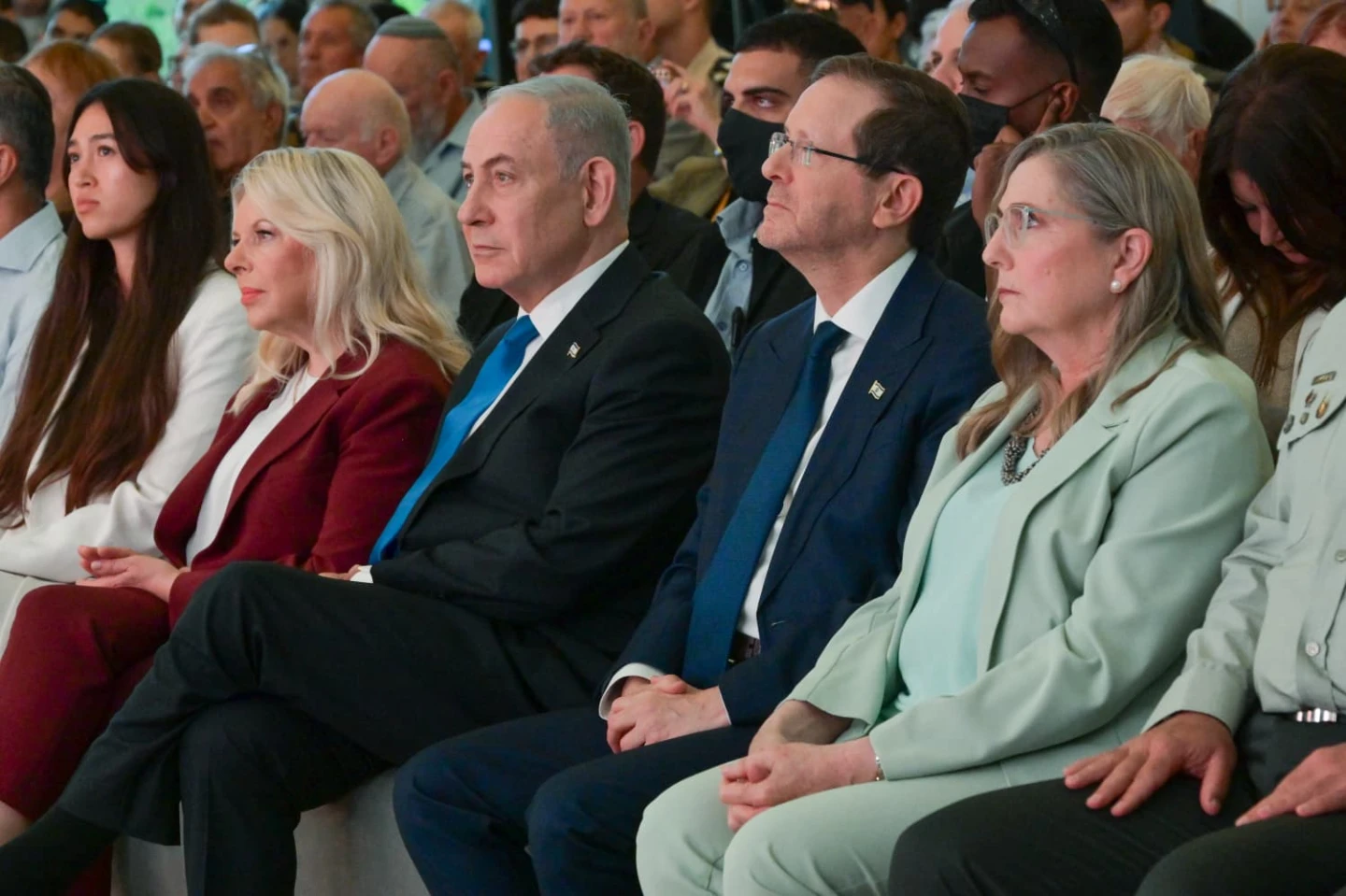
The Entebbe operation was renamed “Operation Yonatan” in memory of Netanyahu’s brother.
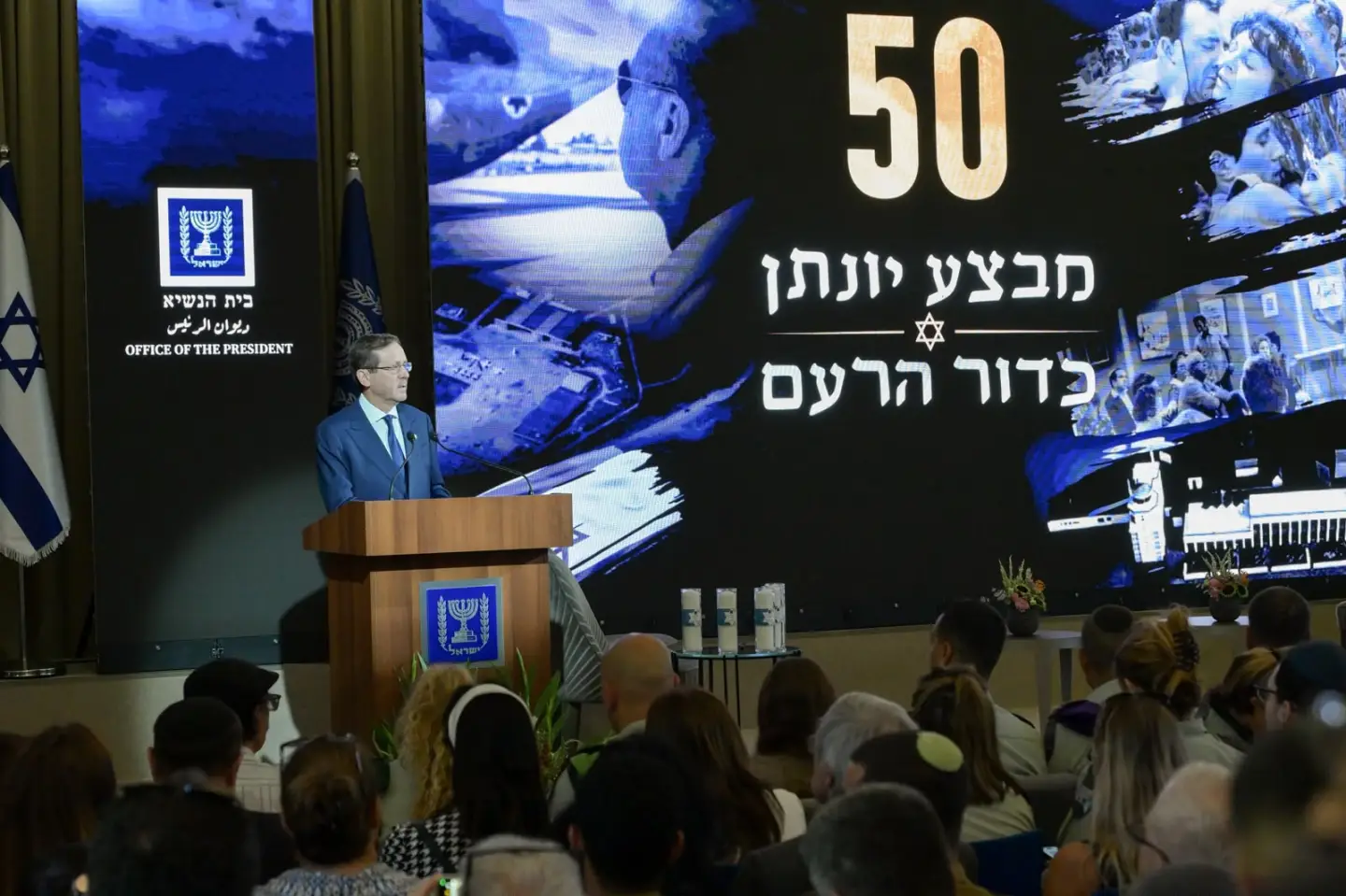
“There are events that are greater than any single figure, place or time. Fifty years later, we gather to declare something very simple,” Israeli President Isaac Herzog said at a July 12 commemoration of the operation at the presidential residence in Jerusalem.
“‘Operation Yonatan’ does not belong to any one person or group. It transcends every disagreement,” Herzog said at the event, which the prime minister attended. “This is a legacy of courage and daring that echoes, and will continue to echo, for generations. A legacy that belongs to the entire nation.”
“‘Operation Yonatan’ was one of the most extraordinary operations in Israel’s history,” he added. “It was also a moral declaration. On that night, the State of Israel established a principle that still resonates in our generation: there are borders to the state, but there is no limit to our responsibility.”
Netanyahu said at the ceremony that “‘Entebbe’ is synonymous with a most daring operation, which made the impossible possible.”
“This unprecedented operation brought our hostages back from the heart of Africa—brought them home,” he said. “At the same time, it uplifted the honor of Israel among the nations and taught the world that a decisive blow can be struck against international terrorism.”
“It taught the world that it is possible, and necessary, to stand firm against bloodthirsty terrorists, strike them and overpower them,” he said.
In Entebbe, “the terrorists forced the Air France plane to land in a country ruled by a ruthless dictator, almost 4,000 kilometers away from Israel,” Netanyahu said at the event. “Thirty-one years after the Holocaust, they conducted a ‘selection’ between Jews and non-Jews. They released hostages of other nationalities, while threatening the Jews with execution.”
“They were certain that Israel would succumb to their ultimatum, because, after all, such a great distance from Israel and the Middle East gave them immunity,” he said. “None of them thought that someone would come to rescue the hostages. But they were greatly mistaken.”
“Yoni was very daring, but he was also very level-headed. He had exceptional composure and judgment, both during battle and before it,” Netanyahu said. “But this daring was shared by all the fighters who went to Entebbe.”
After the operation, “joy broke out in every home in Israel and also among those around the world who cherish freedom and justice,” according to Netanyahu. “Not in my home. Throughout my adult life, I feared that Yoni would fall in battle.”
In the introduction to the 2001 book, Netanyahu wrote that “the death of a brother cut down in his prime is traumatic in every way.”
“It changed my life and directed it to its present course,” he wrote.



