


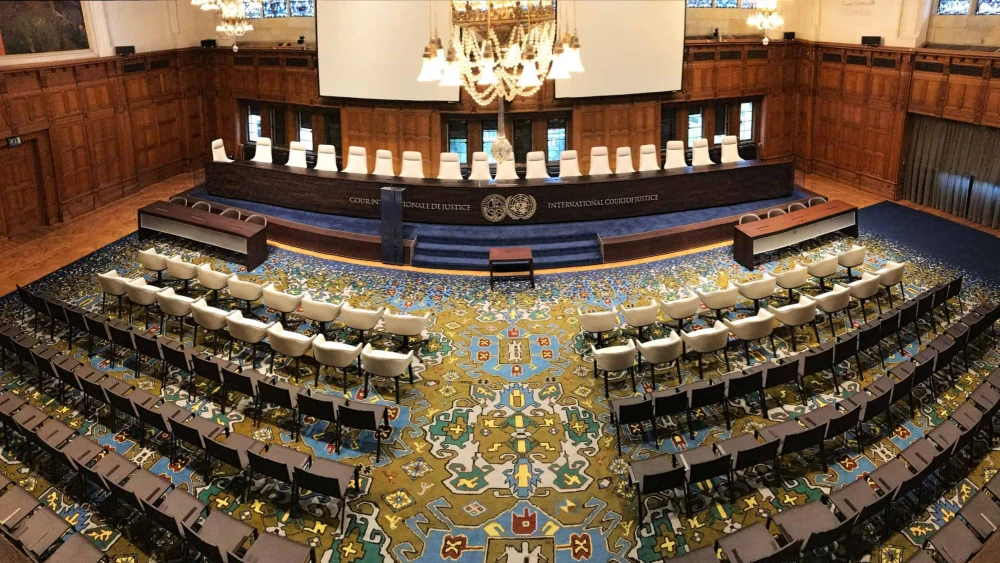
The International Court of Justice announced on Friday that it will hold hearings from Sept. 7-10 on Germany’s preliminary objections to Nicaragua’s claims that Berlin is “facilitating the commission of genocide and, in any case, has failed in its obligation to do everything possible to prevent the commission of genocide” in Gaza.
The hearings will address whether the court has jurisdiction and whether Nicaragua’s claims are admissible, rather than the merits of the case.
Nicaragua filed the case in March 2024, alleging that Germany violated its obligations under the Genocide Convention by providing political, financial and military support to Israel and by suspending funding for the U.N. Relief and Works Agency for Palestine Refugees in the Near East. Several donor countries halted or reduced contributions to the agency after allegations that some employees participated in the Hamas-led terrorist attacks in Israel on Oct. 7, 2023, though many later resumed funding.
In April 2024, the ICJ rejected Nicaragua’s request for provisional measures that would have required Germany to halt military exports to Israel and restore UNRWA funding. Germany argued that only a small portion of its military export licenses to Israel involved weapons, and that it continued providing humanitarian assistance to Gaza through other U.N. agencies and aid organizations.
The case has since proceeded through written pleadings. In October 2025, Germany filed preliminary objections challenging the ICJ’s jurisdiction and the admissibility of several of Nicaragua’s claims, automatically suspending proceedings on the merits pending resolution of those objections. The September hearings will focus exclusively on those procedural issues.
Nicaragua’s case stems from the separate ICJ proceedings initiated by South Africa, which accuses Israel of violating the Genocide Convention during its military campaign against Hamas in Gaza.
That case remains in its written phase. Earlier this year, the ICJ granted South Africa until November 2027 to file its reply, after Israel sought equal time to submit a rejoinder, extending the timetable for the proceedings.
Legal analysts have argued that Managua’s claims against Germany depend in significant part on the outcome of the South Africa case because they allege Germany aided Israel’s purported violations of the Genocide Convention.
Ireland, which intervened in the South Africa proceedings, has asked the ICJ to adopt a broader interpretation of what constitutes the commission of genocide by a state. Irish officials have said the move is intended to strengthen civilian protections under the Genocide Convention, while critics argue it would lower the legal threshold for proving genocidal intent.
Critics say the move was part of a pattern by the anti-Israel international community to change the meaning of legal and other accepted terms to specifically fit a prosecution or allegation against Israel.



