


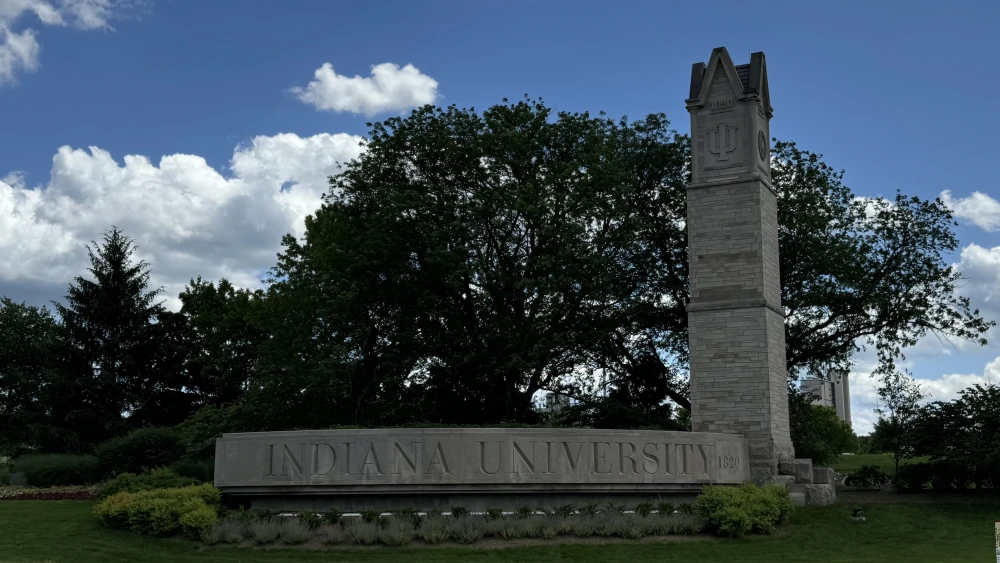
The Indiana University Institute for the Study of Contemporary Antisemitism and the Wilson Center, based in Washington, D.C., have received a $6 million grant from the National Endowment for the Humanities to lead a three-year international initiative examining the historical roots of antisemitism and its resurgence around the world.
The award, announced on July 30, is the largest of 81 grants funded in the NEH’s latest $41.4 million funding cycle.
The initiative will support scholarly research, international conferences, publications and a podcast series aimed at deepening public understanding of antisemitism while providing educators, journalists and policymakers with historically grounded resources to identify and confront it.
“Widespread hostility to Jews has accelerated in recent years and is an increasingly threatening phenomenon in this country and abroad,” said Alvin Rosenfeld, the grant’s co-principal investigator and founder of Indiana University’s Institute for the Study of Contemporary Antisemitism. “My colleagues and I are dedicated to understanding the various forces that drive such animosity and will aim to formulate the means to contend with it effectively.”
Founded in 2009, the institute will oversee the project’s research, organizing five interdisciplinary working groups of historians, philosophers, literary scholars, religious studies experts and digital humanities researchers. Their work will examine antisemitism’s historical evolution, its ideological and religious foundations, its effects on democratic institutions, and its spread through social media and other digital platforms.
The institute also plans to host two international academic conferences and expand its Social Media and Hate Research Lab to study how antisemitic content circulates online.
The Wilson Center will direct the initiative’s public outreach, organizing nine international policy conferences over three years, producing a podcast hosted by Wilson Center fellow Izabella Tabarovsky, and conducting educational seminars for members of Congress and international officials.
The project will partner with research institutions in Israel, the United Kingdom, Canada, India and the United States. Organizers also plan to create a publicly accessible digital archive of conference recordings, research papers and transcripts while building a long-term international network of scholars and public institutions focused on combating antisemitism.



