Hezbollah Secretary-General Naim Qassem on Wednesday ruled out any possibility of truce talks with Israel, saying negotiations under fire would amount to “forced surrender and the deprivation of Lebanon’s entire capabilities.”
The Iranian-backed terrorists remain “determined to continue without limits, ready to sacrifice endlessly, and now serve as a shining symbol of nationalism and the beacon of the coming liberation,” Qassem said in an address, according to a translation by Tehran’s state-run Press TV outlet.
Hezbollah began firing rockets and suicide drones at Israel from Lebanon on March 2, in retaliation for the Jewish state’s targeted killing of Iranian Supreme Leader Ali Khamenei. Khamenei was killed in the opening strikes of “Operation Roaring Lion/Epic Fury” against the regime on Feb. 28.
In response to the terrorist organization’s violation of the U.S.-brokered Nov. 27, 2024, truce agreement with Lebanon, Jerusalem launched an aerial campaign against Hezbollah and ordered Israel Defense Forces troops to advance and take control of additional areas in Southern Lebanon to halt cross-border attacks.
Qassem on Wednesday said that “negotiations with an enemy that occupies land and attacks daily are entirely unacceptable,” adding, “Confronting the aggression against Lebanon is a national responsibility for everyone.”
Regarding the war against the Islamic Republic, the Shi’ite Islamist said that “Iran stood firm against the mightiest and most brutal criminals on earth, and it will prevail, Inshallah [‘God willing’].
“Every victory against America and Israel brings good to all,” he added.
Qassem slammed demands by Lebanon’s government that Hezbollah disarm as required by the ceasefire deal.
“When the exclusivity of weapons is demanded [by the Lebanese Armed Forces] to meet what Israel desires while the occupation and aggression continue, it is a step toward Lebanon’s demise and the realization of Greater Israel,” he claimed, peddling false assertions that Jerusalem is seeking to expand its borders to include the Land of the Cedars.
Qassem called for national unity, which he said “frustrates our enemy from occupying our country.”
Lebanese Foreign Minister Youssef Raggi announced on March 24 that he had revoked the approval of Iran’s designated ambassador to Lebanon and ordered him to leave the country within five days.
Mohammad Reza Shibani, who had been nominated as Tehran’s ambassador, was declared persona non grata and must depart Lebanon by March 29, according to Raggi.
Hezbollah condemned the move as a “national and strategic sin,” calling on the government to “immediately reverse this decision because of its dangerous repercussions.”
The decision marked another step taken by Beirut against the Islamic Republic since hostilities resumed on Lebanon’s southern border resumed this month.
Lebanese Prime Minister Nawaf Salam on March 2 rejected attacks launched from Lebanese territory without approval from legitimate state institutions as he called for “limiting Hezbollah’s activities and obliging it to surrender its weapons.”
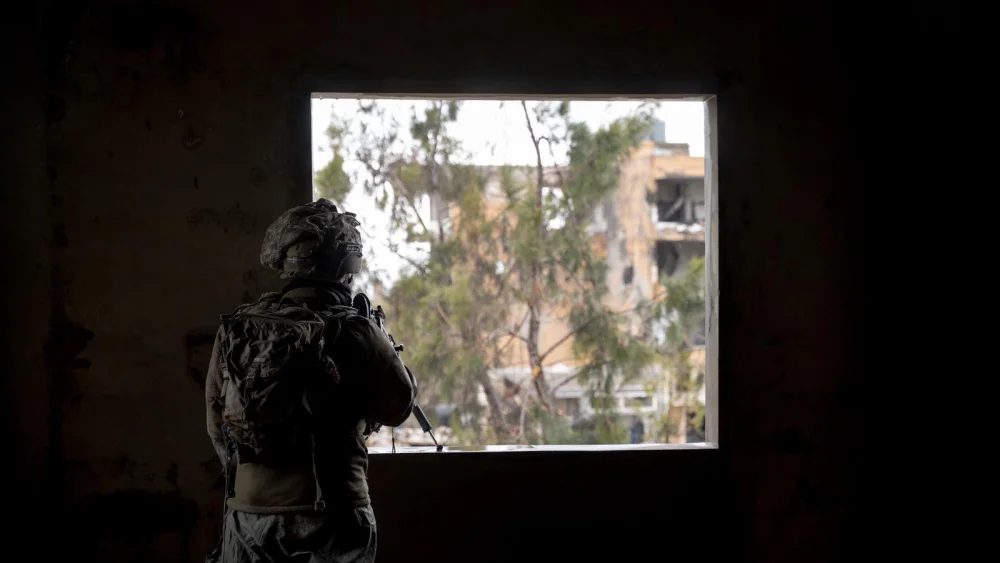
Meanwhile, soldiers of the IDF’s Golani Infantry Brigade have destroyed more than 200 Hezbollah infrastructures while eliminating terrorists during operations in Southern Lebanon, the IDF said on Thursday.
Golani soldiers, operating under the command of the 36th Division, aka the Rage Formation, “continue targeted ground operations to expand the security zone in Southern Lebanon,” the military said.
Troops of the 91st “Galilee” Division destroyed over 350 Hezbollah terrorist targets and eliminated over 330 terrorists, including dozens of operatives of its elite Radwan Force, it added in a separate statement.
“In addition, numerous weapons and military equipment were located in the area, including night vision devices, military vests, missile launchers, RPG rockets, magazines, Kalashnikov rifles and a machine gun to plan and carry out terrorist attacks against IDF troops and the State of Israel,” according to the army.
Defense Minister Israel Katz on Tuesday said that the IDF was deployed into Lebanon “to seize a forward line of defense, eliminate Hezbollah terrorists and destroy the terror infrastructure established there, and the houses in the Lebanese villages near the border, which serve as terrorist outposts for all intents and purposes.”
Israel promised to restore security for northern residents, and “that is exactly what we’re doing,” he said.