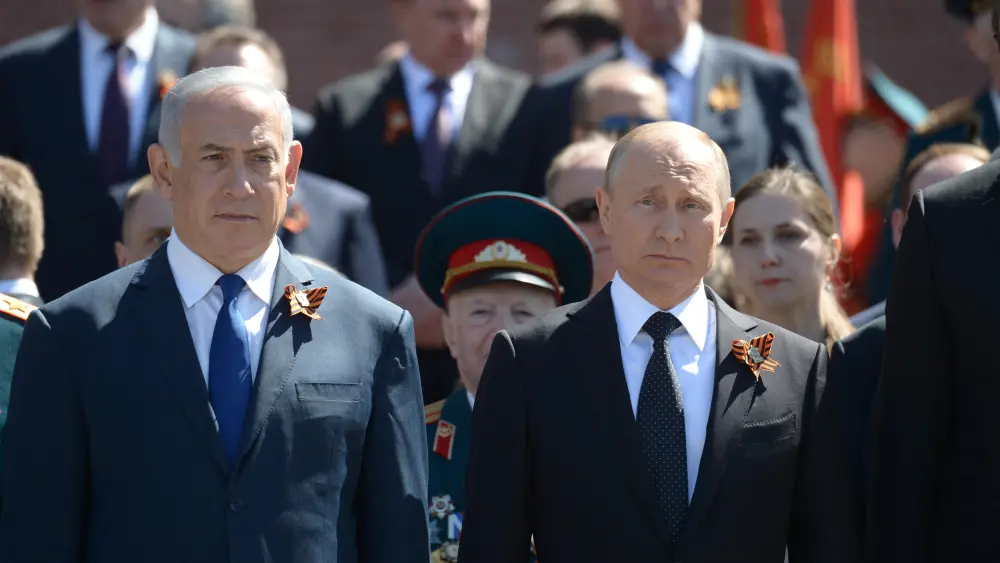
Russia’s President Vladimir Putin agreed to strengthen coordination on Syria with Israeli Prime Minister Benjamin Netanyahu during a phone call on Friday, the Kremlin said in a statement.
The two leaders discussed “the situation in Syria in the context of joint efforts to ensure security around the Syrian-Israeli border,” and they “voiced readiness to strengthen coordination on Syria, including on combating international terrorism,” said the Kremlin.
Russia has been involved in the ongoing war in Syria since 2015, supporting Syrian President Bashar Assad’s forces against rival Syrian rebel forces and largely ensuring Assad’s continued rule. Iran has also supported the Assad regime in Syria, and Israel has consistently declared that it will not permit Iran to establish a presence there.
Since Israel has launched a number of strikes in Syria in recent months to prevent Iran from entrenching itself there, it has become necessary for Israel and Russia to coordinate on security and prevent unnecessary clashes.
Friday’s phone conversation between Putin and Netanyahu follows up on the two leaders’ meeting in Moscow last month, as well as Defense Minister Avigdor Lieberman’s recent visit to Russia.
On May 28, a senior Israeli official revealed that Israel and Russia had reached understandings on the matter of Israel’s northern border with Syria.
The Syrian government’s plans to recapture rebel-held areas near the border have raised Israeli and Jordanian concerns that Iran and the Lebanese terrorist group Hezbollah could reaffirm their presence there.
On Thursday, according to a prominent Syrian rights group reported, Hezbollah rejected Russian demands to withdraw its forces from the Lebanese-Syrian border.