Newsletter
Newsletter Support JNS

Palestinians do not have a parliament, and it’s an issue

They cannot write to or phone their elected legislators to complain about anything. All they can do is resort to social media, especially Facebook, to air their views.

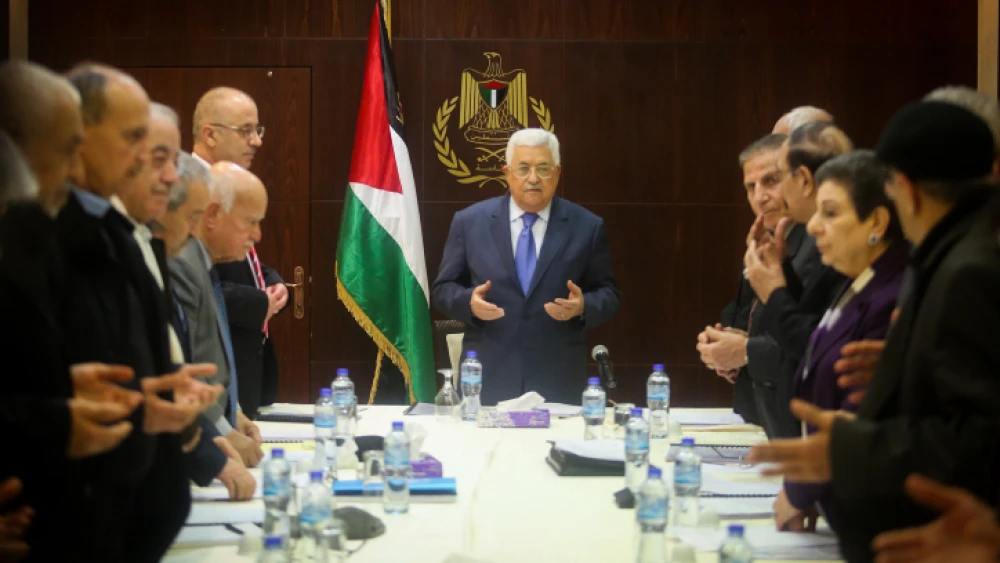
Palestinian Authority leader Mahmoud Abbas at a meeting of the executive committee of the Palestine Liberation Organization in the city of Ramallah in the West Bank, on Feb. 13, 2017. Photo by Flash90.

In the absence of a parliament, the Palestinians have no address to express their grievances. They cannot write to or phone their elected legislators to complain about anything. All they can do is resort to social media, especially Facebook, to air their views.

As Palestinian Authority leader Mahmoud Abbas does not tolerate criticism particularly well, he doubtless feels more comfortable delivering speeches at international forums such as the United Nations, the European Parliament, and his own Fatah and PLO institutions than at the Palestinian parliament.

The others are places where no one takes him to task for his tyranny.

In the past few years, scores of Palestinians have been harassed, arrested and interrogated by Abbas’s security forces for posting critical comments on Facebook.

Read the full article at Gatestone here.

“These attacks come amid a broader rise in violent extremism across Canada and other Western democracies—a toxic brew of anti-Zionist rhetoric, local criminal elements, Iranian-backed proxies and ISIS-inspired terrorism,” CIJA stated.
“Iran and Israel are the only two countries on this planet that have a biblical relationship,” the exiled Iranian Crown Prince Reza Pahlavi said.
“We discussed the friendship and relations between Israel and Bahrain, as well as the importance of the U.S.-led Abraham Accords,” Isaac Herzog said.
The cause of the blaze near the grave of Rabbi Shneur Zalman of Liadi was not immediately clear.
The Japanese Red Army member, who helped kill 26 people, lived in Lebanon since his release in a 1985 prisoner exchange.
The suspect’s writing about the deadly Samaria shooting prompted an investigation and the seizure of ammunition, cash and fireworks.