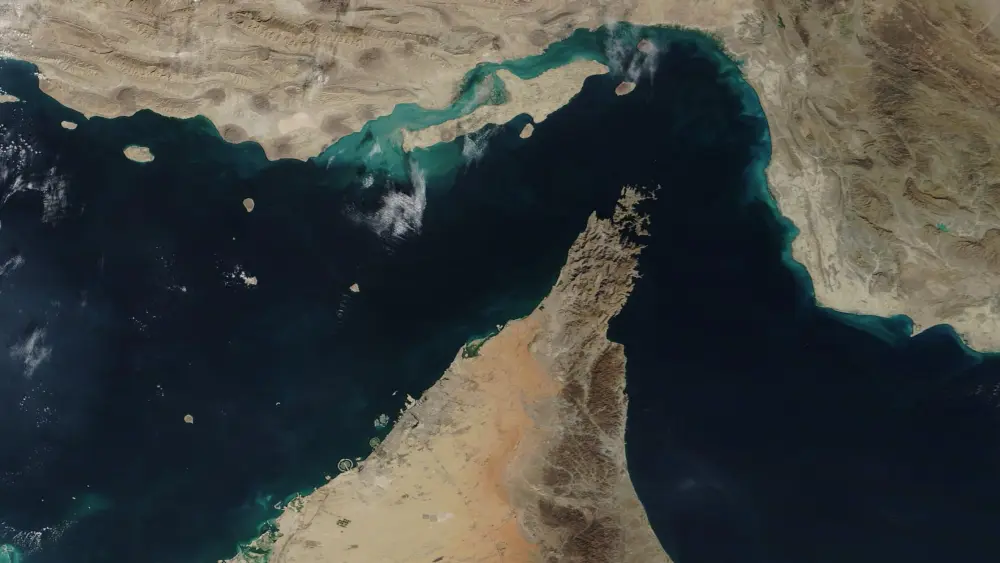
A United Nations agency regulating maritime transport said on Thursday that it had halted the evacuation of vessels from the Strait of Hormuz in the wake of an attack against a ship in the Gulf of Oman.
Arsenio Dominguez, Secretary-General of the International Maritime Organization, said in a statement that he decided to “temporarily pause” his organization’s evacuation plan “in order to reconfirm that the necessary safety guarantees continue to be in place for the ships on our evacuation list and all those in the region.”
He further noted that the vessel that came under attack “did not transit under IMO’s evacuation framework.”
June 25 “marks the Day of the Seafarer, underlining the importance of ensuring that the continued evacuation of the thousands of seafarers stranded in the Persian Gulf can proceed without the risk of them becoming collateral victims in this geopolitical conflict,” he added.
U.K. Maritime Trade Operations, a Royal Navy office situated in Dubai, reported on Thursday that a cargo vessel has been hit southeast of Dahit, Oman on the starboard side by “an unknown projectile,” causing damage to the bridge.
No casualties were reported in the incident.
A U.S. official speaking on conditions of anonymity told the Associated Press that the merchant vessel, identified as Ever Lovely, was hit by a drone launched by Iran’s Islamic Revolutionary Guard Corps.
The reported strike came hours after Tehran warned vessels against passing the waterway without its permission.
Iran’s Persian Gulf Strait Authority, an agency established in May, wrote on X on June 19 that only vessels that submit compliant transit requests will be permitted to transit the waterway during the 60 days designated in the Memorandum of Understanding signed last week between Washington and Tehran.
Following the Islamabad MoU and official directives, vessels that submit compliant transit requests will be permitted to pass through the Strait of Hormuz during the announced period.
— PGSA | نهاد مدیریت آبراه خلیج فارس (@PGSA_IRAN) June 19, 2026
Details: https://t.co/7SPYB6INvI https://t.co/UjXJxljD6E pic.twitter.com/78Jte5aFpg
After the attack on Thursday, the PGSA issued a threat against transit outside of designates routes. “Any consequences arising from unauthorized routing shall be the sole responsibility of the vessel owner, charterer, and master,” it added.
PGSA advises that vessels passage outside designated routes are not covered by the Safe Passage Guarantee, insurance, or related liabilities. Any consequences arising from unauthorized routing shall be the sole responsibility of the vessel owner, charterer, and master. https://t.co/GPzROqOn4p
— PGSA | نهاد مدیریت آبراه خلیج فارس (@PGSA_IRAN) June 25, 2026
Earlier in the day, U.S. Secretary of State Marco Rubio said that the opening of an alternative route through the strait would relieve pressure on the world economy and remove the Islamic Republic’s main source of leverage in the negotiations with the Trump administration, AP reported.
“If that stops, then we’re going to have a problem,” he said during a visit to the Gulf countries, according to the report.
Following Rubio’s remarks, the naval arm of the IRGC issued a warning carried by Iran’s government-run IRNA news agency that an alternative passage in the vital waterway is “unacceptable and completely dangerous,” according to the Associated Press.
“The only authorized route for passing through the Strait of Hormuz is the one declared by the Islamic Republic of Iran. Vessel traffic outside these routes is extremely dangerous and prohibited. Violators will be dealt with,” it added.