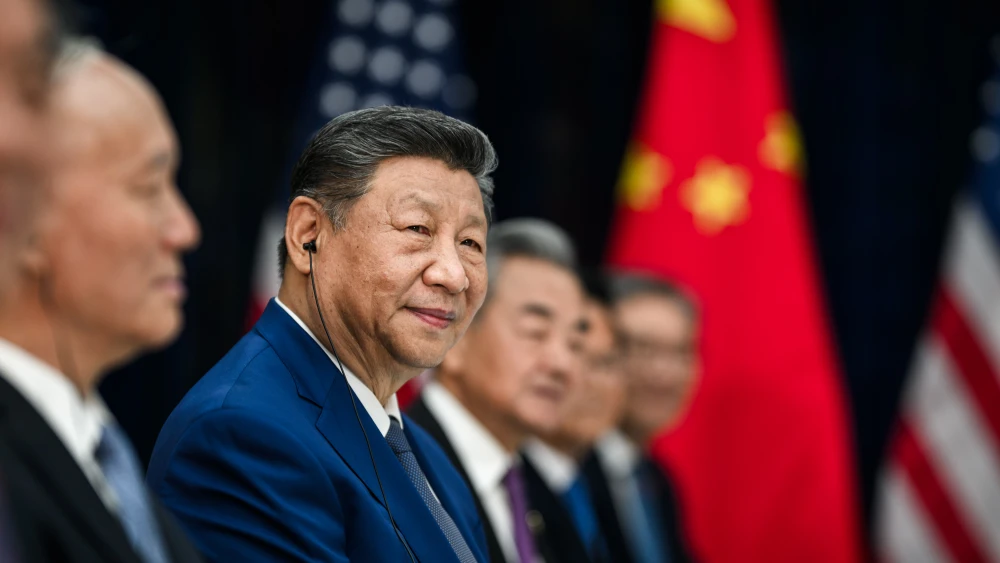

King Abdullah II of Jordan was just invited to Beijing after an 11-year absence. Now, Xi Jinping of China is heading to Egypt for his first state visit there in a decade.
Xi will travel to Cairo immediately after attending the Shanghai Cooperation Organization summit in Kyrgyzstan that starts on Sept. 1. Officially, Beijing describes the Egypt visit in familiar terms: 70 years of diplomatic relations, a flourishing comprehensive strategic partnership, economic cooperation and an exchange of views on regional and international issues.
But Egyptian analysts are asking: Why now?
The Al-Ahram Center for Political and Strategic Studies places the visit squarely in the context of the upheaval in the Middle East: Gaza, Sudan and Libya, Red Sea security, and what it calls the transformations in the Gulf following the U.S.-Israeli war with Iran. It also points to something particularly important for China: the connection between instability in the Red Sea, disruption of maritime trade and the Suez Canal. Every ship diverted from the Red Sea simultaneously raises China’s trading costs and reduces Egypt’s Suez revenues.
Another Egyptian analysis describes the timing as exceptional, coming amid unprecedented geopolitical and security turmoil in the Arab system. It sees an opportunity for Egypt and China to move beyond their substantial economic relationship toward greater coordination over regional affairs.
This intersects with a problem increasingly identified by American analysts.
China has become the dominant trading partner for much of the Middle East, remaining extraordinarily dependent on area stability without taking steps to contribute to it. The Iran war and disruption of the Strait of Hormuz have exposed that vulnerability particularly clearly. It has been reported that despite China’s close relationship with Tehran, Chinese vessels largely stopped transiting Hormuz after the conflict began. Beijing’s political relationships could not insulate it from the consequences of the war.
China has significant commercial interests in the region and depends upon its energy and maritime routes, but has largely avoided assuming the security burdens required to protect them. This is despite the fact that Beijing’s fundamental interest is a regional order that keeps trade flowing.
From Israel’s perspective, the positioning of Iran’s comprehensive strategic partner, China, warrants observation in a region where Iran and its proxies have repeatedly used missiles, drones, terrorism and maritime disruption. For Jerusalem, the question is whether Beijing’s search for a new modus operandi will acknowledge Israel’s security concerns or continue to frame the conflict primarily as a humanitarian and diplomatic problem.
Enter Egypt. This most populous Muslim state in the Middle East sits at the intersection of many of the problems Beijing is trying to navigate. It controls the Suez Canal and has an enormous stake in Red Sea stability. It maintains relations with Israel while playing a notable role on the Palestinian issue. It has relationships across the Gulf and with Iran. And, importantly, it has long experience balancing competing great powers while protecting its own room for maneuver.
For Israel, Egypt is also an important security actor. Its control of the Rafah crossing, its influence in Gaza, its role in ceasefire negotiations and its cooperation in securing the Sinai and Red Sea approaches give Cairo direct relevance to Israel’s immediate strategic environment. An expanded Chinese-Egyptian relationship could therefore affect Israel indirectly, particularly if Beijing seeks a larger role in Gaza diplomacy, reconstruction, regional maritime security or the political architecture that follows the war.
Egyptian analysts recognize the limits of Beijing’s current approach. The Al-Ahram Center notes that despite China’s enormous economic weight in the Middle East, Beijing remains reluctant to assume direct security or military responsibilities and is not seeking to reproduce America’s system of alliances and bases.
That may have worked when China could maintain good relations with everybody. However, China’s interests in the region become considerably more difficult to pursue when its partners are fighting one another, maritime chokepoints essential to China’s economy are disrupted, and Beijing discovers that being everyone’s economic partner doesn’t necessarily give it leverage to stop the fighting.
From Israel’s standpoint, the same shift creates both risks and opportunities.
Greater Chinese engagement could help stabilize trade routes, support Egyptian mediation and encourage pressure against attacks on international shipping. But it could also give Beijing greater influence over Gaza while allowing it to avoid confronting Iran’s military network directly. Israel will therefore judge China’s role less by the language of strategic partnerships and more by whether Beijing is prepared to oppose the forces that threaten regional security, including Iran’s support for Hamas, Hezbollah and the Houthis.
When I was in Beijing in July, some of China’s leading Middle East experts were unusually candid about their frustration with precisely this problem. They were struggling with how China should navigate Iran, the Gulf, the continuing closure of Hormuz and the instability affecting the country’s energy security.
Beijing seems to think that Jordan’s King Abdullah and Egypt’s President Fattah el-Sisi can offer new perspectives and/or access. This, in turn, indicates that Beijing is not pursuing a Middle East diplomatic maintenance campaign but instead looking for a new way to operate in a geographic neighborhood where its old strategy of being friends with everyone is becoming increasingly difficult to sustain.
From Israel’s strategic perspective, that new approach will be meaningful only if China is willing to recognize that regional stability requires more than mediation and economic engagement. It requires confronting the networks, weapons and state sponsors that make instability possible.
Jerusalem will be watching closely for any Chinese effort to constrain Israel’s freedom of action, internationalize decisions about Gaza’s future or equate Israel’s defensive operations with the actions of Iran and its proxies. At the same time, Israel has an interest in any Chinese initiative that genuinely protects maritime commerce, strengthens Egypt’s role as a responsible regional actor and reduces the ability of hostile groups to threaten the Red Sea.