
Israel is unhappy.
The emerging American agreement with Iran to end the current conflict appears far removed from Jerusalem’s preferred outcome. Israeli leaders have spent years warning that Iran’s nuclear program constitutes an existential threat. Their objective has been straightforward: the complete dismantlement of its nuclear capabilities.
Instead, Washington appears focused on a different set of priorities. The United States wants to end the war, reduce regional instability, avoid a wider military confrontation and protect broader American interests in the Middle East.
From Israel’s perspective, this is deeply frustrating. Many Israelis increasingly feel that Washington is prepared to dictate what Israel may or may not do in Lebanon, pressure it regarding Gaza and negotiate directly with Tehran while remaining unwilling to guarantee the one outcome Israel considers essential to its long-term security.
Viewed from Jerusalem, the message seems clear: America’s interests come first. Yet that may be precisely why this agreement will ultimately benefit both Israel and American Jewry.
The greatest threat to Israel’s standing in the United States today is not Iran. It is the growing belief among large segments of the American public that American foreign policy exists primarily to serve Israeli interests. This perception is becoming one of the few ideas capable of uniting otherwise opposing political movements.
On segments of the political right, an increasingly influential strain of nationalism and isolationism argues that America’s alliances have become costly burdens. In this worldview, foreign entanglements drain U.S. resources while offering little benefit in return. Israel is frequently portrayed as one of the chief beneficiaries of these commitments, despite America’s conflict with Iran long predating Israel’s.
On parts of the political left, anti-Israel activists advance a remarkably similar claim from the opposite direction. They argue that American power has been enlisted in support of Israeli objectives and that Washington routinely places Israeli interests ahead of its own.
The ideological frameworks differ. The conclusion is often the same. America, according to both narratives, is fighting Israel’s battles. And the accusation has become one of the central drivers of contemporary antisemitism.
Historically, antisemitism flourishes when Jews are portrayed as possessing hidden political power. For centuries, antisemites have accused Jews of manipulating kings, governments, banks, media institutions and political systems. The details change with each generation. The underlying allegation remains constant. The modern version of that conspiracy theory is the belief that Israel dictates American foreign policy.
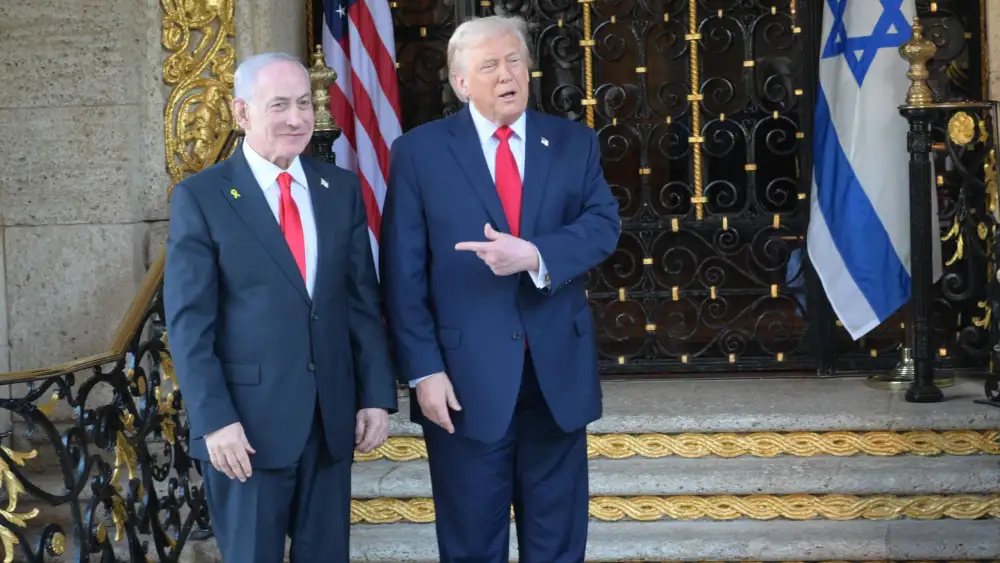
This is why the current disagreement between Washington and Jerusalem matters far beyond the question of Iran’s nuclear program. Israel has made its preferences known. The United States has listened and then chosen its own course.
One can debate whether that course is wise. Many Israelis believe it is not. Some fear that Tehran will retain too much of its nuclear infrastructure. Others worry that short-term diplomatic success will merely postpone a larger crisis. Still others believe that the agreement sacrifices deterrence in exchange for temporary calm.
Whether or not the agreement proves successful, it communicates something important to the public: Washington is making decisions based on its own assessment of U.S. interests. The fact that Israel may dislike those decisions is not incidental. It is the point.
Every time the United States publicly overrules Israeli preferences, it becomes harder to sustain the claim that Israel controls American policy. Every time Washington tells Israel what it may or may not do militarily, it weakens the narrative that American leaders are acting at Jerusalem’s direction. Every time an American president pursues diplomacy with Iran despite Israeli objections, it demonstrates that the relationship is an alliance, not a hierarchy.
Supporters of Israel often make the mistake of believing that America’s strongest alliance in the Middle East is strengthened when Washington and Jerusalem appear inseparable. In reality, the opposite may be true. The health of the alliance depends upon Americans’ understanding that their government acts on behalf of its own interests. Once large numbers of Americans begin to believe otherwise, support for the alliance itself becomes vulnerable.
An alliance perceived as beneficial to both countries can endure. An alliance perceived as benefiting only one country eventually comes under pressure. This is why the optics of the current disagreement may matter as much as the substance of the agreement itself. Israel may emerge from these negotiations dissatisfied. It may believe that its security concerns were inadequately addressed. It may view the agreement as strategically shortsighted.
By demonstrating that American policy is determined in Washington, rather than Jerusalem, the agreement may help dismantle one of the most persistent and destructive myths in modern political discourse. No diplomatic initiative can eliminate antisemitism. No treaty can silence every conspiracy theorist. But if the current negotiations convince even a portion of the American public that the United States is pursuing its own interests rather than serving someone else’s, they will have achieved something important.
Ironically, the most valuable gift Washington may give Israel is not unconditional support. It is the unmistakable demonstration that Israel does not control American foreign policy.
At a moment when that accusation is poisoning political discourse across the ideological spectrum, such a demonstration may prove more valuable than many Israelis currently realize. The best thing Donald Trump may have done for Israel is to ignore it.