
Between chants to “End the war” and “Bring them home,” there is a quiet recognition by many that Israel is stuck. It’s hard not to see it. On the political right and left, anyone willing to think beyond the slogans can see that Israel faces an impossible set of choices. The cabinet’s decision to take “control” of Gaza City, more than 670 days into the war, underscores the point.
Following the Hamas-led terrorist attacks in Israel on Oct. 7, 2023, Israeli Prime Minister Benjamin Netanyahu made Israel’s objectives clear: Destroy Hamas and bring home the hostages. More than 200 hostages have since been released, mostly through negotiations, and the majority of Hamas’s fighting force has been destroyed. But 50 hostages, including 20 believed to be alive, are still in Gaza, and Hamas is still fighting. Fully reaching Netanyahu’s stated goals is beginning to feel out of reach.
Hamas has no incentive to negotiate. The United States and Israel had agreed to a deal, much like the previous ones, in which Israel would release thousands of Palestinian prisoners in exchange for the hostages. Hamas, though, no longer feels the need to agree, or even negotiate, as much of the world’s sympathy and money now stand firmly behind the remnants of the terror organization. Major world powers are calling for the creation of a Palestinian state, while Israel faces near-global condemnation.
On the battlefield, Israel has the upper hand. In the propaganda war, however, Hamas and its “Gaza Health Ministry” are winning. False headlines accuse Israel of starving Gaza, while images of emaciated Israeli hostages barely register internationally.
If Hamas will not negotiate, the only option is a rescue mission. But most experts say such an operation is nearly impossible, given the extensive, booby‑trapped tunnel network where the hostages are held. Israel’s last attempt ended in tragedy, with Hamas executing six hostages as Israel Defense Forces soldiers closed in.
For months, the free world called on Qatar, one of Hamas’s key patrons, to demand that Hamas disarm and release the hostages. Qatar has now joined Saudi Arabia, Egypt and the rest of the Arab League in making that demand. It is too little, too late. Hamas appears determined to cling to its last pieces of leverage.
Israel has now rightly declared that it will no longer negotiate for hostages in piecemeal fashion. It’s all or nothing. This should have been the position from day one. Trading prisoners for hostages might have been a necessary evil early on, but it also made kidnapping civilians a more attractive tactic for Hamas and increased the price for their return. In any case, that card has now been played out.
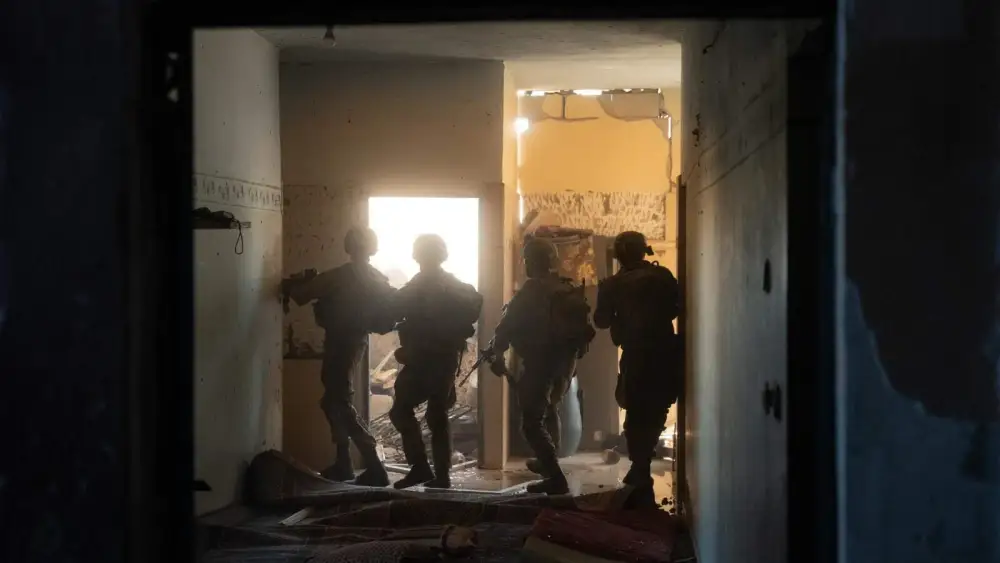
Militarily, Hamas fighters continue to operate by firing rockets, planting IEDs, and attacking Israelis and Gazans. Wiping out the remaining fighters entirely appears increasingly unlikely. The IDF’s earlier strategy of clearing areas and withdrawing proved flawed, as terrorists simply returned. The newer approach of holding territory has been more effective, but comes at a heavy price, with stationary troops becoming easier targets.
So, how does Israel end the war? The nation of 10 million people cannot sustain a forever war. Netanyahu is considering occupying all of the Gaza Strip. This would cripple Hamas’s ability to govern, but it would also come at a steep cost for Israeli soldiers, the Israeli public and the ever-elusive international standing of the Jewish state.
Under this plan, Israel would maintain a constant military presence, keeping Hamas marginalized while controlling aid distribution, overseeing reconstruction and elevating non-Hamas factions in the Strip. The gamble is that Hamas will rush to release the remaining hostages and disarm in exchange for sovereignty in Gaza. It might also come too late for the hostages sitting in the dark, damp Hamas tunnels. In this no‑win situation, Israel is stuck between a rock and a hard place, and this may be the only remaining path forward.