

As Jews prepare for Passover while Israel fights Iran alongside the United States, an event will be held in the U.S. House of Representatives Cannon Office Building on March 24 that both mocks Jewish history and appropriates Jewish suffering.
An event advertised as a “Congressional Passover Seder Featuring Sarajevo Haggadah” will bring together “members of Congress … the diplomatic community” and “faith leaders.” No doubt these attendees do not suspect that they will be involved in a ritual seeking to affirm and legitimize the exploitation by the Muslim government of Bosnia and Herzegovina of an ancient Jewish religious artifact.
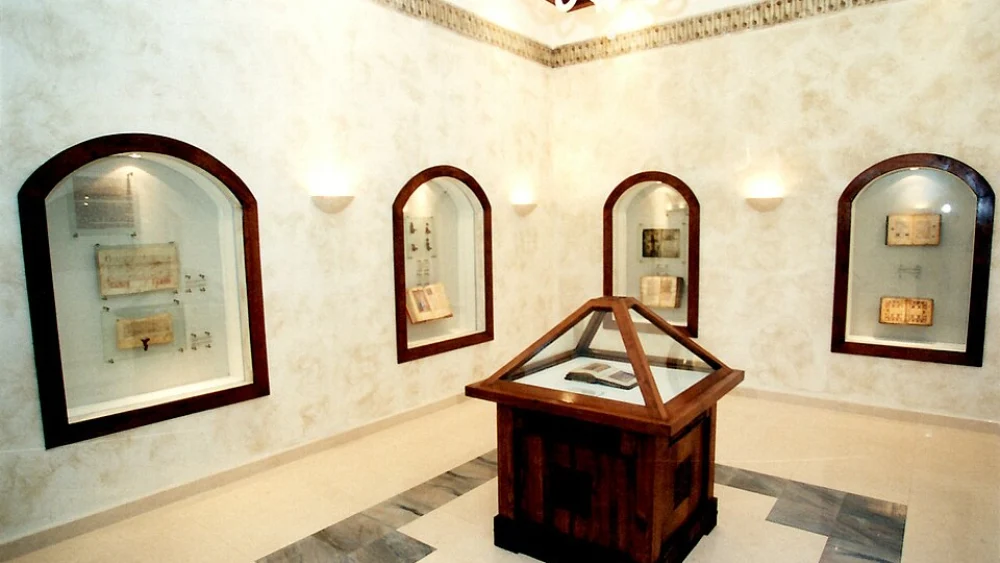
At the heart of this outrage stands the Sarajevo Haggadah, a 14th-century illuminated Passover manuscript—a masterpiece of Jewish artistry and resilience. Crafted in medieval Spain, it traveled around Europe, eventually winding up in Sarajevo. It survived the Spanish Inquisition, the Holocaust and the brutal Bosnian Civil War of the 1990s.
Housed in Sarajevo’s National Museum, this artifact symbolizes Jewish continuity through centuries of political upheaval and evil. Yet today, Bosnia’s increasingly pro-Iranian government has hijacked the Haggadah as a political weapon to fund anti-Israel agendas.
On Aug. 1, as Israel still fought to release dozens of hostages being held by Hamas in the Gaza Strip, Bosnia’s state-run National Museum made the stunning announcement, saying that it would send proceeds from the Haggadah (from museum shop book and ticket sales) for “helping Palestine.” The museum’s announcement, put out on Palestinian flag letterhead, slammed Israel for “calculated and cold-blooded terror,” and baselessly accused it of genocide. The Bosnians took no issue with Hamas or its massacres.
A relic celebrating the Jews’ holiday of escape to freedom was being used to provide moral and financial support to those who were literally holding Jews captive underground in tunnels.
These brazen moves have reignited urgent demands for the Haggadah’s repatriation to the Jewish state, where it belongs.
In 2019, Israeli President Reuven Rivlin pressed Bosnia’s ambassador on this very point, underscoring the manuscript’s profound ties to Jewish patrimony. More recently, in January, Israeli President Isaac Herzog echoed this call during meetings with Republika Srpska (RS) officials, advocating for its safe return to Jerusalem, far from the clutches of political opportunists.
Many still think of Bosnia and Herzegovina as a model moderate Muslim state. Bosnia is a fractured nation forged from the ashes of the 1990s civil war. The 1995 Dayton Accords divided the country into two highly autonomous entities: the Bosniak (Muslim)-dominated Federation of Bosnia and Herzegovina (FBiH) with its capital in Sarajevo; and the Serb-led, Christian-majority Republika Srpska, based in Banja Luka.
Hopes for peaceful coexistence have been stymied by two factors.
First, the Bosniak entity has increasingly drifted into the radical Islamist orbit of Turkey and Iran. Second, under a unique arrangement, the supreme authority in the country still lies in the hands of a European official known as the High Representative. Originally intended as an interim facilitator, he has total legislative authority over both entities and has systematically used it to strengthen Sarajevo at the expense of the consistently pro-Israel RS government.

But why Sarajevo? Once dubbed “the heart of Europe” by generals in Iran’s Islamic Revolutionary Guard Corps, Bosnia has become a frontline in a clash of civilizations: radical Islamism versus Judeo-Christian values. Tehran’s tentacles run deep here. During the Bosnian war, IRGC operatives smuggled arms; trained mujahideen fighters, including Al-Qaeda affiliates; and flouted U.N. embargoes. Three decades on, CIA-linked reports warn that IRGC elements linger in the federation, embedding themselves like a cancer.
Iran’s Sarajevo embassy, bloated with more than 400 staff (far exceeding any legitimate diplomatic footprint), serves as a hub for this infiltration. Republika Srpska leaders have repeatedly sounded alarms about a terrorist training camp in Pogorelica, allegedly used to groom militants for European attacks and even the terrorist attacks against the United States on Sept. 11, 2001.
The political fallout is unmistakable. During Israel’s war with Hamas in Gaza, Palestinian flags fluttered from Sarajevo’s government buildings, massive pro-Palestinian rallies clogged the streets, and officials hurled “genocide” accusations at Israel. Last June, pressure forced the Conference of European Rabbis to flee Sarajevo for Munich. Weeks later, 47 Israeli tourists were left stranded when hotel staff in Muslim-majority areas reportedly trashed their passports—a petty act of hostility that screams intolerance.
Sarajevo has been subject to a calculated radicalization, greased by Iranian influence.
Members of Congress must reject this charade outright.
Attending the so-called seder would lend legitimacy to Iranian-backed actors who cloak themselves in Jewish victimhood while peddling hate. It’s time to call out the weaponization of our heritage, demand the Haggadah’s return and starve Tehran’s soft-power machine of oxygen. America’s lawmakers owe it to history—and to the truth—not to play along.