



In two lengthy front-page articles on June 14, New York Times reporters explored—with unusual depth and little Bibi-bashing—the political demise of now-former Prime Minister Benjamin Netanyahu. With balance and nuance towards Israel a rarity in the Times, former Jerusalem Bureau Chief David M. Halbfinger assessed his considerable political achievements, especially keeping “the perennially embattled country out of major wars”; and “forging a symbiosis with the Trump administration to cement historical gains” that included the relocation of the American Embassy from Tel Aviv to Jerusalem and annexing the Golan Heights.
Nor was that all. Netanyahu, Halbfinger continued, “compartmentalized the Palestinian conflict” and “unilaterally expand[ed] the Jewish presence in the occupied West Bank” (biblical Judea and Samaria). Most striking, he “struck watershed accord with four Arab countries.” And, it might be added, he made Hamas pay dearly for its recent rocket assault against Israel. If Netanyahu also was “a deeply polarizing” prime minister, there can be little doubt that historians will add BB to the famous “Bs”—David Ben-Gurion and Menachem Begin—whose bold leadership transformed a Zionist dream into Israeli reality.
To be sure, Halbfinger notes, Netanyahu has been “deeply polarizing”: “governing from the right; branding adversaries as traitors, anti-Israel or anti-Semitic”; “obsessed with power”; and “comfortable deploying street-fighter tactics to retain it.” Yet under his leadership, Israel developed “a globally envied tech industry” and launched “diplomatic and trade relationships across Asia, Africa and Latin America” with “fast-knitting ties to Arab lands that were unfathomable even a year ago.”
Most recently, Netanyahu “became a global vaccination leader and brought a traumatized society back to life.” Despite his perceived flaws, it might also be said (although Halbfinger did not say it), that except for the two prime minister “Bs” who preceded him, Netanyahu may have achieved more than all his predecessors combined.
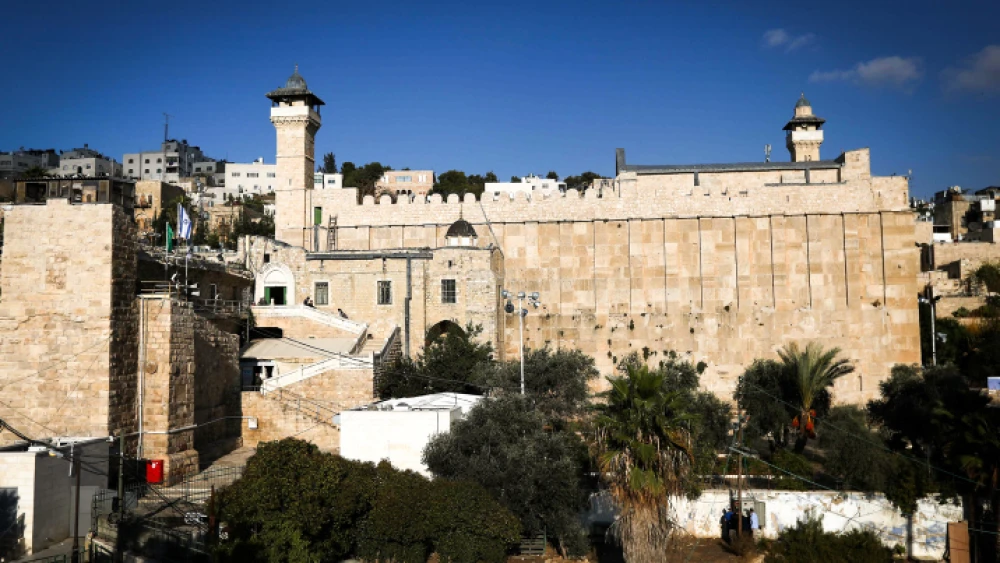
But during his first term as prime minister (1996-99), Netanyahu was indisputably timid. He made a fateful decision that ranked high, especially for religious Zionists and Orthodox Jews, for his capitulation to political pressure and abandonment of the most ancient Jewish holy site in the biblical Land of Israel, the Machpelah burial place of the biblical patriarchs and matriarchs
In 1992, 25 years after the Six-Day War when Israel regained control over Hebron, its ancient capital city, then-Prime Minister Yitzhak Rabin negotiated a peace agreement—more accurately, capitulation—with PLO leader Yasser Arafat. Rabin relinquished nearly all of Hebron, where several dozen Jewish families had returned to reclaim their ancient biblical city where King David ruled before relocating his throne to Jerusalem.
Rabin’s hope for “peace now” was quickly shattered in Hebron, where repeated Palestinian terrorist attacks targeted Jewish families. An Israeli soldier and two Russian immigrants, father and son, were shot to death. The father died in the arms of Dr. Baruch Goldstein, chief medical officer for the Hebron-Kiryat Arba community. Taking revenge, Goldstein entered Isaac Hall during Muslim prayer in the Machpelah burial site and machine-gunned 29 worshippers to death in revenge.
The Rabin government capitulated to Palestinian fury by removing yeshivah students from the Jewish Quarter and expelling Jewish residents living in trailers near the ancient Jewish cemetery where victims of the 1929 massacre were buried. Muslims were granted exclusive rights to Isaac Hall, the largest and most stunningly beautiful burial chamber in Machpelah, except for 10 days each year (for Jewish holy days and special Shabbat celebrations). Religiously observant Jews would be punished in perpetuity for the horrific action by a single Jew.
During his first term as prime minister (1996-99), Netanyahu was indisputably timid, capitulating to political pressure from his secular leftist opponents. He made a fateful decision that ranked high, especially for religious Zionists and Orthodox Jews, by relinquishing Israeli control over Machpelah.
But two decades later, in 2019, Netanyahu became the first Israeli prime minister in nearly 20 years to visit Hebron. Paying respect to the family of a murdered Jew by a local Palestinian, he declared that Israelis would remain in Hebron forever. “Hebron will never be cleansed of Jews. … We are not strangers in Hebron.” Critics charged that they were merely words, but they were words that no other Israeli premier had spoken.
Tiny in number, supported by few Israelis and always in danger of murderous Palestinian attacks, Hebron Jews are fiercely determined to inhabit and defend their most ancient and revered holy city. Without Benjamin Netanyahu as prime minister, it remains to be seen whether any of his successors, beginning with Naftali Bennett, will do as much for Hebron Jews as he did. For now, it seems highly unlikely.
Jerold S. Auerbach is the author of “Hebron Jews: Memory and Conflict in the Land of Israel” and “Print to Fit: The New York Times, Zionism and Israel 1896-2016,” which was recently selected for Mosaic by Ruth Wisse and Martin Kramer as a “Best Book” for 2019.


