


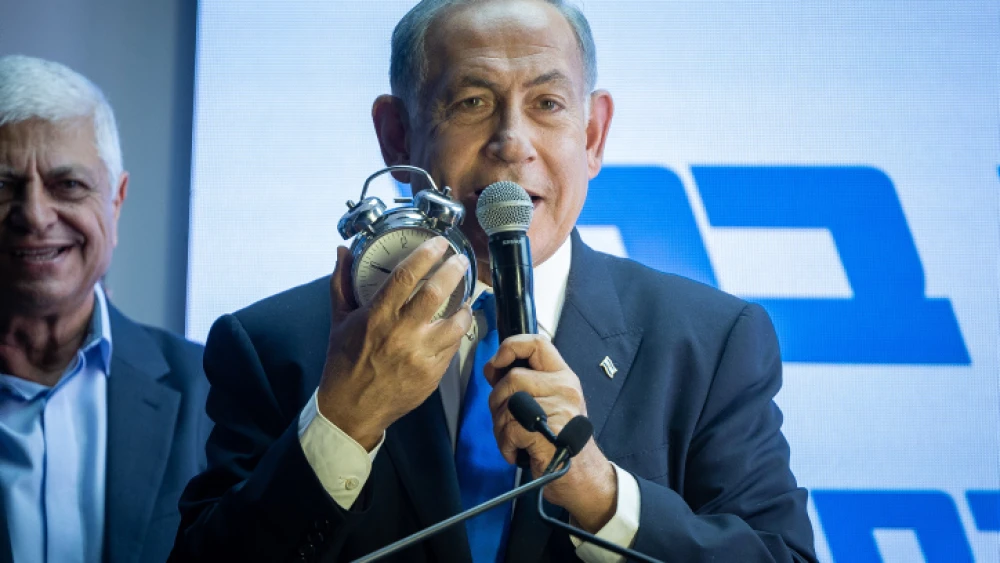
Although votes are still being tabulated, the bottom line of this election is that the Israeli people have spoken and the gridlock has finally been broken in favor of the right.
Likud leader Benjamin Netanyahu is poised to return to power, but he will not be able to do so unless he partners with the Religious Zionist Party, because no one else can provide the number of seats necessary to form a government.
Yesh Atid, which had sought to match Likud’s strength, will take comfort in having increased its strength from 17 to 24 seats.
The most surprising development is the Shas Party. As usual, it was overlooked by the pollsters and outperformed the polls by at least two seats, apparently winning a total of 10. This can be largely attributed to its decision to wage a campaign with two main themes. It pledged to fight the cost of living, which affects everyone, and also preserve Israel’s Jewish character.
Netanyahu, if the certified results match the exit polls, will be able to form a government with his right-wing and Haredi allies, but he may decide to extend a hand to his rivals in an attempt to form a unity government.
It’s true that voters want the right to be the ruling faction, but they also sent a message that they want electoral stability and calm. This can only be achieved with a diverse government. A narrow right-wing government would be a major headache for Netanyahu, who would be at the mercy of all his coalition members. This will be made even worse if Itamar Ben Gvir’s Otzma Yehudit splinters off into its own fringe faction.
If the past is prologue, governments that command only a narrow majority tend to be short-lived. Therefore, it is not beyond the realm of possibility that Netanyahu will try to expand his government by bringing Gantz’s National Unity Party in, despite the latter making it clear just hours after the results came in that this was off the table.
Netanyahu could also try to convince former Likudniks in other parties to return to the fold by defecting, presumably by promising them the moon.
Nechama Duek is a journalist and political commentator.
This article was originally published by Israel Hayom.



