Many Americans, especially Jews, may not be looking forward to Thanksgiving this year—certainly not because of the food (who doesn’t love pumpkin pie?) but because of the potential tension around the table.
Picture the careful seating arrangements: “Uncle Lou is a staunch Republican, you can’t seat him next to Jennie, who voted for Kamala Harris.” Or, “Don’t put Aunt Sylvia next to Hannah. Aunt Sylvia is totally left-wing on Israel, and Hannah has a son who lives in an Israeli settlement.”
That is just a small sample of potential Thanksgiving-seating-related conversations.
The political and cultural wars have come home, especially within the Jewish community. In the past year, election news has been nonstop, and in the wake of Oct. 7, discussions on Israel and Zionism are center stage.
The outcome of this presidential election delighted some Jews and devastated others, but there is a path forward. It is a very Jewish path—one that our texts and traditions have been trumpeting for 2,000 years.
It starts with Jews listening to one another.
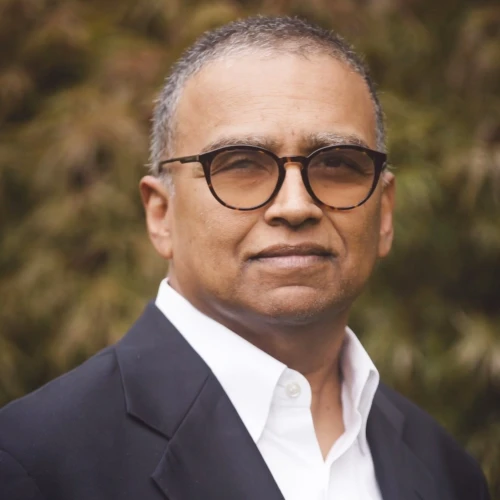
As a Reform rabbi with more than 40 years of experience leading difficult Jewish conversations, I co-founded Wisdom Without Walls with Sandra Lilienthal, a noted Orthodox Jewish educator, and Conservative Rabbi Ed Feinstein. Wisdom Without Walls is an online salon that brings together Jews from North America and beyond for meaningful dialogue with leading Jewish thinkers—authors, scholars and artists like Rabbi David Wolpe, Israeli journalist Yossi Klein Halevi and Elana Stein Hain of the Shalom Hartman Institute. These conversations are not just intellectual exercises; they are transformative.
Participants often share powerful realizations such as, “In most Jewish spaces, I’ve always been on the left. Now, I see that Jewish conservatives have valuable wisdom, too.” One woman said that when it comes to Israel, “I’m a right-winger, but I get it, those on the left are also living out their Jewish values.” Another person reflected, “I never understood the depth of trauma from Oct. 7 until this moment.” These dialogues transcend ideological lines and reflect diverse Jewish perspectives.
True, Jews in larger urban areas often have access to renowned speakers and events, but many in smaller or remote Jewish communities don’t. For these Jews, Wisdom Without Walls has been a lifeline, bridging ideological and geographical divides. It has become a vital space where differences are acknowledged and, more importantly, where people listen and learn from one another.
The initiative, powered by a small team, relies on the passion and dedication of Lilienthal and me; we see it as a soul-feeding endeavor rather than a financial one. But Lilienthal and I do not take salaries. This is our passion project, which feeds our souls—and the souls of so many. It has made us reflect on the deeply rooted human need to connect, even across ideological chasms.
Our work reminds me of the story of the Siloam Tunnel in ancient Jerusalem, which carried water from the Gihon Spring to the Pool of Siloam. Workers chiseled from opposite ends of the tunnel, calling out to one another in the dark until their axes met, allowing water to flow. This is what we hope to achieve: The flow of knowledge and understanding that nourishes and sustains Jewish life.
More than ever, Jews need spaces for conversations that go beyond religious or political identities. Hopefully, Jews can bring the spirit of open dialogue to their Thanksgiving tables. Instead of focusing on what divides us, we can listen and try to understand the beliefs of those we care about. Real listening can break through walls that divide us and allow the sweet waters of Judaism to flow freely—a gift we can all be thankful for.