
I practice male genital mutilation.
All these years as a mohel, I was under the impression I was performing a deeply spiritual act, continuing a 4,000-year-old unbroken chain. But thanks to Dr. Max Pemberton’s recent article in the Daily Mail, my eyes have finally been opened to the true nature of the procedure. It turns out everything Judaism ever taught me was a lie, and I owe him a debt of gratitude.
Or perhaps Pemberton is hiding behind a medical degree to peddle recycled anti-circumcision propaganda.
As someone who’s spent his career working to perfect the craft of brit milah and protect those who undergo it, I am deeply troubled by the anonymous accounts detailed in the article. Reports of post-procedural complications are distressing. But Pemberton’s presentation, while emotionally evocative, is anecdotal and not supported by the data.
Circumcision complications, especially at the neonate stage, are rare, occurring less than 0.5% of the time. And of these aberrations, the large majority relates to bleeding issues, which are easily resolvable with no long-lasting effects. These statistics are actually low as compared to most procedures. But the complication rate increases 20-fold for those circumcised between ages of one and nine, and ten-fold for those over age 10.
Although there’s a clear benefit for undergoing the procedure at a young age, the question of consent still remains. Many who argue against circumcision claim the parents have violated the child’s autonomy due to lack of consent. But by definition, that’s parenting. From vaccinations, to education, to even ear piercings—parents make these decisions for their children.
These choices are often done with the best intentions in mind. There is no way to know if one day they will resent the path chosen for them. And many who resent their circumcision do so for fanciful reasons. They’ve been sold a bad bill of goods. The anti-circumcision movement purports the solution to all sexual woes can be found in the foreskin.
From the 16 functions to the 20,000 nerve endings contained therein, the foreskin has become a mythical sexual pot of gold. Many of the men and women waging war against the practice do so on faulty grounds. Two of the 16 functions listed are protection from sunburn and frostbite, and the number of nerve endings has never been officially researched.
There is no doubt that there is a difference in sensation pre- and post-circumcision, but this result is solely dependent on the individual. There are those who have had the procedure done later in life who are unhappy with the result, and there are those who feel that it’s an improvement. These reactions have been documented in peer-reviewed studies, indicating one definitive correlation: those who feel positive about the procedure have increased sexual satisfaction, while those who regret it show a marked decrease. This is not to say it’s all in one’s head (no pun intended), but there is definitely more going on than just the presence or absence of a piece of skin.
The one area Pemberton and I agree on is regulation. Circumcision should not be a free-for-all that anyone can perform. The Jewish community has never treated it that way. In England, organizations such as Milah UK and The Initiation Society effectively regulate the safe practice of the ancient rite with measurable results. The solution to undesired outcomes is not a ban, but rather increased oversight in communities that lack proper regulations.
However, it’s easy to take governmental oversight too far. When it comes to Female Genital Mutilation (FGM), one could easily draw the wrong conclusions. At first glance, FGM seems identical to circumcision: both involve removal of skin in the same region of the body. But beyond that they are vastly dissimilar.
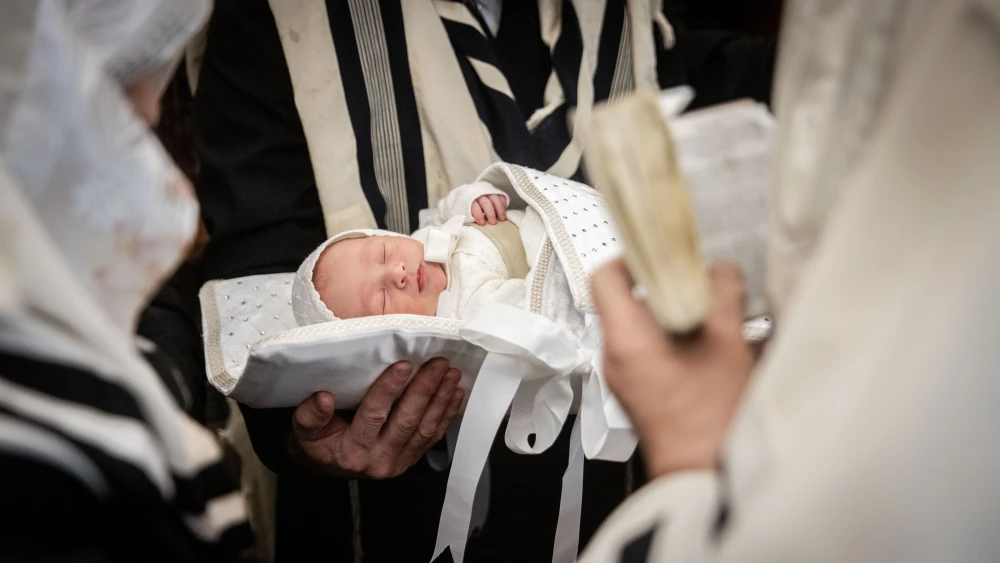
Brit milah is a religious rite intended to elevate the male members of the community to full status. There is no intention nor is the result a conclusive loss of sexual sensation. FGM is the opposite. The intention is to keep the woman subservient to her husband, while experiencing little to no sexual pleasure. The practice is unlike a bris in the Jewish community; when FGM is done traditionally, it puts women in life-threatening danger due to its lack of hygiene and commitment to medical standards.
Circumcision has been proven to be medically beneficial. Studies have shown that beyond preventing the transmission and contraction of sexual diseases, it also reduces both penile and cervical cancers. A child is more likely to have a negative event with his foreskin than a complication with its removal, according to statistics. Circumcision also significantly reduces the likelihood of urinary tract infections. While this may seem trivial, UTI’s can lead to hospitalization and sepsis, the latter of which contributes to thousands of deaths annually.
On a statistical level, there generally isn’t an indication of the psychological effects of circumcision. Just as much as Pemberton can quote men he’s interacted with who are experiencing lasting trauma, I can report that Jews have not experienced this trauma as a collective.
The Jewish community isn’t one for “manning up” as he put it. We don’t suppress dissension. Ours is a tradition deeply rooted in open debate at all levels. Those who oppose the practice have made their voices heard. But if there were such lasting implications, the Jewish people would have been the first to feel them.
I’ll concede that routine medical circumcision is not a necessity. Just as the AAP has left the decision to circumcise up to the parents, I, too, see the value in an even-handed approach to the practice. Outside of the religious context, parents should be given the information and be encouraged to make an informed decision. But people like Pemberton and his cohort are not interested in educating the public.
The anti-circumcision movement is out for blood. They masquerade as the saviors of newborns while peddling lies. And they will not stop until circumcision is outlawed. As one who toils in the safety of babies, it is my duty to speak up for our age-old rite because one’s mutilation is another’s freedom.