Newsletter
Newsletter Support JNS

Al Jazeera honors al-Qaradawi with interviews defending suicide bombings

The recently-deceased Muslim Brotherhood spiritual leader told the TV channel “martyrdom operations,” are justified against “occupiers.”

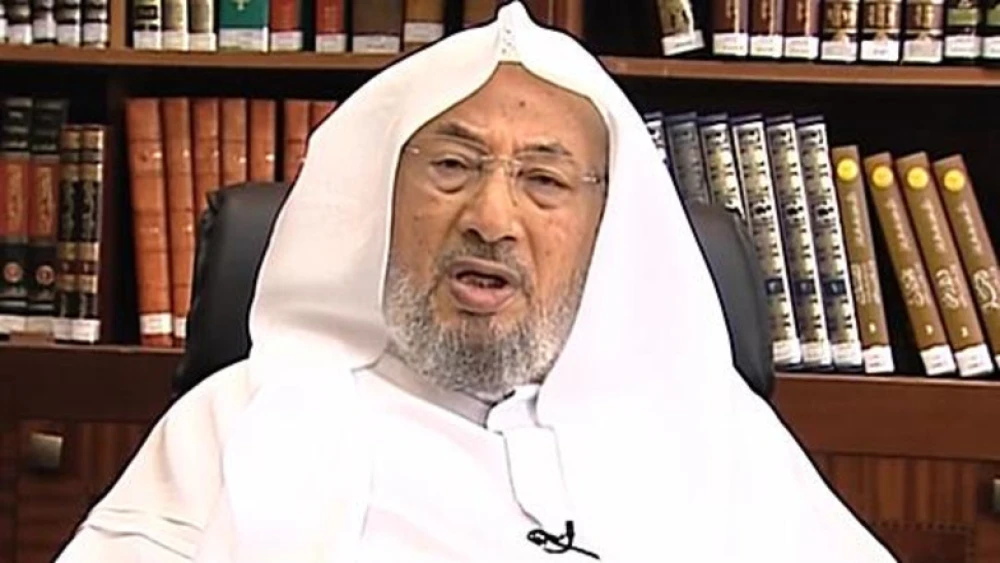
Islamist cleric Sheikh Youssef al-Qaradawi. Photo: Ebong abd/Wikimedia

The Qatar-based Al Jazeera network aired a program honoring Muslim Brotherhood spiritual leader Sheikh Youssef al-Qaradawi on Sept. 29, three days after his death at age 96. The program included excerpts from interviews in which al-Qaradawi defended his support for “martyrdom operations,” i.e. suicide bombings against “occupiers” including civilians.

In the interviews translated by MEMRI, al-Qaradawi lauded Qatar for its role in spreading his teachings.

He explained that in “lawful” “martyrdom operations,” people use their bodies to defend their country from occupiers, which was not the case in the 9/11 attacks, in which the attackers killed innocent airplane passengers in order to “invade” and assault the United States.

Born in Egypt in 1926, Qaradawi left his homeland in the 1960s for the Gulf state of Qatar, where he enjoyed the protection of the royal family and preached militant Islamist ideology to the Sunni world.

Hamas and the Islamic Movement in Israel are both offshoots of the Muslim Brotherhood.

“At a time when some would isolate Israeli academia, UCLA has chosen collaboration,” Eveline Shekhman of the American Jewish Medical Association told JNS.
“The juxtaposition of us being at the United Nations, and all those people walking out while literally their employees helped to perpetuate Oct. 7 was put in a certain frame,” Rabbi Steven Burg of Aish told JNS.
“I want you to listen to my words carefully: One day, and it may not be far away, the Iranian people will be free. Their murderous regime will be toppled by its lies, by its corruption, by its cruelty,” the Israeli prime minister said.
Jason Brodsky, of United Against Nuclear Iran, told JNS that the address carried messages to “the international community, antisemites abroad, state threats against Israel and most especially the Iranian people.”