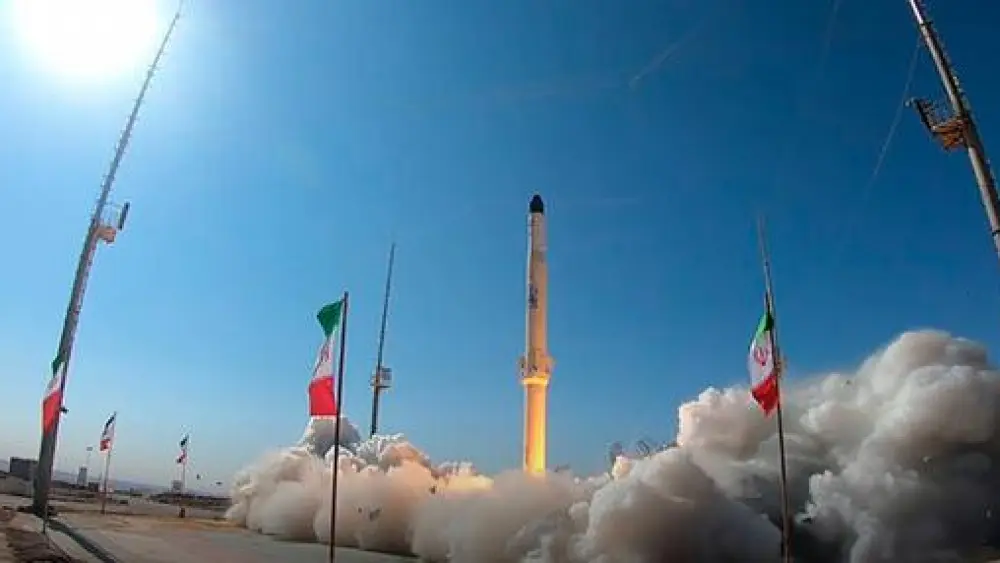
Satellite images of the Iranian Space Center show that Iran is preparing to send a space-launch vehicle out of the atmosphere, a new report by the Jerusalem Center for Public Affairs said on Wednesday.
The report, by Lt. Col. (ret.) Michael Segall, a senior analyst at the JCPA, noted that the development is occurring as nuclear talks between Iran and world powers are occurring in Vienna, adding that “the action may be intended as leverage to further pressure the West in the negotiations.”
“It is widely suspected that Iran is seeking to connect its nuclear capabilities to launch vehicles for nuclear weapons,” added the report.
In February of this year, Iran launched a new, powerful, three-stage rocket called “Zuljanah,” claiming it could lift “a 500-pound payload as high as 310 miles.”
Such systems could also enable an intercontinental ballistic missile to launch and re-enter the atmosphere
The U.S. Defense Intelligence Agency found that an Iranian space launch vehicle called “Simorgh” could be “capable of ICBM ranges if configured as a ballistic missile,” according to the report.