Russia

Due to the sensitivity of the issue and Israel’s good working relationship with the two countries, officials are treading carefully to avoid appearance that they’re taking sides.

Former defense officials say the development is an indication of Moscow’s desire to back the sovereignty of Syrian President Bashar Assad and that this may not be good news for Iran; the messaging could also be relevant for current Russian-American tensions regarding Ukraine.

There are no plans to evacuate Israelis at this time, says the Foreign Ministry • Jewish Agency informs employees it will ensure they are evacuated should war break out.

U.S. forces have also been put on heightened alert; White House warns Russia of “massive consequences and severe economic costs.”

Jewish organizations estimate that as many as 75,000 Ukrainians in the eastern part of the country are eligible for Israeli citizenship.

President Alar Karis has called for an increase in NATO troop numbers in his country amid tensions with Russia.

“The bottom line is that Kazakhstan is a very problematic country. Why? Because basically, it’s a target of many important global players, including Russia, Turkey, the U.S. and China, not to mention Islamist groups. They all have interests there,” said Zvi Magen, a researcher at the Tel Aviv-based Institute for National Security Studies.

As talks between world powers continue in Vienna, the Israeli prime minister raised the importance of maintaining a strong stance against Tehran’s nuclear program.
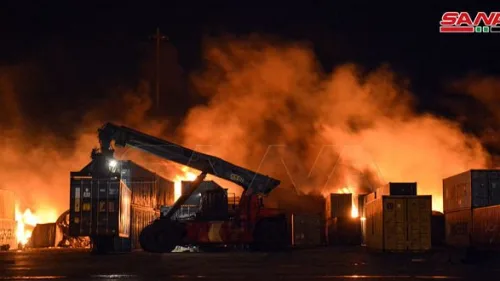
“The Israelis target sites that are inside Russian-controlled areas, and they [the Russian troops] don’t even intercept the missiles,” says the official.
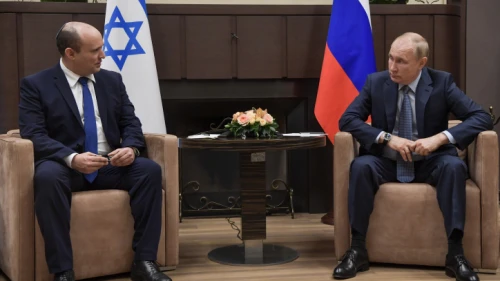
President Vladimir Putin’s bluffing “is extremely dangerous,” warns Dima Course, a postdoctoral fellow and lecturer at Ariel University. “Every provocation from any side, every mistake on the ground, can provoke a major clash with unpredictable consequences.”

Russian foreign minister cancels planned Israel visit, citing ‘personal reasons’
Russian Foreign Minister Sergey Lavrov was to have met with his Israeli counterpart Yair Lapid, as well as with Israeli Prime Minister Naftali Bennett.

The majority of materials were taken in July 1942 from Thessaloniki, which once had a thriving Jewish community.