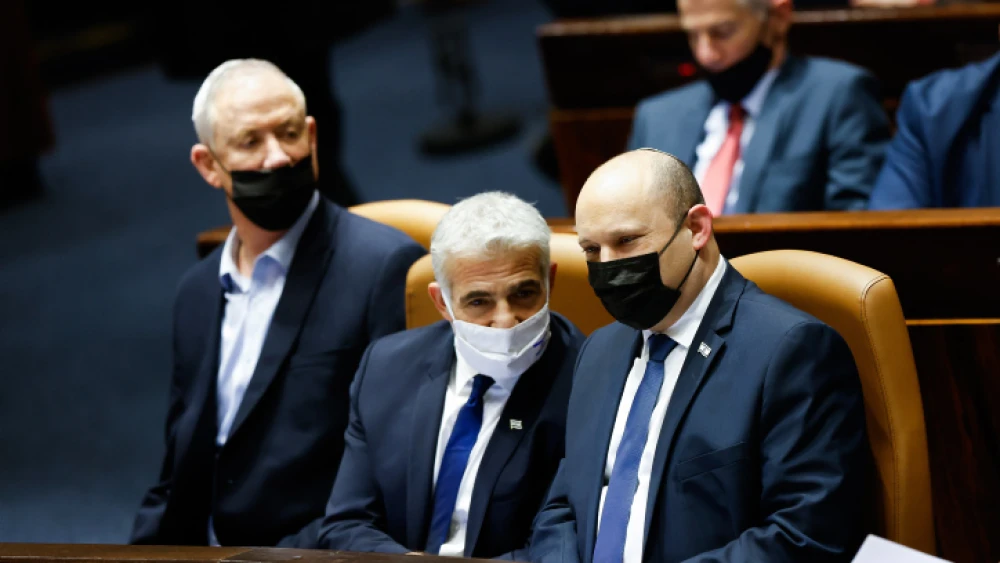
Israeli Prime Minister Naftali Bennett held an assessment of the situation regarding Ukraine and Russia on Thursday with senior officials.
According to the Prime Minister’s Office, the leaders said that the main points for Israel during the crisis were a continuation of efforts to evacuate Israelis from the area, aid to the Jewish community in Ukraine and preparations to receive olim, preparations to render humanitarian assistance as necessary and continued discussions on the situation as it pertains to Israel.
“The consequences of the crisis, in its diplomatic, economic and security aspects, were reviewed in the discussion,” the Prime Minister’s Office said in a statement.
Participating in the discussion were Foreign Minister Yair Lapid, Defense Minister Benny Gantz, National Security Adviser and Director of the National Security Council Eyal Hulata, the Prime Minister’s Office Director-General, the Foreign Ministry Director-General and the Finance Ministry Director-General as well as representatives from the IDF, the Foreign Ministry, the Defense Ministry and National Information Directorate.
In remarks on Thursday, Bennett avoided outright condemning the Russian invasion and mentioning Moscow by name.
Speaking at an IDF officer graduation ceremony in southern Israel, Bennett noted that the “world order is changing,” and that it is becoming “much less stable, and our region, too, is changing every day.”
“These are difficult, tragic times,” the Israeli leader said. “Our hearts are with the civilians of eastern Ukraine who were caught up in this situation.”
However, Israeli Foreign Minister Yair Lapid was harsher in his tone on Thursday, calling the invasion “a grave violation of the international order.”
Addressing the nation on Thursday, U.S. President Joe Biden said that Russian President Vladimir Putin “chose this war” and laid out a set of measures that will “impose a severe cost on the Russian economy, both immediately and over time.”