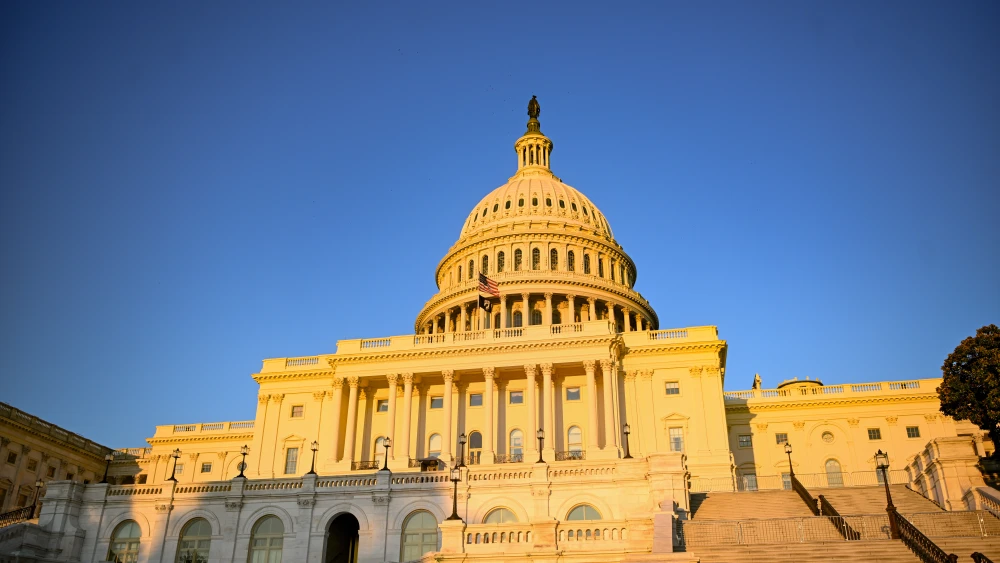
Reps. French Hill (R-Ark.) and Jared Moskowitz (D-Fla.) introduced a bill in the U.S. House of Representatives on Thursday that aims to disrupt production and trafficking of illegal drugs, including captagon, across the Middle East
The bipartisan bill was filed as an update to a bill that Hill introduced, and which passed the House, which requires the federal government to develop an interagency strategy to dismantle narcotics production, trafficking and affiliated networks linked to the Bashar Assad regime in Syria that fell in December 2024.
A psychostimulant that is illegal in most countries, captagon boomed under the Assad regime, which was responsible for around 80% of the drug’s global production, a multi-billion-dollar industry.
Deposed in late 2024, Assad self-exiled to Russia.
“Following the fall of Assad, captagon production has shifted, trafficking routes have adapted and the harm is spreading across the region,” Hill stated. “It is imperative that we have clear, up-to-date information and a coordinated strategy to disrupt these networks, address the growing methamphetamine problem and protect regional and global stability.”
In the post-Assad era, production and trafficking has shifted in the region, including into smaller operations in southern Syria, along with Iraq, Yemen and Sudan.
“Congress must update its strategy to meet the reality on the ground” to “track evolving narcotics networks, strengthen cooperation with our partners and disrupt criminal organizations tied to Hezbollah and Iran-backed proxies,” Moskowitz stated.
The new bill requests the U.S. defense secretary and a wide range of federal agencies to submit a report to Congress on captagon and similar drug production and trafficking.
Several groups, including the Syrian American Council and the American Task Force on Lebanon, back the bill.
“Soldiers from the Lebanese Armed Forces have lost their lives in this mission, and the LAF has proven an excellent and capable strategic U.S. partner in this critical effort,” Ed Gabriel, president and CEO of the American Task Force on Lebanon, stated.