Newsletter
Newsletter Support JNS

UNRWA says it has run out of funds, cannot pay employees

The Trump administration cut all U.S. funding to UNRWA in September 2018 due to criticism that the agency enables the Palestinian refugee issue and teaches anti-Israel material in its student textbooks.

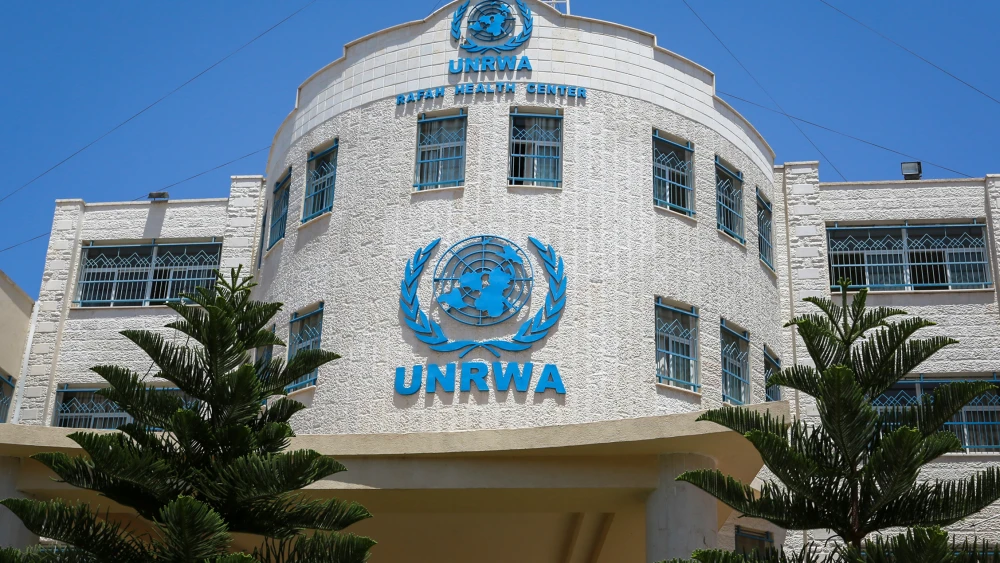
The United Nations Relief and Works Agency (UNRWA) building in Rafah, the southern Gaza Strip, July 26, 2018. Photo by Abed Rahim Khatib/Flash90.

The United Nations Relief and Works Agency for Palestine Refugees (UNRWA) said on Monday that it has run out of funding to pay the salaries of its staff across the Middle East.

The U.N. agency for Palestinian refugees announced that it will need $70 million by the end of the month to completely pay 28,000 staff for November and December. It called for donations in order to avoid the halt of its essential services.

“Despite all of our efforts to raise the resources needed to keep our humanitarian and development programs running, it was with great regret that I informed our staff today that we don’t have sufficient funding at this stage to honor their salaries this month,” said UNRWA Commissioner-General Philippe Lazzarini in a statement. “If additional funding is not pledged in the next weeks, UNRWA will be forced to defer partial salaries to all staff.”

The Trump administration cut all U.S. funding to UNRWA in September 2018 due to criticism that the agency enables the Palestinian refugee issue and teaches anti-Israel material in its student textbooks.

Although President-elect Joe Biden is expected to restore funding, UNRWA officials said that the resumption would likely take months and would be “late to meet the hole in the agency’s $1.4 billion annual budget, including emergency programs for Gaza, Syria and COVID-19,” reported Reuters.

A small business owner in the Big Apple told JNS that she is being hurt by tariffs more than by the credit rating.
Jay Greene, author of a new report on the subject, told JNS that the unions communicate in an “overwrought and extreme” way about Israel.
“Why are we to trust the U.N.’s own vetting procedures?” Adam Kaplan, of USAID, asked a congressional committee.
The pro-Israel group “has become increasingly problematic for many American Jews and for many candidates running for office,” Lauren Strauss, of American University, told JNS.
Sharon Liberman Mintz, of Jewish Theological Seminary, told JNS that the 1526 Haggadah “is one of the most exciting books that I have ever had the pleasure to turn the pages of.”
Tehran combines a narrative of victory with one of victimhood to shape public opinion. Israel is trying to catch up in the battle for public perception.