
In the mid-1990s, a Jewish-American marketing professional named Gary Wexler was hired by the Ford Foundation to help build a marketing institute for its Israeli grantees. Ford was funding both Jewish and Arab civil society organizations inside Israel, believing it was helping construct a liberal, democratic Middle East.
Wexler sat down with every organization on the list. The Jewish groups were euphoric. Peace, co-existence, a new Middle East. The Arab organizations were having a completely different conversation. The word “peace” never came up. And from every Arab organization he interviewed, whenever Wexler pressed on anything sensitive, he got the same answer: “Go ask Ameer Makhoul.”
Makhoul ran an Arab civil-rights organization in Haifa. He was also the person coordinating every Arab NGO in that network.
When Wexler finally sat down with him, Makhoul opened by reciting Wexler’s biography back to him: his college, his campus activism, his kibbutz summers, his Jewish organizational clients. Then he made his intentions clear.
“Just like you were a Zionist campus activist, we will create Palestinian campus activists in America and all over the world. Bigger and better. Just like you spent your summers on the kibbutz, we will bring college students to spend their summers in refugee camps. Just like you helped create global pro-Israel organizations, we will create global pro-Palestinian organizations.”
The money, he said, would come from the European Union, Arab governments, Muslim governments and wealthy Arab donors. Not from Jewish liberal foundations.
The next morning, Ford called Wexler to say that Makhoul had reported he’d threatened him and “spewed Zionist propaganda.” It was an outright lie. Wexler’s partner was in the room for every word. Ford backed down.
Years later, Ameer Makhoul had been arrested as a spy for Syria and Hezbollah. He pleaded guilty and served time in an Israeli prison.
The plan he described in that Haifa office was carried out almost exactly as he outlined it.
From 2000 to 2001, the Ford Foundation extended more than $35 million to some 272 Arab and Palestinian organizations through its Cairo office. Since the 1950s, Ford’s Beirut and Cairo offices had awarded more than $193 million to more than 350 Middle Eastern organizations, the overwhelming majority Arab, Islamic or Palestinian.
• • •
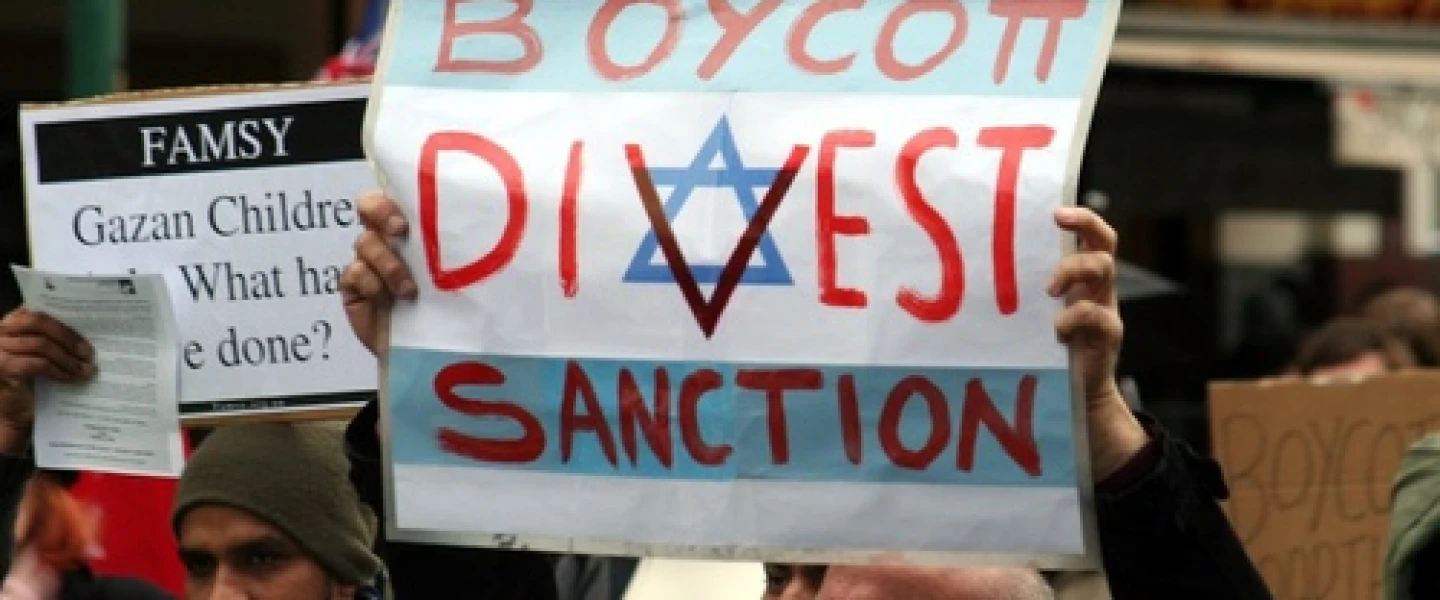
In August 2001, the United Nations held its World Conference Against Racism in Durban, South Africa. It was supposed to address global racial injustice. What it became was an internationally broadcast antisemitism festival. Nazi imagery and Jewish caricatures were distributed openly. Resolutions were drafted, labeling Israel a “racist apartheid state” guilty of genocide. The U.S. delegation walked out.
The NGOs orchestrating much of that conference were Ford grantees.
The Palestinian NGO Network, funded by Ford, drove the effort to pass a resolution calling for “a policy of complete and total isolation of Israel as an apartheid state,” including mandatory sanctions and the full cessation of all diplomatic, economic, and military ties. Another Ford grantee, according to UN Watch, “was instrumental in creating the antisemitic and anti-Zionist focus at Durban.”
In 2003, Rep. Jerrold Nadler (D-N.Y.) and 20 colleagues sent a formal letter to Susan Berresford, president of the Ford Foundation, documenting the grantees’ activities, including one that maintained website links to Hamas, Islamic Jihad and the Popular Front for the Liberation of Palestine.
Berresford met with Nadler and committed that Ford would not fund groups that espouse antisemitism, promote violence or deny Israel’s right to exist. Some grantees were cut. New guidelines were issued. But independent monitors at NGO Monitor later found that the Durban strategy continued inside Ford’s grant portfolio even after those public commitments.
Meanwhile, the campus infrastructure was being built.
• • •
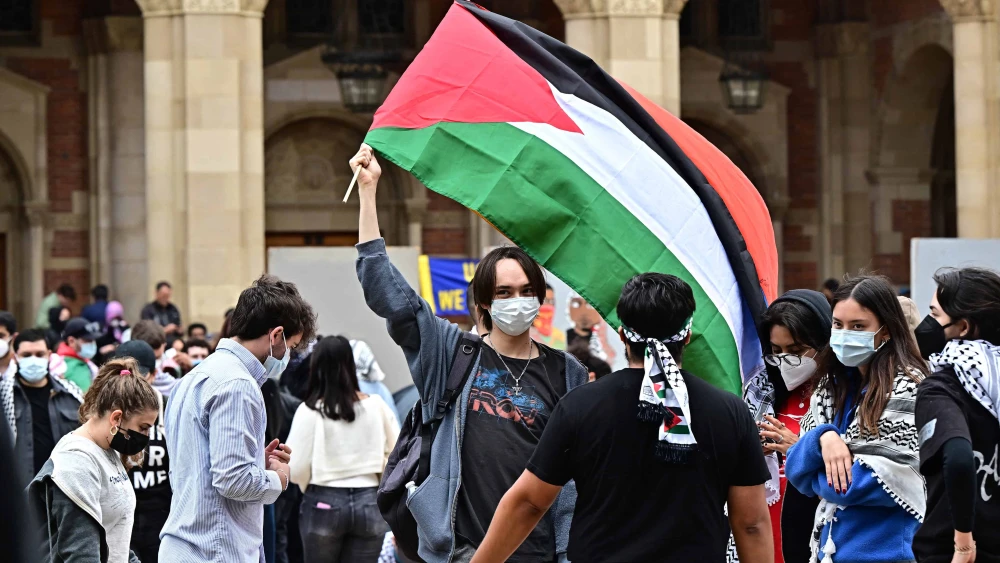
Students for Justice in Palestine was founded at the University of California, Berkeley in 1993, built primarily by Hatem Bazian, who founded American Muslims for Palestine (AMP) in 2006. The Foundation for Defense of Democracies has documented links between AMP and Hamas.
The tactics were designed for maximum impact. Mock Israeli military checkpoints were built in campus plazas. Fake eviction notices were slipped under Jewish students’ dormitory doors. BDS resolutions were timed to coincide with Jewish holidays, when Jewish students would be least likely to attend governance meetings. By 2023, SJP had an estimated 250 active chapters across the United States, Canada and New Zealand, with more than 80 additional applications filed in the weeks after the Hamas-led terrorist attacks in southern Israel on Oct. 7.
The language these chapters use is engineered, not organic. Israel is a colonial project. Zionism is white supremacism. Jews have white privilege, even though more than half of Israel’s Jewish population is Mizrahi, Ethiopian or Sephardic, meaning they or their families came from Arab countries, Iran or Africa. Every phrase slots Palestinian advocacy into the identity-politics vocabulary that dominates American university culture and places Israel on the wrong side of the progressive moral hierarchy. Challenge any of it, and you’re a racist. That’s how it was designed to work.
AMCHA Initiative research found that antisemitism is eight times more likely to occur on campuses with at least one active anti-Zionist student organization. A Brandeis University study found that an active SJP chapter is one of the strongest statistical predictors of a hostile campus environment for Jewish students.
• • •
The Jewish institutional response has been reactive, fragmented and late.
Within weeks of Oct. 7, Wexler had received more than 200 separate fundraising solicitations from more than 200 separate Jewish organizations. No coordination, no unified message and zero shared strategy. Donors put up billboards. Social media campaigns were assembled. Every one of these efforts was a reaction to a playing field built by the other side, in a language developed by the other side, within a moral framework constructed over 30 years.
Good intentions running in 200 separate directions aren’t a strategy but a lot of expensive noise. And it fell flat.
There was a documented, deliberate, organized, multi-decade campaign to build Palestinian advocacy infrastructure on American campuses and in global institutions. The Ford Foundation funded Palestinian organizations that played central roles at Durban. Despite reforms, it continued funding organizations pursuing that same strategy. Again, documented. Campus antisemitism is statistically correlated with the presence of anti-Zionist student organizations. Yep, documented.
Not everyone holding a “Free Palestine” sign is a knowing participant in a coordinated operation. People adopt ideas because those ideas offer a clear story and come with social belonging. The Palestinian advocacy campaign understood that and built for it. The Jewish world mostly didn’t.
• • •
One question worth addressing directly is why so much of the left embraces this cause while the right largely stayed on Israel’s side?
The campaign that Makhoul described was built specifically for a progressive audience, using the language of anti-colonialism, indigenous rights and racial justice because that’s the vocabulary the Western left organizes around.
Conservatives were never the target. They had their own reasons to support Israel, rooted in evangelical theology, Cold War alignment and an instinctive respect for a small sovereign nation defending itself against hostile neighbors.
The campus was the chosen battlefield precisely because the student body leans left, and the language was engineered to be persuasive there. That doesn’t mean everyone who was persuaded is antisemitic. Some were genuinely moved by Palestinian civilian suffering. Some buckled under social pressure, working from a framework that had been deliberately fed to them over decades without their awareness. The campaign was sophisticated enough to reach all of those people simultaneously, through the same message.
• • •
Ameer Makhoul is free. He served his sentence and was released. The plan he described in a Haifa office in the 1990s was executed with patience and a strategic precision that most Jewish organizations responding to Oct. 7 still haven’t matched.
The question Wexler raised in 2023 remains unanswered: Is there a Jewish leadership capable of the long-horizon, coordinated effort required to actually change this?
Not to win a news cycle or raise money off a crisis. But to build something durable that doesn’t just react to the field as drawn but insists on drawing its own.
Twenty-five years after that meeting in Haifa, we’re still waiting.
And now, as Israel and the United States move to dismantle the Islamic regime in Iran, the same people who marched for Hamas are marching for the ayatollahs. The same students who called Oct. 7 “resistance” are now framing an oppressive, murderous regime that funds Hamas, Hezbollah and other terrorist entities; executes its own citizens for protesting; and has spent 40 years promising to wipe Israel off the map, as a victim of Western imperialism.
The Iranian people who have been dying in the streets trying to break free from that regime don’t register. They don’t fit neatly into the story.
• • •
This was never only about Palestine. It’s about a fixed ideological position that designates the United States and Israel as the permanent villain in every conflict, regardless of who the actual victims are.
When the cause shifts but the coalition stays identical and the target stays identical, you’re not looking at humanitarian concern. It’s a strategy. The machinery Makhoul described in that Haifa office wasn’t built to protect civilians.
Oct. 7 proved it. Iran is proving it again.
Originally published in The Jewish Star.