The United States conducted a series of airstrikes over the weekend on Yemen’s capital of Sanaa, and on Hodeidah, the country’s principal Red Sea port.
On Saturday evening, U.S. aircraft targeted Mount Nuqum, east of Sanaa, and the Al-Nahda neighborhood in the Al-Thawra district, northwest of the capital, German press agency DPA reported.
Earlier, the U.S. targeted the Hodeidah port and its airport, according to the Houthi-owned Al-Masirah television channel.
The attacks followed U.S. strikes late last week aimed at destroying the Houthi-controlled Ras Isa fuel port, which U.S. Central Command announced on April 17.
Ras Isa terminal, about 35 miles north of Hodeidah, has a storage capacity of three million barrels.
“Today, U.S. forces took action to eliminate this source of fuel for the Iran-backed Houthi terrorists and deprive them of illegal revenue that has funded Houthi efforts to terrorize the entire region for over 10 years,” read a CENTCOM statement.
“The objective of these strikes was to degrade the economic source of power of the Houthis, who continue to exploit and bring great pain upon their fellow countrymen,” the statement continued.
The Houthis have been able to sustain their military operations and receive economic benefit by “embezzling the profits” from oil through the Ras Isa port, according to CENTCOM.
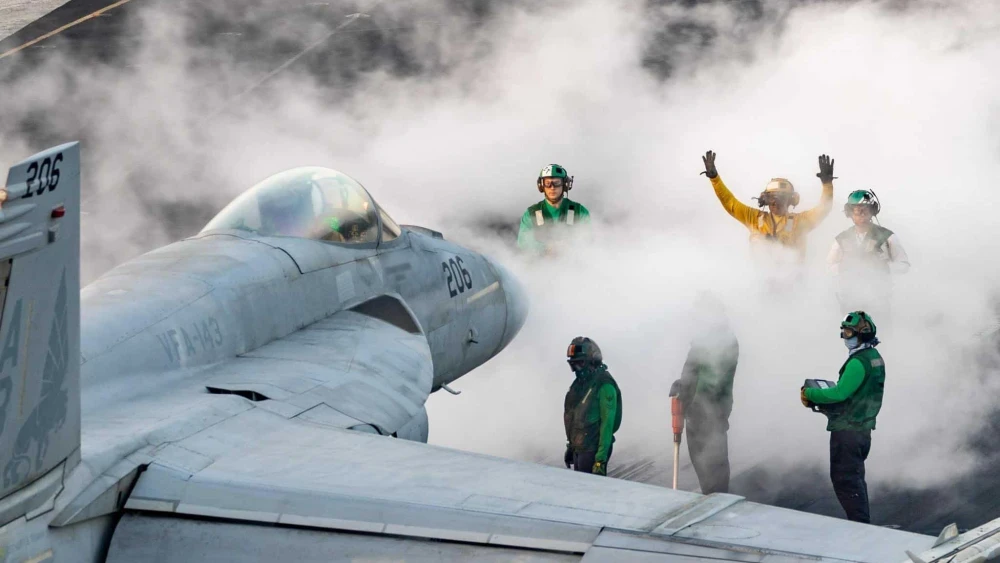
Arming aircraft aboard USS Harry S. Truman for operations against Iran-backed Houthis…#HouthisAreTerrorists pic.twitter.com/tLrXQsu314
— U.S. Central Command (@CENTCOM) April 7, 2025
At least 74 were killed in the attack and 171 injured, the Iran-backed group claimed on Friday.
The group also vowed revenge against the United States and Israel for the intensifying U.S. raids.
“The American military buildup and continued aggression against our country will only lead to more counter-attack and attack operations, clashes and confrontations,” said Houthi military spokesman Yahya Saree.
The Houthis claimed to have attacked two U.S. aircraft carriers, USS Harry S. Truman and USS Carl Vinson.
The Houthis also launched a missile at Israel in the early morning hours on Friday, triggering sirens across central Israel, Jerusalem and parts of Judea and Samaria. The missile was successfully intercepted, according to the Israeli military.