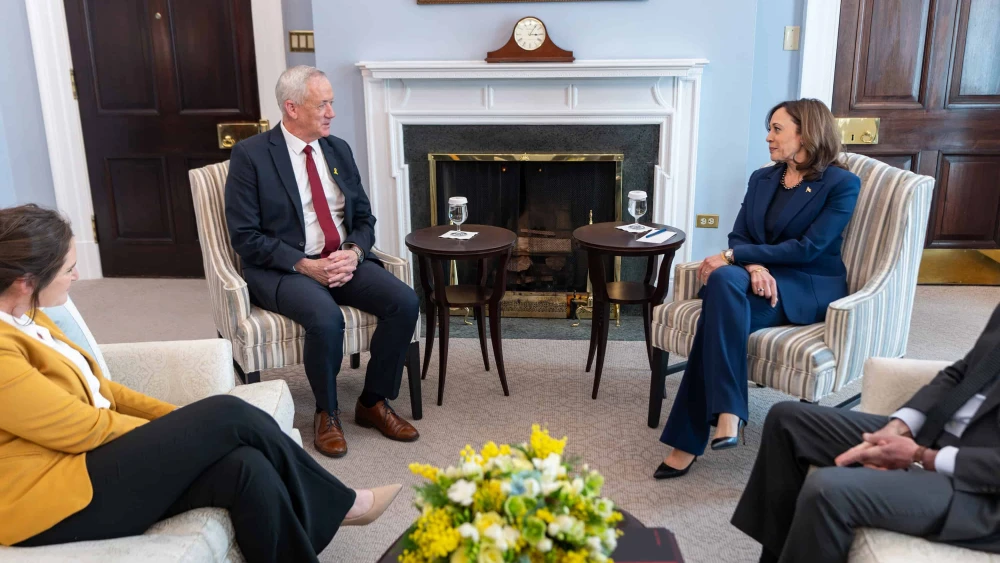
U.S. Vice President Kamala Harris underscored America’s “unwavering commitment” to Israel’s security but also expressed “deep concern” for humanitarian conditions in Gaza during a meeting with Israeli War Cabinet member Benny Gantz at the White House on Monday.
Harris “reiterated U.S. support for Israel’s right to defend itself in the face of ongoing Hamas terrorist threats,” according to a White House statement on the meeting.
She also stressed the urgency of reaching a hostage deal, welcomed Israel’s “constructive approach” to the talks and called on Hamas to accept the terms on the table, in which the hostages would be released in exchange for an immediate six-week ceasefire and a surge of humanitarian assistance across the Gaza Strip.
The vice president and Gantz also reviewed the situation in Rafah, a city in Gaza bordering Egypt and the last stronghold of Hamas, which Israel intends to enter to clear of terrorists.
“A credible and implementable humanitarian plan” was needed before a major military operation, “given the risks to civilians,” Harris said.
“She urged Israel to take additional measures in cooperation with the United States and international partners to increase the flow of humanitarian assistance into Gaza and ensure its safe distribution to those in need,” the White House readout said.
Gantz also met with U.S. National Security Advisor Jake Sullivan. During the hour-and-a-half meeting, Sullivan presented Gantz with a graph and said Israel must “finish the mission” in Gaza.
Gantz also met with Secretary of State Antony Blinken.
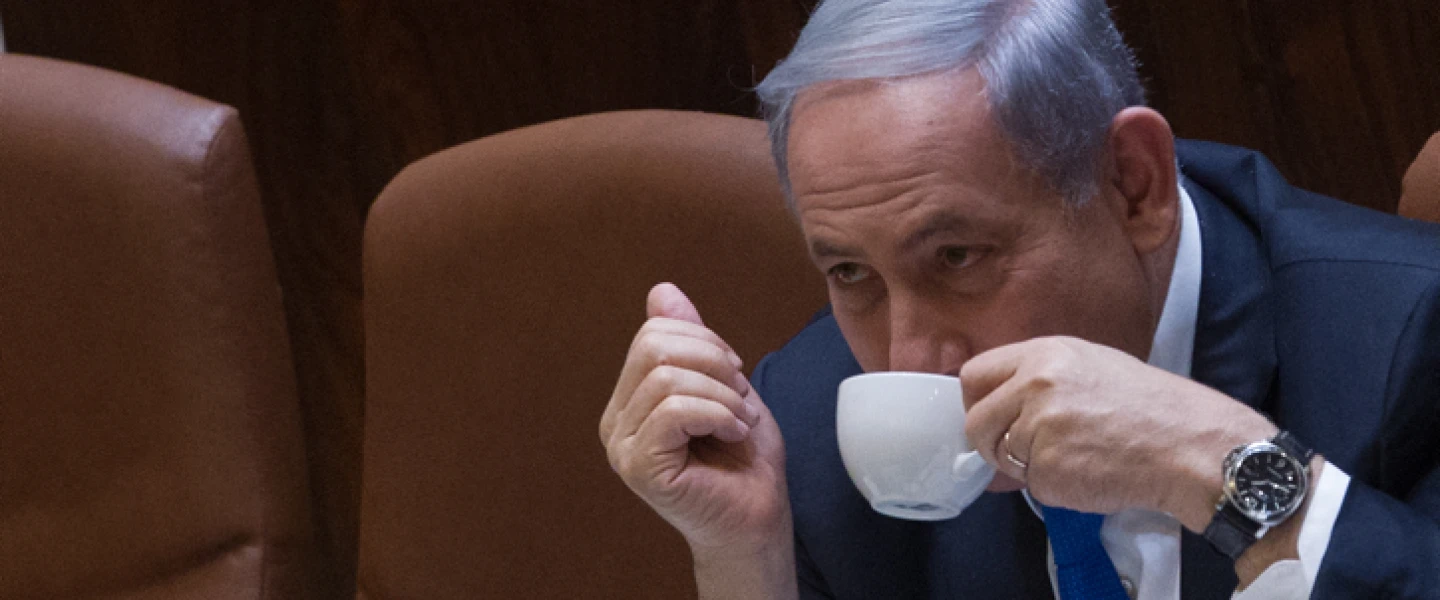
Prime Minister Benjamin Netanyahu strongly opposed Gantz’s visit, which he did not authorize. The Israeli embassy in Washington was instructed not to assist with the trip.
Netanyahu “made it clear to Minister Gantz that the State of Israel only has one prime minister,” and that the trip preparations did not follow proper procedures mandating “every minister to clear travel in advance with the prime minister, including approval of the travel plan,” a source close to the prime minister told Ynet.
State Department spokesman Matthew Miller was forced to defend the administration’s decision to meet with Gantz despite the prime minister’s opposition during a press conference on Monday.
“So in taking these meetings, did the U.S. consider that they might fuel political instability within the existing Israeli government?” a reporter asked.
“The various political intrigue inside Israel is ultimately a matter for the government of Israel and the political class in Israel that we take no position on,” Miller said.
Gantz came to bolster U.S.-Israel ties, strengthen American support for Israel’s war effort, and push for the release of hostages held by Hamas, AP reported, citing an Israeli official. Gantz will next head to the U.K.
Richard Goldberg, a senior adviser at the Foundation for Defense of Democracies, a Washington think tank, told AP, “I don’t doubt there are some administration officials who believe just by meeting with Gantz they are undermining Netanyahu.
“But if Gantz carries the government’s line on key issues of disagreement, these meetings are net-negative for the White House while helpful back home for Gantz,” he said.