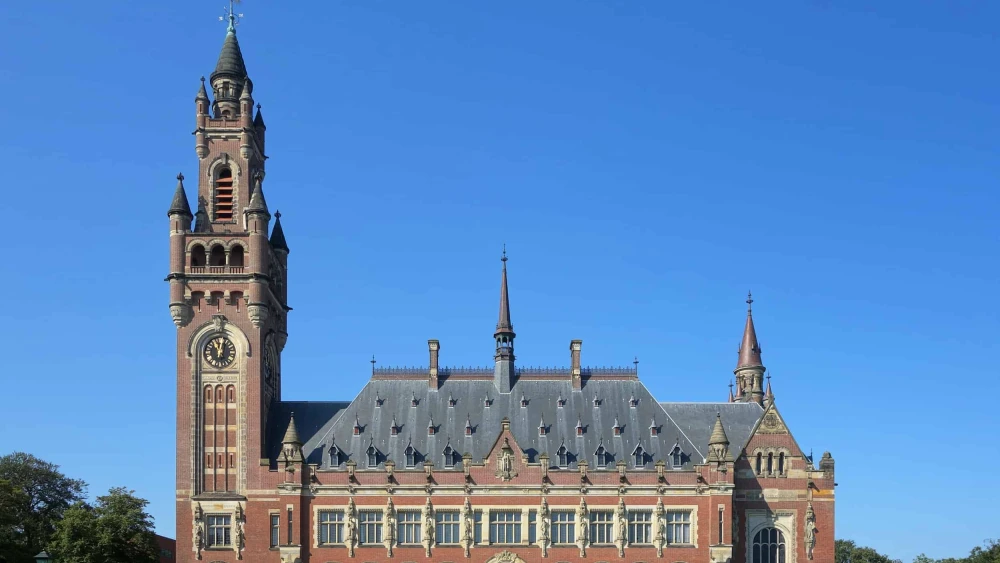
Germany said that it is withdrawing its backing of Israel in a genocide case that South Africa brought against the Jewish state before the International Court of Justice, as Berlin faces its own charges before the court for aiding Israel.
The court, which is based in The Hague, is the principal judicial arm of the United Nations.
Germany said in early 2024 that it would file a third-party intervention in South Africa’s case against Israel in the wake of the Hamas-led Oct. 7 terror attacks.
At the time, Berlin rejected South Africa’s claims as “baseless” and a “political instrumentalization” of the Genocide Convention, while supporting Israel’s right to self-defense.
Multiple German government officials said this week that the country is now withdrawing that support, as Berlin defends itself in a separate case that Nicaragua brought before the International Court of Justice.
Nicaragua alleges that Germany is violating international law, including the Genocide Convention, by supporting Israel politically, financially and militarially in its war against Hamas.
The court turned down Nicaragua’s request for emergency measures, but the case was allowed to proceed and remains active.
Germany has argued that the court cannot logically make a determination on its actions until it decides the case against Israel. An intervention on behalf of Israel could serve to undermine Germany’s reasoning.
“There will not be an intervention at the International Court of Justice,” stated Josef Hinterseher, deputy spokesman for the German Foreign Ministry.
“We are now part of a process at the ICJ initiated by Nicaragua, and we have decided to focus on this process,” he said.
Germany is Israel’s second-largest arms supplier and fifth-largest export partner. It has rarely exercised criticism of Israel amid the war and lifted a suspension of some arms export licences to Israel in November.
Earlier this week, Israel filed its response to South Africa’s case, following two time extensions.
South Africa is now debating whether to reply to Israel’s response or advance the case to oral hearings.
Paraguay filed an intervention last week on behalf of Israel. Eighteen countries back South Africa’s application, including the staunchly anti-Israel governments of Ireland and Spain.
Any country party to the Genocide Conention can take another to court over that subject at the ICJ.