


By Stan Polovets, co-founder and chairman of the Genesis Prize Foundation
When Columbia University begins a new academic year today, it will do so with a new leader: Dr. Jennifer Mnookin, only the second Jewish president in Columbia’s 272-year history.
The appointment is notable. Columbia has been at the center of the campus upheaval that followed the Hamas-led terrorist attacks on Oct. 7, 2023—pro-Palestinian encampments; calls for boycotts and divestment from Israel; and fierce disputes over antisemitism, academic freedom and the safety of Jewish students.
It might be tempting to conclude that Mnookin was chosen by the Columbia board as a response to accusations that the university has not done enough to combat antisemitism. That would be misguided. The simple truth is that the pool of potential candidates to lead major universities is heavily tilted toward Jews.
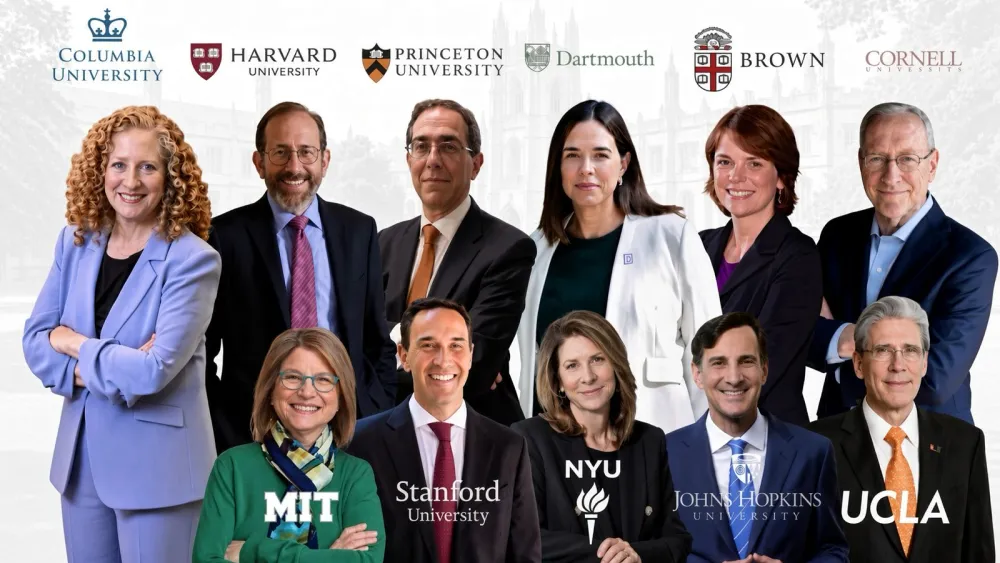
Look at the data. Mnookin joins Jewish presidents at Harvard, Princeton, Dartmouth, Brown and Cornell—meaning that six of the eight Ivy League universities are now led by Jews.
Jewish presidents also lead elite, non-Ivy schools, including Stanford, the Massachusetts Institute of Technology, Johns Hopkins, New York University and the University of California, Los Angeles. Just one year ago, Northwestern and the California Institute of Technology were on that list as well. Taken together, it is an extraordinary reversal from an era when elite universities excluded Jews.
How did a people comprising roughly 2% of the U.S. population come to lead so many of America’s most influential universities?
The answer lies in the intersection of two cultures: one that revered learning and one that eventually rewarded merit.
Jewish tradition has long treated learning as far more than a path to professional success. It is a religious obligation, a cultural inheritance and a communal responsibility. Rabbis led through scholarship rather than force. The Talmud preserved disagreement alongside consensus, teaching generations that truth emerges through rigorous debate rather than unquestioned authority. Those habits of inquiry align naturally with the ideals of the modern university.
Across centuries of exile and discrimination, Jews learned that kingdoms could seize land, wealth and homes, but not learning. Excluded from owning land, joining guilds or entering many professions, Jewish communities invested instead in education. Literacy became widespread. Study became a moral duty. Learning became portable wealth.
Yet for much of the early 20th century, America’s most prestigious universities sought to limit Jewish enrollment. Admissions quotas, character interviews, geographic preferences, and subjective notions of “fit” were explicitly designed to restrict Jewish students despite outstanding academic performance.
Only after World War II did those barriers gradually fall. As universities moved—however imperfectly—toward merit-based admissions and advancement, talented Jewish scholars entered the faculty pipeline, became deans and provosts, and eventually presidents.
The real story is not today’s presidents. It is yesterday’s professors. Long before Jewish presidents became numerous, Jewish scholars had become disproportionately represented on the faculties of America’s leading research universities. University presidents are almost always drawn from those same senior academic ranks.
This is what can happen when a culture that prizes learning gains equal access to institutions that reward scholarly achievement. The transformation reflects a remarkable historical arc: from exclusion to leadership, from quotas to opportunity.
Today’s university presidents face challenges unlike those of any previous generation. They must simultaneously serve as scholars, CEOs, diplomats, fundraisers and public figures while navigating intense political polarization.
For Jewish presidents, the burden has become even heavier since Oct. 7. They have been called upon to defend free inquiry while confronting antisemitism sometimes cloaked in the language of activism. They must protect robust debate without tolerating intimidation, preserve academic freedom while ensuring Jewish students feel safe, and distinguish legitimate protest from harassment.
That makes Columbia’s transition particularly resonant. One of the universities that once restricted Jewish enrollment—and that more recently has become a flashpoint over Israel and antisemitism—is now turning to a Jewish scholar to lead it through a deeply unsettled moment.
Some university leaders have responded more effectively than others. But the larger historical reversal is unmistakable.
A century ago, Ivy League universities debated how many Jews to admit. Today, most entrust Jews to lead them. Few historical reversals better capture both the endurance of Jewish values and the American promise that, however imperfectly, merit can triumph over prejudice.



