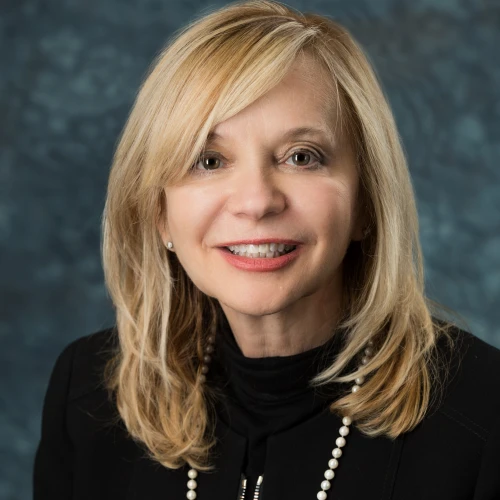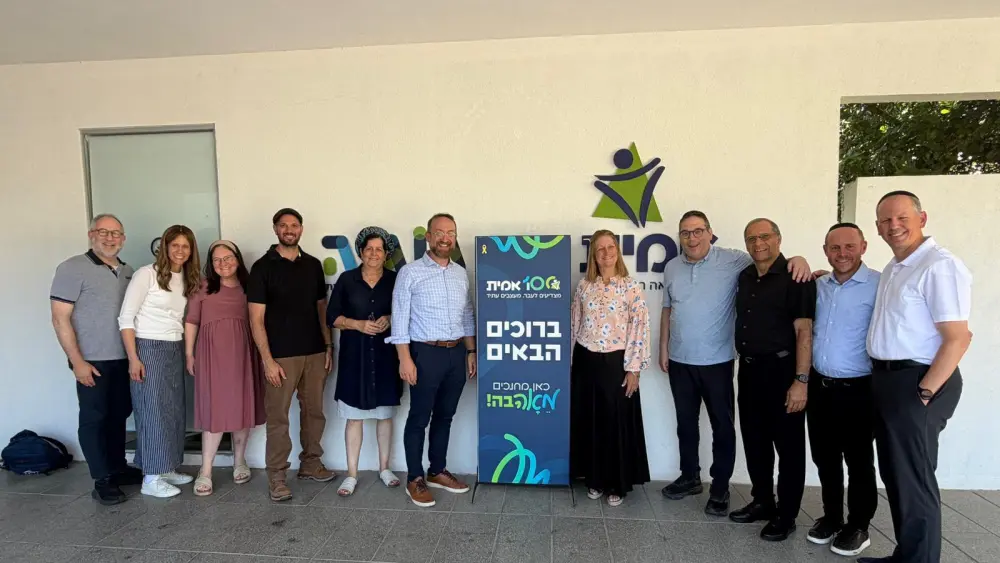
When Mrs. CB Neugroschl, principal of Ma’ayanot Yeshiva High School for Girls in Teaneck, N.J., traveled to Israel with a group of educators this summer, she joined a larger conversation about connecting Jewish schools and communities worldwide. As part of the first cohort in AMIT’s new educational think tank, Neugroschl was one of a group of principals who came to learn about the school network and discuss the global future of Jewish education.
The group from the United States and Canada included Rabbi Joseph Beyda of Yeshivah of Flatbush, Brooklyn, N.Y.; Rabbi Eli Ciner of Yeshivat Frisch, Paramus, N.J.; Rabbi Seth Grauer, Ph.D., of Bnei Akiva Schools, Toronto; Rabbi Jeffrey Kobrin, Ph.D., of North Shore Hebrew Academy, Great Neck, N.Y.; Mrs. Sara Munk of Shulamith High School, Brooklyn, N.Y.; Rabbi Gil Perl, Ph.D., of Jewish Leadership Academy, Miami; and Neugroschl.
From the start, participants understood they were part of AMIT’s new venture to create a global partnership that would benefit students and schools on both sides of the ocean. “We’re all trying to accomplish the same goals and if we could do that together, I don’t see what could hold us back,” said Kobrin.
The visiting leaders presented candid case studies from their own schools, sharing the challenges and opportunities they encounter. In turn, AMIT professionals introduced the network’s learning models: the Learning Management System’s personalized pathways, now being implemented nationwide in partnership with Israel’s Ministry of Education; the Tatzam mentorship model, which fosters personalized growth; and a partnership with the Disabled Veterans Organization that connects students to real-world challenges through values-driven projects.
“I was amazed by the combination of culture and strategy at AMIT,” said Beyda.
Visits to schools and communities around Israel brought their discussions to life and gave the group a firsthand look at Israeli society and culture. A trip to Sderot highlighted resilience and rebuilding, as U.S. educators observed the forward-thinking approach of the community and AMIT school leadership despite the difficulties of the past few years.
A visit to the Orot Shaul Hesder Yeshiva in Tel Aviv spurred a conversation about identity formation. Roshei Yeshiva Rav Itamar Eldar and Rav Tamir Granot spoke about the challenges and opportunities facing the Dati Leumi (Religious Zionist) community.
A conversation with two reservist officers from very different backgrounds and belief systems sparked a dialogue about connection within Israeli society and across the larger Jewish community.
“Jewish education is about building the future,” said Neugroschl. “I found AMIT’s commitment to growth so remarkable and gained a real appreciation for its holistic approach.”
“This passionate and talented group of educators grappled with important issues facing the global Jewish community,” said AMIT director general Amnon Eldar, Ph.D. “We learned from one another and explored how we might raise the bar in significant areas in education.”

Going stateside
Earlier in June, AMIT brought 45 principals and senior educators from Israel to the United States for an intensive professional learning seminar designed to foster cross-cultural collaboration and explore emerging trends in education around the world.
Over the course of several days, the group engaged with a diverse range of educational institutions, examining innovative pedagogical models and thinking about the role of schools in a rapidly changing world. Participants considered how these ideas intersect with the realities of Israeli education and how new approaches could strengthen AMIT’s own holistic educational philosophy and ultimately create greater opportunities for students.
The group visited three secular schools in the tri-state area, intentionally selected to challenge different anchors of AMIT’s educational model. Each offered a distinct lens: one explored questions of identity and belonging; another focused on developing each student’s individual strengths; and the third examined how environment and educational practice can foster a more effective learning experience.
The Earl Monroe New Renaissance Basketball School, for example, had a model that reflected AMIT’s philosophy of recognizing that a student’s passion can become a gateway to a larger world of possibility. At the school, basketball is used as an entry point, exposing students to related fields ranging from marketing and contract negotiation to media and analytics, building on their passion and creating a solid career path.
“At a time of heightened geopolitical tensions surrounding Israel, it was meaningful to see secular school communities warmly embrace a delegation of Israeli educators. Their willingness to engage was a powerful reminder of the connections that can be created across cultures through education,” said Limor Friedman, director of strategic overseas relations and innovation at AMIT.
AMIT hosted a luncheon to welcome the educators to the United States and to recognize their determination, despite the volatile climate at home, to make the trip, grow as educators and bring new opportunities back to their students.
“At AMIT, we are always looking beyond our own schools for ideas that can make us better,” said AMIT president Shari Safra. “Our educators’ openness is what makes them such extraordinary leaders and opportunities like this help us continue to grow.”
The group also spent significant time delving into the issues of Jewish identity, values and antisemitism. They visited Hillel at Columbia and met with Rabbi Yehuda Sarna, Ph.D., at New York University and Rabbi Ingber of Romemu. Highlights of the week also included visits to the Heschel School, SAR High School, NCSY and Camp Moshava.
“Experiencing Jewish life and schools in the United States firsthand, the visit showed us the tremendous potential for collaboration,” said Eldar. “We left energized by the opportunity to deepen the connection between American Jewish communities and the State of Israel.”
The same sense emerged from both visits: Educators on both sides of the ocean have much to learn from one another, and building on that connection offers new possibilities for educational growth.