Hate is being given a free pass far too often. Once confined to the margins, hatred now finds acceptance in public life. For Jews, that normalization has already turned deadly and the rising tide of violent rhetoric—from the far left to the far right—endangers everyone. In New York, new leadership may determine whether silence or moral clarity will prevail.
The election of Zohran Mamdani as New York City’s next mayor has left many New Yorkers anxious about what his leadership will mean for their safety. New York City is home to 1.3 million Jews. The Jewish commissioner of the New York City Fire Department immediately resigned in response, and many Jews are now considering relocating. The Anti-Defamation League recently reported on “brazen and intensified” incidents against Jews in New York City this year. The leading Jewish civil-rights organization launched the Mamdani Monitor: Holding the New Administration Accountable.
Mamdani’s activist background, inflammatory rhetoric and extremist supporters raise concerns. He founded a chapter of Students for Justice in Palestine at Bowdoin College in Maine and refused to condemn the violent slogan, “Globalize the intifada.” His wife publicly praised a Hamas-affiliated propagandist and has expressed hostility toward the United States and Israel.
The movement behind the rhetoric: DSA’s radical turn
The ideological current powering Mamdani’s campaign reflects a growing international movement that merges political radicalism—from the left and the right—with religious extremism. Mamdani is backed by the Democratic Socialists of America. The political organization includes communists and socialists.
DSA uses Soviet-era Marxist language to support its anti-Western activism. In a recent statement, the group condemned the “archaic and undemocratic U.S. Senate that needs to be left to the dustbin of history.” The organization also denounced Democrats as “sell-outs.”
The Marxist DSA was founded in 1982 and supported Israel. Its founder condemned the 1975 U.N. vote, falsely calling Zionism racism. By 2017, new members had pushed the group sharply left, and now requires political candidates to support Israel’s destruction if they seek an endorsement.
DSA is pressuring Mamdani to “withdraw city funds from banks that do business in Israel, dismantle the NYC-Israel Economic Council and arrest any Israeli leader.” Mamdani already pledged to shut down the partnership between Cornell University and the Technion–Israel Institute of Technology on the city’s Roosevelt Island.
Mamdani’s campaign also drew support from activists and organizations dedicated to Israel’s destruction, including activist Linda Sarsour and the Council on American-Islamic Relations. CAIR was an unindicted co-conspirator in the 2007 Holy Land Foundation Hamas terrorism-financing case.
At a recent CAIR conference, Sarsour claimed that “the darkness has just begun” for Muslims in America and that “some of us will be sacrificed for the cause.” Her remarks were condemned by Palestinian American peace activist Ahmed Alkhatib. He warned that support for Hamas and open hostility to the United States “have become mainstream views” within parts of the so-called pro-Palestine movement.

‘I want to kill and enslave Jews’
Harassment, vandalism and attacks against Jews have continued to rise sharply, mirroring the growing normalization of violent rhetoric.
Two 19-year-olds from wealthy New Jersey families were recently arrested for plotting ISIS attacks. Milo Sedarat wanted to “line up 500 Jews and execute them in front of their wives and family. Then take all their wives as slaves. Imma have like 10 yahood slave girls inshallah.” Yahood is Arabic for “Jew,” and inshallah means “God willing.”
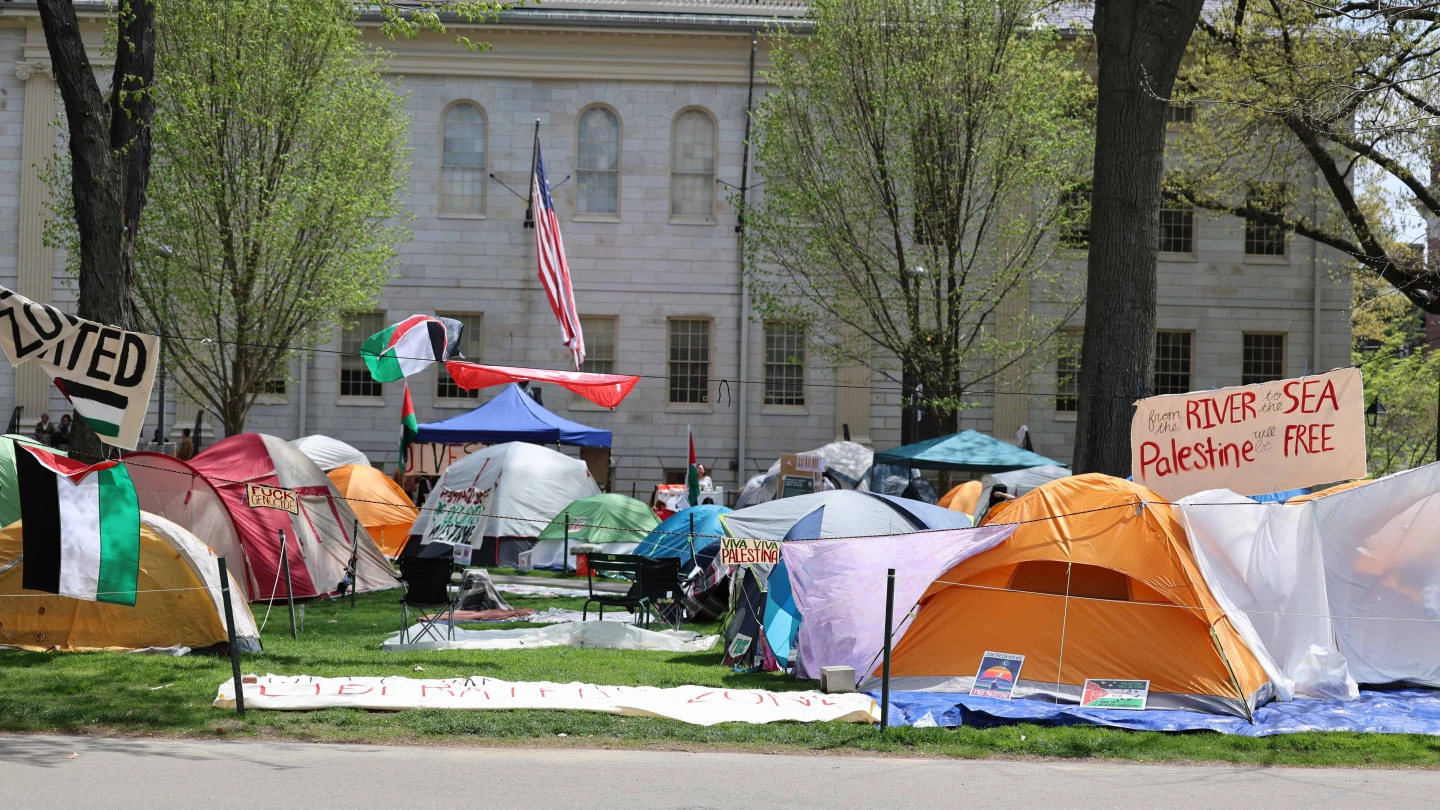
Nov. 5 campus attacks: From protest to violence
Students for Justice in Palestine activists at the Toronto Metropolitan University violently stormed an event featuring an Israeli speaker. Students Supporting Israel campus chapters routinely host Israeli veterans to discuss their experiences fighting Hamas terrorists. Activists used a drill bit to shatter a glass door, causing cuts and abrasions on multiple victims. SSI released a statement: “Broken glass. Blood everywhere. All because we’re Jewish and tried to open dialogue.”
On the same day, about 40 anti-Israel activists disrupted a similar SSI event at Louisiana St. University. The students barged in, banging pots and pans, shouting for Israel’s destruction. One protester boasted that they “greatly outnumbered the Zionist students.” About 1,000 miles away, the University of Maryland student government unanimously passed a resolution calling to ban former Israeli soldiers from speaking on campus because their presence is “harmful to students and the community.”
Dalia Ziada, a liberal Egyptian Muslim who works for a U.S. organization that studies anti-Jewish hate, recently posted: “Anti-Zionism is used as a politically correct cover for antisemitism, and antisemitism is the platform for anti-Americanism.”

Remembering Kristallnacht: When words became violence
Eighty-six years ago, Nazi rhetoric turned into action. Long before the night of shattered glass (Kristallnacht) of Nov. 9-10, 1938, German Jews had already been pushed to society’s margins through propaganda, boycotts and laws that stripped away their rights and livelihoods.
State-run newspapers spread conspiracy theories blaming Jews for Germany’s defeat in World War I and for the country’s economic collapse. Schoolbooks and radio programs taught children to see Jews as subhuman. Businesses were marked, professional licenses revoked, and citizens were discouraged from buying goods at Jewish-owned stores.
In a single night, Nazi forces, Hitler Youth and civilian mobs burned 1,400 synagogues, destroyed 7,000 Jewish-owned businesses and arrested 30,000 Jewish men who were sent to concentration camps. German authorities stood by as mobs looted businesses, torched synagogues and murdered nearly 100 Jews. The “Night of Broken Glass” shattered not only windows; the coordinated attacks began to shatter Jewish life across Europe.
Kristallnacht commemoration hijacked in Norway
Norway’s prime minister, Jonas Gahr Støre, decided to attend a recent Kristallnacht memorial event organized by anti-Israel organizations, instead of a commemoration organized by the Oslo Jewish community.
“I cannot recall a European leader engaging in Holocaust denigration like this,” stated Dani Dayan, chair of Yad Vashem Holocaust Memorial Museum in Jerusalem. “He misused the anniversary of the Pogrom to partner with those who seek to leave the Jewish people stateless and defenseless again.”
Eighty-six years after Kristallnacht, its lesson still stands: When societies tolerate propaganda and excuse hate, it never stops with just words.
Points to consider:
1. From Kristallnacht to today: Silence leads to violence.
Some 86 years after the violent Nazi pogroms, the pattern is disturbingly familiar: hate-filled rhetoric is tolerated, violence excused and too many Americans choosing silence. Propaganda always precedes persecution. From Tucker Carlson on the far-right to Mamdani on the far-left, today’s anti-Jewish slogans and anti-Israel rhetoric appear to be no different. What begins with the Jews doesn’t end with the Jews. Everyone’s safety depends on moral clarity from political, civic and faith leaders. History’s lesson is clear: once hate is normalized, it extends beyond Jews and consumes entire societies.
2. Moral leaders must reject hate and excuses for extremism.
Political silence and selective outrage send the dangerous message that some hate is acceptable. When leaders minimize anti-Jewish hate speech when it comes from within their own political party or defend those who spread it, extremists see this trivialized response as a permission slip. Condemning hate should never depend on politics or polling data. The measure of moral leadership is simple: Reject all forms of hate, without excuses and without hesitation.
3. When movements reject democracy, they endanger everyone.
Groups like the Democratic Socialists of America and the Council on American-Islamic Relations increasingly frame both America and Israel as oppressors rather than democracies. What began as social activism has hardened into ideological extremism that treats Western values, Jewish identity and free societies as enemies of “justice.” Once fringe, their rhetoric is becoming increasingly popular. The test for progressive movements and cities like New York is whether their calls for inclusion still extend to Jews. Unity and safety depend on rejecting any ideology that excuses hate by calling it progress.
4. Anti-Zionism has become the acceptable face of anti-Jewish hate.
Calls to “globalize the intifada” or boycott the world’s only Jewish state are increasingly tolerated. This shift has made anti-Zionism a socially acceptable disguise for anti-Jewish hate. “Zios,” a slur popularized by former KKK leader David Duke, is now being used by far-left and far-right influencers. Activists increasingly target Jews for supporting Israel’s right to exist while excusing those who call for its destruction. When hate is repackaged as activism, its danger only grows.
5. Light shines brighter when communities stand together.
The lesson of Kristallnacht is not only how hate begins, but how courage responds. Americans can stand up to hate with unity and resolve. Every act of solidarity—attending a commemoration, challenging rhetoric or defending truth—pushes back against fear. History proves that anti-Jewish hate thrives in silence but weakens when confronted by a united community. Light endures when people of conscience stand together and refuse to be intimidated.