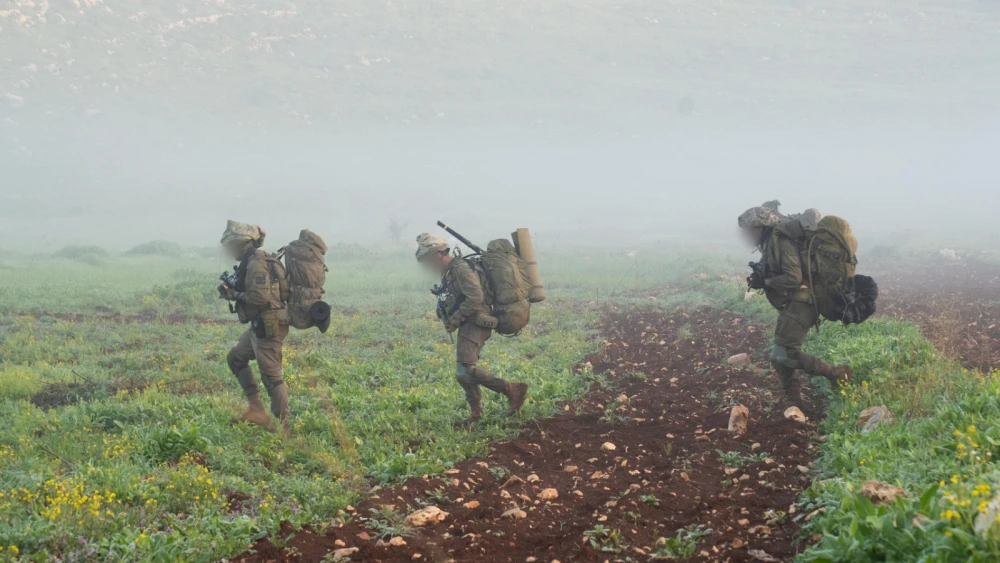
In the span of a single week, two reservists from the Duvdevan unit—among the most elite soldiers in the IDF—died by suicide. They survived the missions. They survived the war. But they could not survive what came after.
There are no ceremonies for this kind of loss. No sirens. No flags folded and handed to grieving families in the way we have come to know.
But the pain is no less real. And the responsibility is no less ours.
These are young men who operated in some of the most complex and dangerous environments imaginable, moving in silence and carrying out missions most will never hear about, let alone understand. They lived inside a constant rhythm of zero to 100 and back again. One moment, stillness. The next, life-or-death decisions made in seconds. And then, just as suddenly, they were expected to return home, to family, to routine and to a version of life that no longer felt familiar.
We ask them to make that transition as if it were simple.
It is not.
Over time, something begins to accumulate: the weight of what they have seen, the distance between who they were before and who they have become. And too often, they carry it alone.
This is not a failure of strength. These are some of the strongest individuals our people have ever produced. This is a failure of structure. Modern defense systems are built for operational readiness, not long-term human durability. Elite operators face compounding psychological strain, delayed-onset trauma and profound reintegration challenges without the infrastructure to address them.
Over the past two and a half years, the intensity has only deepened: repeated deployments, continuous operations and a reality that allows no room for pause or for processing.
And now, we are seeing the cost.
At Friends of Duvdevan, we support these soldiers and their families through mental health care, resilience programs and long-term frameworks designed to help them rebuild and reconnect. But we are not only responding, we are learning. Through direct engagement, we are identifying what works, systematizing those insights and building a model for applied resilience strategy in elite combat environments.
Because this challenge does not belong to one unit alone. It belongs to all of us.
As we approach Yom Hazikaron, we will stand in silence to honor those who fell in defense of Israel. But alongside that remembrance, we must confront a quieter truth:
Some of our soldiers are falling after they come home.
If we send them to fight, we must be prepared to stand with them when the war follows them home. Because this kind of loss, quiet, invisible and internal, is the most dangerous kind.
The next evolution of national security will not be defined only by technology or firepower. It will be defined by the systems we build to sustain the people who carry it all.
We did not lose them in battle.
And that is exactly why we cannot look away.