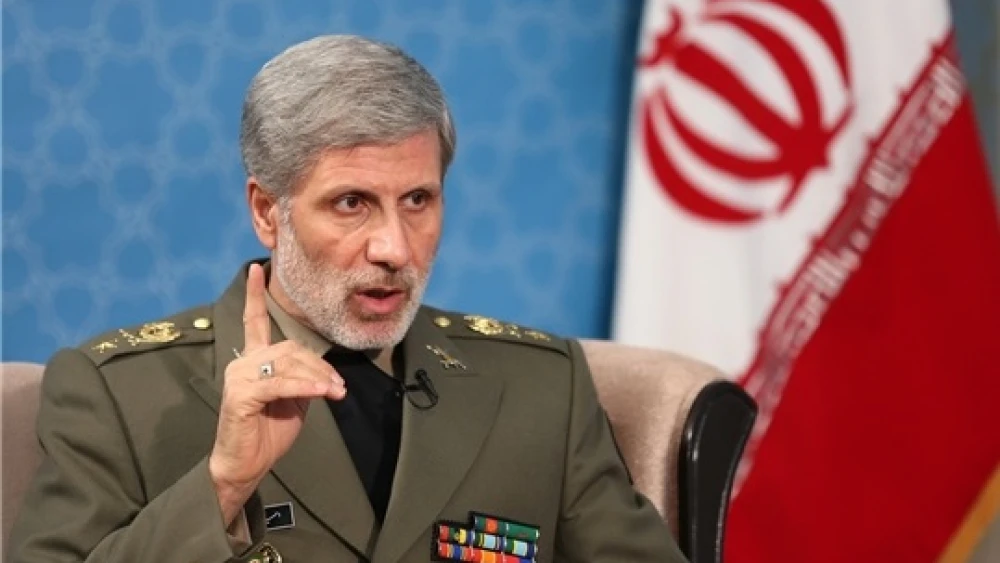
Iran on Wednesday again blamed Israel for the assassination of nuclear scientist Mohsen Fakhrizadeh, claiming that it had “strong evidence” of Jerusalem’s involvement in the Nov. 27 killing of the man believed to be the head of Tehran’s military nuclear program.
Iranian Defense Minister Gen. Amir Hatami sent a letter to 60 defense ministers worldwide requesting that they condemn “the Zionist regime” for the “inhuman, illegitimate and felonious move.”
“Iran possesses strong evidence that the Zionist regime was involved in the assassination. The Zionist intelligence services have a dark history of assassinating Iranian scientists,” the letter said.
Israel, suspected of killing Iranian nuclear scientists over the past decade, has not commented on the assassination.
Hatami praised Fakhrizadeh in the letter, claiming that his scientific achievements have helped Iran fight the coronavirus pandemic. He called on the international community to “put aside the double standard” in its approach towards state-sponsored terrorism.
He further hinted that the lack of response from the international community could lead to an Iranian response to the assassination, which might undermine regional and global stability.
Meanwhile, Gen. Esmail Ghaani, commander of the Quds Force—Iran’s elite extraterritorial black-ops arm—threatened on Thursday to attack the United States “at home” in retaliation for the assassination of his predecessor, Gen. Qassem Soleimani.
Soleimani, considered the architect of the Iranian policy that positioned it as the world’s top state sponsor of terrorism, was killed in a U.S. drone strike on Jan. 3, 2020, in Iraq.
This article first appeared in Israel Hayom.