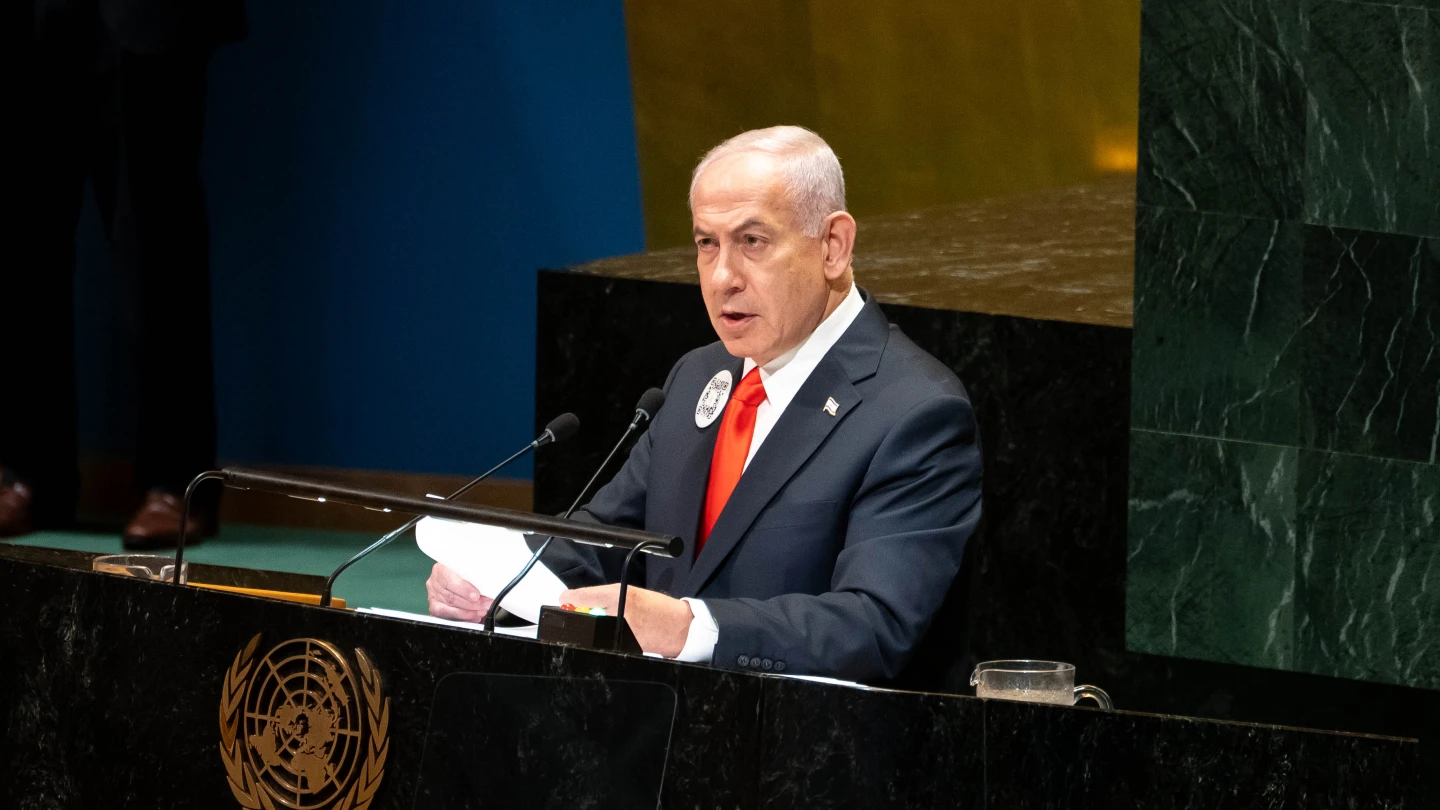
Israeli Prime Minister Benjamin Netanyahu said on Monday that anti-regime protests in Iran could be approaching a critical moment, with the Iranian people poised to “take their fate into their own hands.”
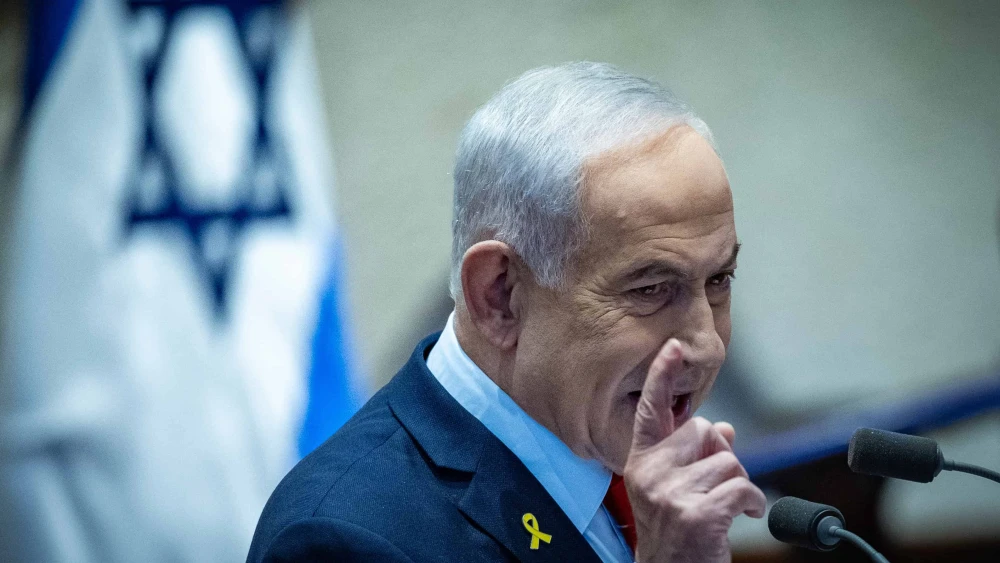
“We in Israel identify with the struggle of the Iranian people and their aspiration to liberty and justice,” Netanyahu said, speaking at a 40-signature debate, which the opposition can call once a month and which the prime minister is obliged to attend. “We may be at a critical moment,” he said.
The premier stressed in his remarks that, “in any case,” he had repeatedly made clear to the Islamic Republic that if it carries out a surprise attack against the Jewish state, “the consequences for Iran will be very severe.”
Israel will also not allow Iran to rebuild its nuclear or ballistic missile program, he said.
"[President Donald] Trump and I have expressed a firm stance: we won’t allow Iran to rebuild its ballistic missile industry or to renew the nuclear program, which we damaged severely in ‘Operation Rising Lion,’” he stated, referencing the 12-day war with Tehran in June.
“Our position is zero enrichment capability, removing all the enriched uranium outside Iran and continuous supervision of the nuclear facilities,” added Netanyahu.
The Israel Defense Forces is reportedly expediting preparations for a potential confrontation with Iran in light of the internal unrest in the country. The plans reportedly include the possibility that the regime will attack Israel as part of an attempt to avert its overthrow by the Iranian people.
The Channel 12 News report said that Netanyahu held consultations regarding the protests in Iran as part of his visit to the U.S. last week.
The prime minister told lawmakers at the debate on Monday that his government made “courageous decisions” that broke Iran’s regional “Axis of Evil, which is licking its wounds and trying to lift its head.
“It is much weaker. We made these fateful decisions in the face of pressures from outside and opposition from within,” he declared.
The Iranian regime has cracked down on widespread expressions of dissent over the country’s spiraling economic crisis, which has left the national currency at an all-time low of 1.4 million rials to a U.S. dollar.
Mass rallies and strikes continued nationwide for a ninth day on Monday despite a large security presence and the use of live ammunition by regime forces in several cities, Iran International reported.
Shopkeepers at Tehran’s iconic Grand Bazaar closed their shops in protest and chanted “freedom” on Tuesday morning, according to footage received by the opposition outlet.
Other protesters were recorded chanting “Reza Shah, may your soul rest in peace,” referring to Reza Shah Pahlavi, Iran’s last monarch, who was toppled in the 1979 Islamic Revolution, Iran International reported.
At least 27 civilians and two members of the security forces have been killed in the protests so far, the Human Rights Activists News Agency (HRANA), a U.S.-based opposition group, said on Monday night.
Trump warned on Sunday that the Islamic regime would get “hit very hard” if it starts killing protesters, upping his rhetoric against Tehran.
Washington is monitoring the situation “very closely,” the president told reporters aboard Air Force One, in response to a question about his Dec. 2 warning that the United States would come to the Iranian protesters’ rescue.
“If they start killing people, like they have in the past, I think they’re going to get hit very hard by the United States,” Trump reiterated.
In his Friday post on the Truth Social social media platform, Trump had threatened that the United States was “locked and loaded and ready to go” if the regime killed protesters, which he said was Tehran’s “custom.” Trump vowed “the United States of America will come to their rescue.”
Reza Pahlavi, the exiled son of the last Shah of Iran, told The Wall Street Journal on Monday that “our key message has always been, we don’t need a single boot of your military on the ground in Iran.
“Our boots on the ground are the Iranian people in the streets of Iran,” the exiled crown prince stated, adding: “Today, we’re not counting on a single penny of your tax dollars being spent on this project. But you can help us in many areas by repurposing the frozen assets that belong to the Iranian people to fund our campaigns, including labor strikes.”
“The regime is at its weakest. Iranians are on the streets protesting not just the economic misery, but calling for an end to this regime. I don’t think we have ever had, in the past 46 years, such a clear and vivid demand by Iranians,” said Pahlavi.
Netanyahu previously voiced support for the protests on Sunday, telling reporters in Jerusalem he stands with all Iranians seeking freedom and that this may be a pivotal moment in their fight.
“The government of Israel, the State of Israel, and my policy: We identify with the struggle of the Iranian people, with their aspirations for freedom, liberty and justice,” he stated at a Cabinet meeting.
“It is very possible that we are standing at the moment when the Iranian people are taking their fate into their own hands,” Netanyahu declared.