


By Ben Cohen/JNS.org
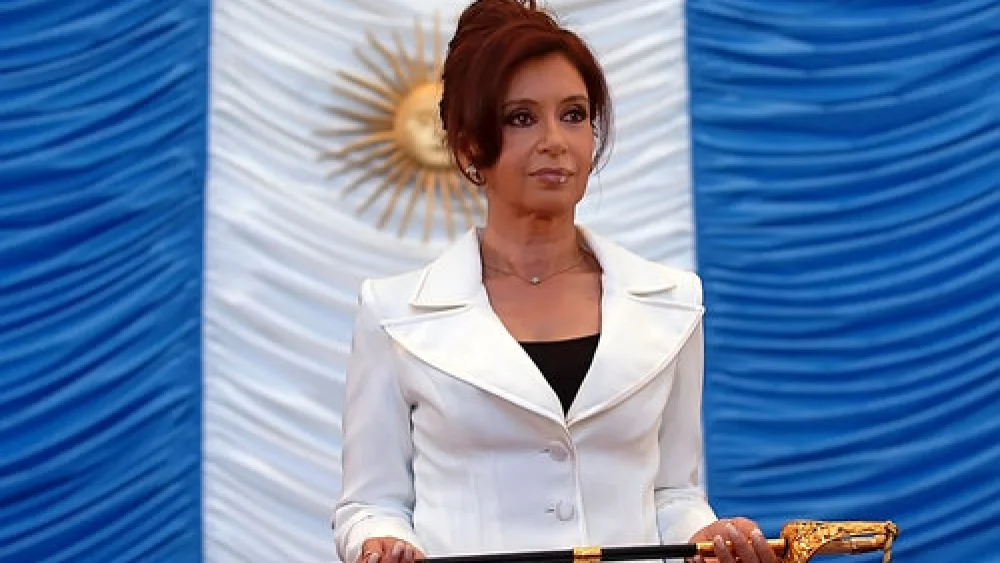
A glimmer of hope in the fight against Iranian-backed terrorism shone forth from Argentina during the final days of 2016. A federal appeals court ruled that former President Cristina Fernández de Kirchner will face a new investigation over allegations that she and her close colleagues made a secret pact with the Iranian regime over the probe into the July 1994 bombing of the Asociación Mutual Israelita Argentina (AMIA) Jewish community center in Buenos Aires.
Eighty-five people were murdered and hundreds were wounded on that fateful day, when a truck packed with primitive explosives rammed into the AMIA building. But the perpetrators of the atrocity, the Iranian mullahs and their Hezbollah auxiliaries, have escaped justice for more than 20 years. Under Kirchner’s government, the most tangible outcome of the probe into the bombing was to produce its 86th victim: federal prosecutor Alberto Nisman, who was found dead in his Buenos Aires apartment Jan. 18, 2015—the day before he was due to unveil a lengthy, painstakingly researched complaint against Kirchner over her collusion with the Iranians.
Kirchner was defeated in last year’s presidential election, and under her successor, Mauricio Macri, there have been constant hints that the question of justice for both the original AMIA victims and Nisman himself is on the agenda once more. Specifically, Macri promised not to challenge a court ruling that the accommodation reached with the Iranians—formally described as a Memorandum of Understanding—was unconstitutional, and he promised that there would be a proper investigation into whether Nisman’s death was a suicide or, as is far more likely, an assassination.
Since Argentina is saddled with a notoriously corrupt judiciary, it’s hard to predict definitively whether the hoped-for progress will be made in the coming year. Much depends on which judge is appointed to handle the AMIA case. Some of the judges who served under Kirchner may well be guilty themselves of collaborating in the Nisman cover-up, but there are also others being considered for the renewed investigation who are more independently minded.
As we await the next developments, it’s important to remember how we got to this sorry juncture. One of the key influences on Kirchner was the late Venezuelan President Hugo Chavez. Riding the wave of an oil price boom in the early 2000s, Chavez joined the pantheon of left-wing dictators with loud mouths and wide appeal. His policies were defined by short-term social welfare programs in some of the country’s poorest towns and cities, oil subsidies to his Cuban friends worth at least $7 billion a year, and a shrill foreign policy founded upon both anti-Americanism and anti-Zionism.
Under Chavez, anti-Semitism, which up until then had not been particularly significant in Venezuela, surged through the media, through both attacks upon Israel’s legitimacy and the lampooning of opposition leader Henrique Capriles, a devout Catholic who nonetheless proudly acknowledges his Jewish heritage. As a result, many of Venezuela’s Jews have sought refuge in Israel and other countries.
At the same time. and not by coincidence, Venezuela’s relations with Iran also surged. There were at least two significant outcomes from that relationship.
First, Iran, along with Hezbollah and its allies, massively boosted its fundraising, criminal activities, intelligence and terror-planning operations throughout Latin America. Second, Chavez used his influence on Kirchner to undermine Nisman’s investigation into Iranian culpability in the AMIA bombing, which had already led Interpol to release five “red notices” for the Iranian suspects, some of them diplomats at Tehran’s embassy in Buenos Aires. Nisman was also the target of direct Iranian threats. Hence the suspicion, as yet unproven, that Kirchner ordered his assassination, or at least acquiesced in it.
Out of that triangle—Kirchner, Chavez and the Iranian regime—only one still stands strong. Kirchner has been utterly discredited and may eventually find herself in prison. Chavez, too, is no longer with us, and the Venezuela he bequeathed to his successor, Nicolas Maduro, has collapsed into criminality, political thuggery, and chronic shortages of basic food and medicine; what was once one of the wealthiest countries in Latin America now has more in common with Zimbabwe under the dictatorship of Robert Mugabe.
In contrast, Iranian power continues to rise, cemented by an alliance with Russia, a dominant military position in Syria, and the political collusion of the Obama administration. (Shamefully, that same administration didn’t even stop to consider the moral turpitude of abstaining on the recent U.N. Security Council Resolution 2334 condemning Israel, even though Iran’s Venezuelan allies were among its sponsors.)
Hence the importance of real progress, and soon, in the Nisman case. Argentina’s courts are once again in a position to convict the Iranians for the unpunished crime of the AMIA bombing. Doing that will generate momentum to take on Iranian-backed terror globally, from Buenos Aires to Gaza, and from Aleppo to Kurdistan. If Iran’s allies in Latin America can crumble, after all, then so too can its allies elsewhere. The pain they have caused, though, can never be undone.
Ben Cohen, senior editor of TheTower.org & The Tower Magazine, writes a weekly column for JNS.org on Jewish affairs and Middle Eastern politics. His writings have been published in Commentary, the New York Post, Haaretz, The Wall Street Journal, and many other publications. He is the author of “Some of My Best Friends: A Journey Through Twenty-First Century Antisemitism” (Edition Critic, 2014).



